Products
Contact lamellae and louvered contact bands
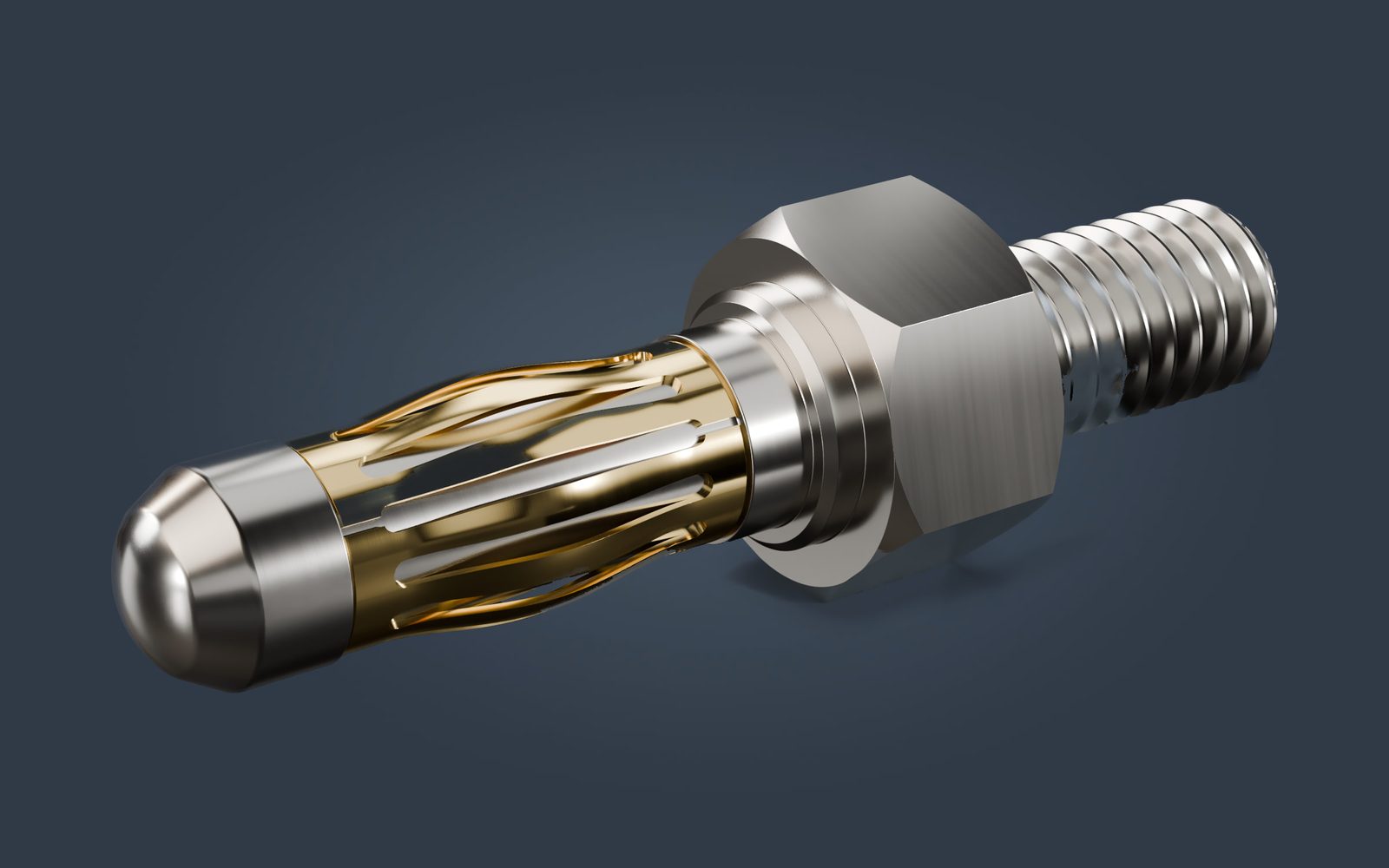
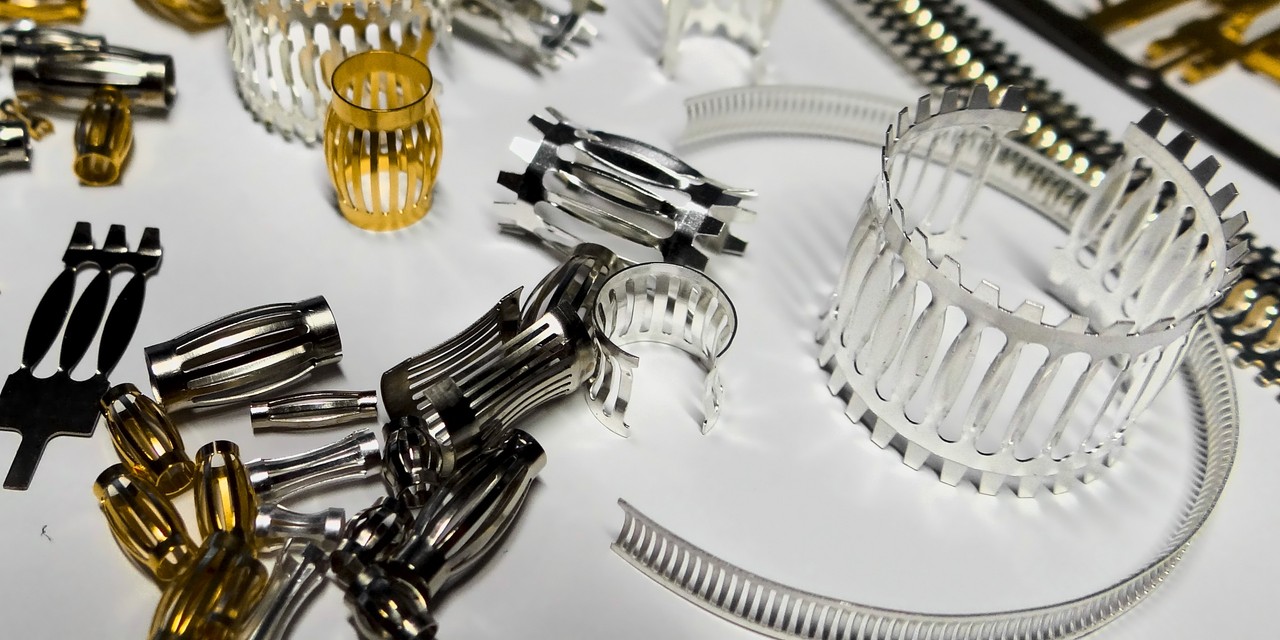
ACA Atlas Contacte manufactures louvered contact bands (contact lamellae) in Wehr (Baden), Germany. We make lamella contacts for pins and sockets in three designs, leaf spring, torsion spring and high-current, from signal contacts to high-current connections.
- Designs
- 3
- Mating diameter
- from 1.5 mm
- Resistance per louver
- from 0.30 mΩ
- Minimum quantity
- 100 pieces
01 Overview
Many contact points instead of one contact face
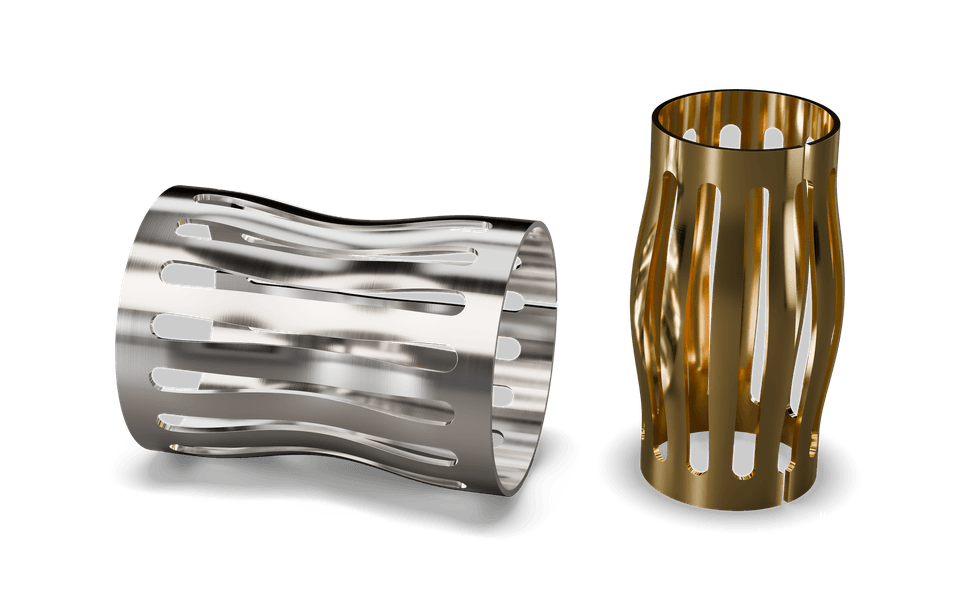
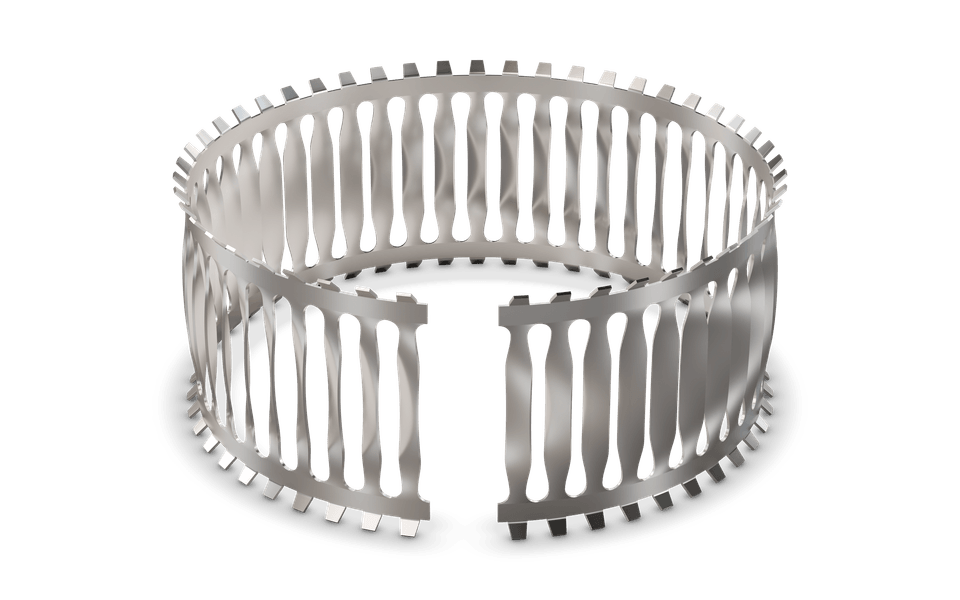
A contact lamella is a stamped spring band with many parallel louvers (contact webs) that creates a multi-point contact between pin and socket. Current flows through all louvers at once instead of through a single contact face. Each louver is a small spring of its own and presses against the mating contact with a defined force. The result is low contact resistance, a high current rating and even contact around the full circumference.
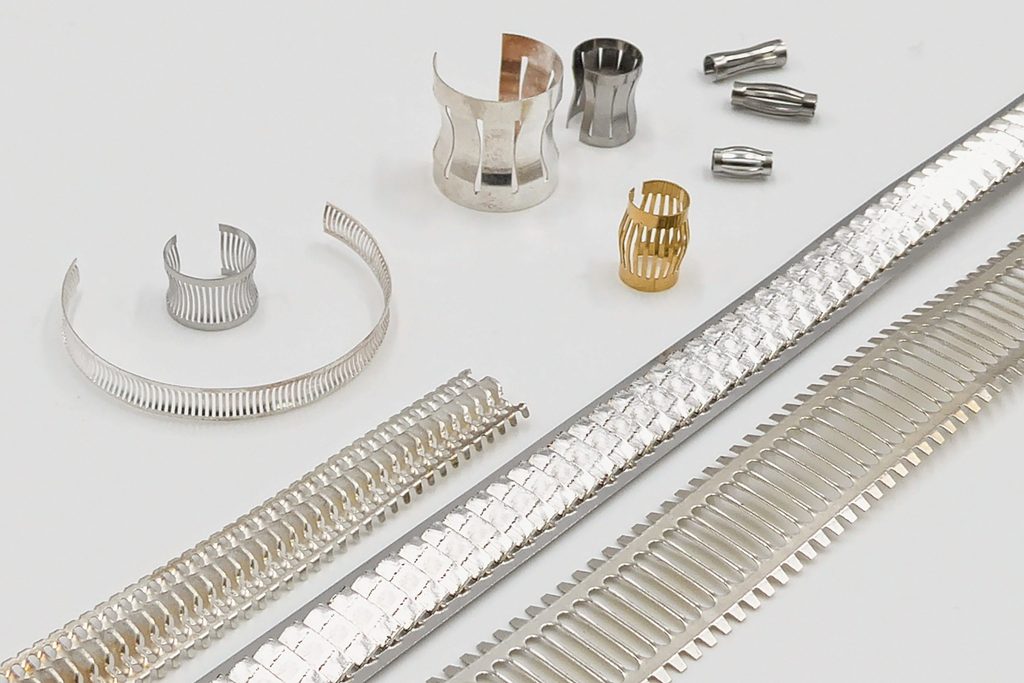
ACA Atlas Contacte makes louvered contact bands, proven in millions of connections, in three designs: the leaf spring contact band for mating diameters from 1.5 mm, the torsion spring contact band for power connectors from 8 mm, and the two-component high-current contact band for very high currents. All three are stamped and formed on tools from our in-house toolroom. The leaf spring contact band is supplied pre-rounded to your diameter and ready to install, the torsion spring contact band pre-rounded or flat and cut to length. The high-current contact band is supplied by the metre or as band pieces with a defined number of contacts.
For round contacts, all you need is a turned part with a groove: a pin with a groove for the pin version, or a socket with an internal groove (recess) for the socket version. In flat contacts the high-current contact band sits in an undercut groove in the conductor or under screwed-on cover plates. The installation dimensions are on the product pages of the three designs. The lamella configurator further down lists the standard sizes and gives a guide value for the current rating.
02 Products
Louvered contact bands by design: technical data, groove dimensions, configurator
-
-
-
03
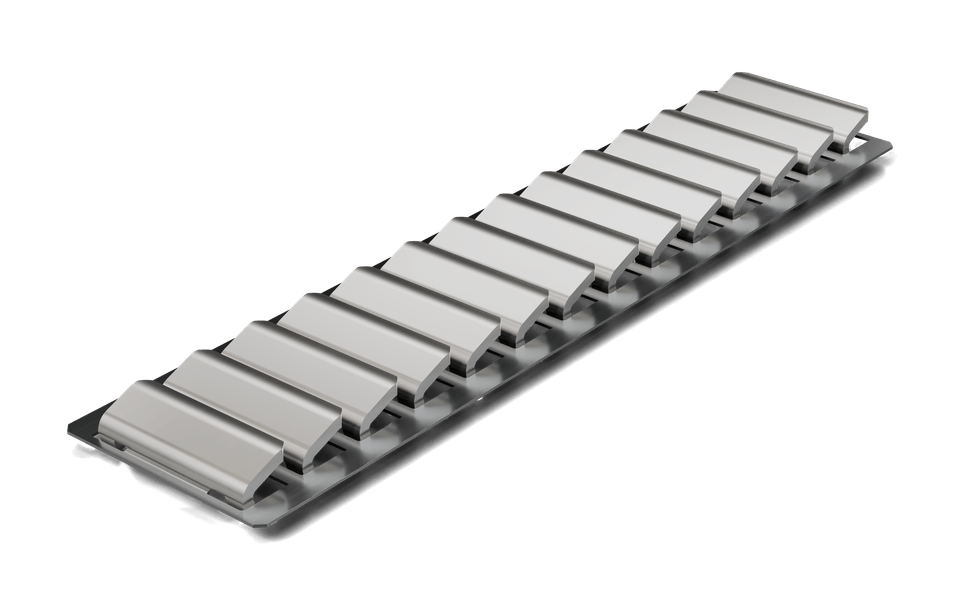
High-current contact band
Stainless spring steel carrier with riveted contact pieces of silver-plated copper
03 Designs
Leaf spring, torsion spring or high-current: the three contact bands compared
| Criterion | Leaf spring contact band | Torsion spring contact band | High-current contact band |
|---|---|---|---|
| Spring principle | Louvers loaded in bending | Louvers loaded in torsion, flatter spring characteristic | Spring steel carrier provides the force, riveted copper contact pieces conduct |
| Material | CuBe, relaxation-resistant | CuBe, relaxation-resistant | Stainless spring steel and copper |
| Finish | Nickel, silver or gold | Silver-plated and passivated, bare as an option | Silver-plated, 20 µm as standard |
| Mating diameter D | from 1.5 mm | from 8 mm | from 20 mm |
| Band width or length L, pitch | Length L 5, 8 or 12 mm (standard sizes) | 17.5 mm with 2.5 mm pitch or 13 mm with 2.0 mm pitch | 12 mm, pitch 3.5 mm |
| Contact resistance per louver | on request | 0.30–0.55 mΩ, depending on thickness | 0.50 mΩ per contact |
| Current rating (guide value) | I ≈ 6 to 14 A × D (D in mm), depending on version and thickness, × 1.2 with silver or gold | per louver 20 A, 28 A or 31 A (17.5 mm, S = 0.15 / 0.2 / 0.25 mm), 25 A (13 mm), silver-plated | above 40 A per contact |
| Temperature range | on request | −40 °C to +180 °C | −40 °C to +150 °C |
| Installation | Pin version or socket version | Preferably in the socket, socket version recommended from D = 20 mm | Groove in the socket or undercut groove in a flat contact |
| Delivery form | Pre-rounded, ready to install | Pre-rounded, or flat and cut to length | By the metre or as pieces with a defined number of contacts |
| Strengths | Compact, for power and signal transmission | High currents, harsh environments, vibration | Very high currents, low contact force, moving parts |
-
Leaf spring contact band
- Spring principle
- Louvers loaded in bending
- Material
- CuBe, relaxation-resistant
- Finish
- Nickel, silver or gold
- Mating diameter D
- from 1.5 mm
- Band width or length L, pitch
- Length L 5, 8 or 12 mm (standard sizes)
- Contact resistance per louver
- on request
- Current rating (guide value)
- I ≈ 6 to 14 A × D (D in mm), depending on version and thickness, × 1.2 with silver or gold
- Temperature range
- on request
- Installation
- Pin version or socket version
- Delivery form
- Pre-rounded, ready to install
- Strengths
- Compact, for power and signal transmission
-
Torsion spring contact band
- Spring principle
- Louvers loaded in torsion, flatter spring characteristic
- Material
- CuBe, relaxation-resistant
- Finish
- Silver-plated and passivated, bare as an option
- Mating diameter D
- from 8 mm
- Band width or length L, pitch
- 17.5 mm with 2.5 mm pitch or 13 mm with 2.0 mm pitch
- Contact resistance per louver
- 0.30–0.55 mΩ, depending on thickness
- Current rating (guide value)
- per louver 20 A, 28 A or 31 A (17.5 mm, S = 0.15 / 0.2 / 0.25 mm), 25 A (13 mm), silver-plated
- Temperature range
- −40 °C to +180 °C
- Installation
- Preferably in the socket, socket version recommended from D = 20 mm
- Delivery form
- Pre-rounded, or flat and cut to length
- Strengths
- High currents, harsh environments, vibration
-
High-current contact band
- Spring principle
- Spring steel carrier provides the force, riveted copper contact pieces conduct
- Material
- Stainless spring steel and copper
- Finish
- Silver-plated, 20 µm as standard
- Mating diameter D
- from 20 mm
- Band width or length L, pitch
- 12 mm, pitch 3.5 mm
- Contact resistance per louver
- 0.50 mΩ per contact
- Current rating (guide value)
- above 40 A per contact
- Temperature range
- −40 °C to +150 °C
- Installation
- Groove in the socket or undercut groove in a flat contact
- Delivery form
- By the metre or as pieces with a defined number of contacts
- Strengths
- Very high currents, low contact force, moving parts
Values from ACA datasheets and installation drawings, current rating guide values from the lamella configurator. Resistances apply to mating contacts in silver-plated copper. The current rating depends on the installation, so higher or lower values are possible. Verify the value in your application.
04 Principle
How a louvered contact works: current and resistance per louver
In a louvered contact the current is shared across the many louvers of the band. Each louver only has to carry part of the current to the mating contact. Because the louvers are electrically in parallel, the resulting equivalent resistance falls with every additional louver. The permissible total current is the sum of the partial currents.
This is why we state the electrical values per louver. Scale them up by the number of louvers in contact for your connection.
- Total current = number of louvers × current per louver
- Total resistance = resistance per louver ÷ number of louvers
- Number of louvers on torsion spring and high-current bands = band length ÷ louver pitch
- According to the torsion spring and high-current datasheets, mating contacts in silver-plated brass instead of silver-plated copper give 0.6 times the current values
- All values apply under ideal conditions with adequately sized conductors. Verify them by measurement in your application.
05 Benefits
What louvered contact bands do in a connector
-
Low contact resistance
The louvers act as resistors in parallel and lower the equivalent resistance. The torsion spring contact band has a contact resistance of 0.30 to 0.55 mΩ per louver, the high-current contact band 0.50 mΩ per contact.
-
High current rating
The total current is the sum of the partial currents. More louvers in contact mean more current with less heating per contact point. The torsion spring and high-current bands also withstand high short-circuit currents.
-
Even contact force
Every louver springs independently and bears on the mating contact with its own preload. Contact is spread around the circumference instead of depending on a single spot.
-
Self-cleaning on mating
During insertion the louvers wipe across the mating surface. This lets the torsion spring contact band make reliable contact even in harsh environments.
-
Many mating cycles
The robust design allows a high number of mating cycles. The high-current contact band works with low contact forces and also suits moving parts.
-
Simple installation
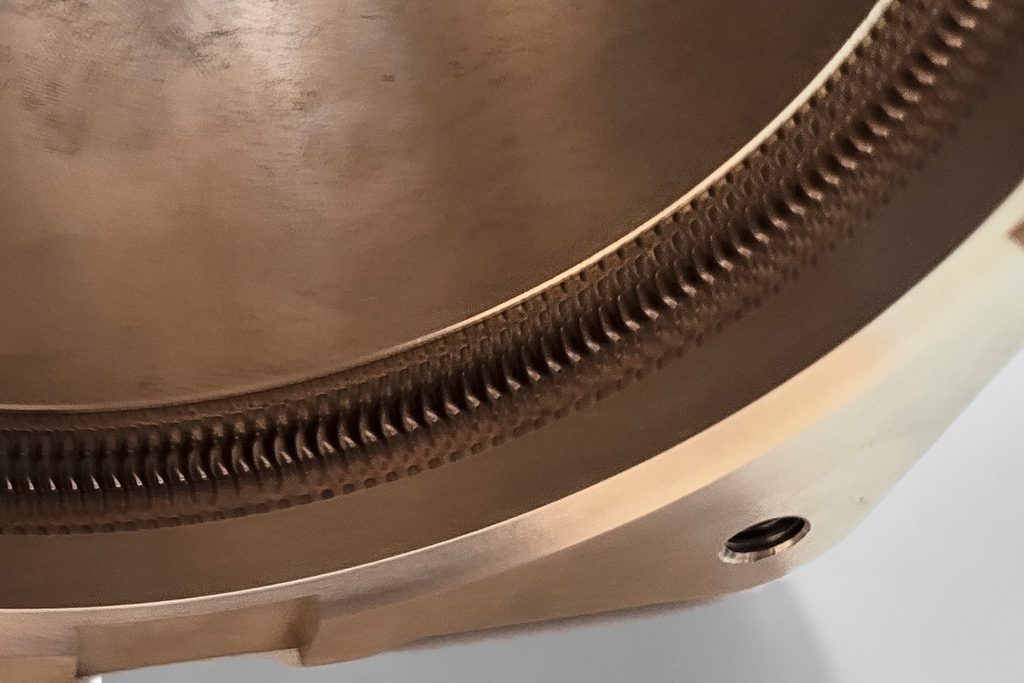
The lamella is pushed into a groove on the pin or an internal groove in the socket, where it snaps in and is held captive. Round contacts usually need no extra fixing part.
06 Installation
Installation in pin and socket
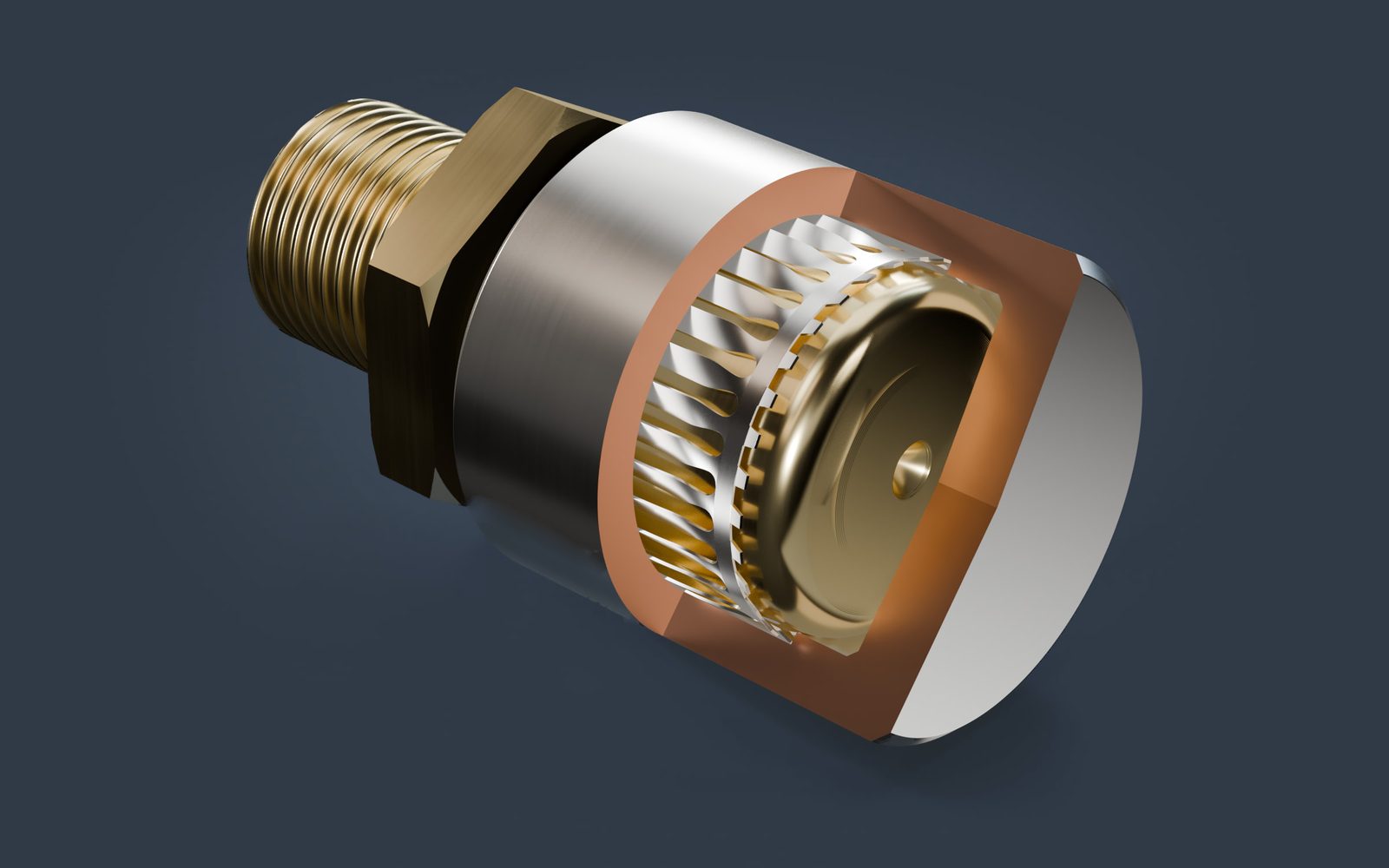
A contact lamella sits either in an internal groove of the socket (socket version) or in a groove on the pin (pin version). In both cases it is pushed into the groove, where it snaps in and is held captive.
Socket version: The socket has an internal groove (recess). The contact lamella is pushed into it, snaps in and is held captive. It makes contact with a cylindrical pin of mating diameter D. Inside the socket the lamella is protected from external mechanical damage.
Pin version: The socket is drilled or turned to a plain cylindrical bore of diameter D. The pin has a groove. The lamella is pushed onto this groove, snaps in and is held captive.
The leaf spring and torsion spring contact bands share the same fits for bore and pin. For the high-current contact band, groove depth and groove width are specified for round and flat contacts. Groove diameter and groove width depend on the design, band width and material thickness. You will find them on the leaf spring, torsion spring and high-current contact band pages.
- Socket bore (leaf spring and torsion spring): D +0.05 mm
- Pin diameter (leaf spring and torsion spring): D −0.03 mm
- Torsion spring contact band from D = 20 mm: socket version recommended, on the pin only with special fixing
- Large dimensions and flat contact arrangements need their own fixing, which we define with you
07 Second source
A second source for louvered contact bands: installation-compatible where the groove fits
In many cases, the torsion spring contact band from ACA Atlas Contacte is installation-compatible with the contact lamellae of common manufacturers as long as groove diameter and groove width match. That makes it a second source for existing connectors, without redesigning the socket or the pin.
Compare your groove with the groove dimensions of the torsion spring contact band, or send us the installation drawing of your existing groove. We check whether band width, material thickness and leg angle suit your installation.
08 Materials
Materials and finishes
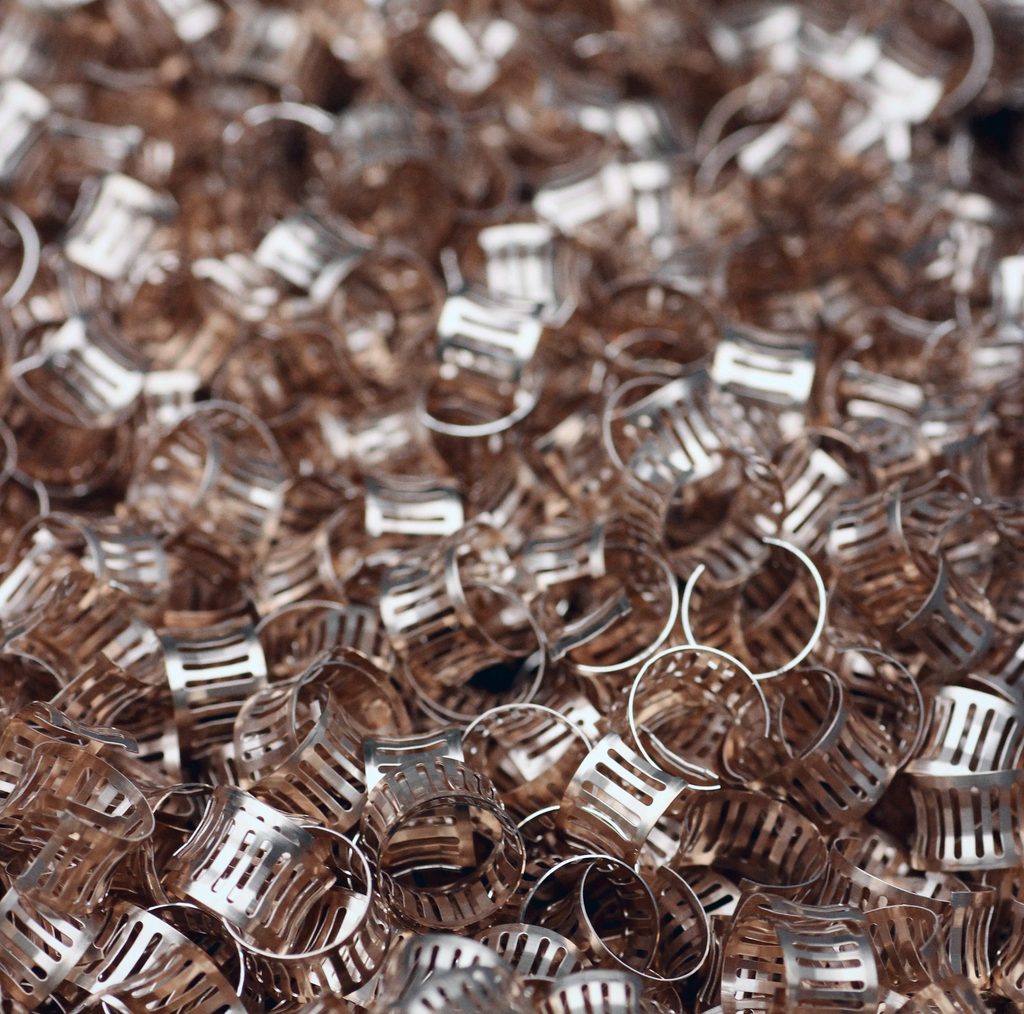
Base material and finish determine the spring force, conductivity and corrosion behaviour of a contact lamella. More in our guide to materials and finishes.
-
Beryllium copper
CuBe
The only base material for the leaf spring and torsion spring contact bands, relaxation-resistant. We age-harden the torsion spring band in-house after stamping and forming. Qualified partners apply the plating.
-
Stainless spring steel
carrier strip
Provides the contact force in the high-current contact band and maintains it thanks to its high relaxation resistance.
-
Copper
Cu, high conductivity
Contact pieces of the high-current contact band. They carry the current and absorb heat, which gives the band its very high short-circuit withstand capability.
-
Finishes
Ag, Ni, Au, Sn
Silver for a high current rating, standard on the torsion spring and high-current contact bands. Nickel for standard applications and gold where corrosion resistance is critical, both available on the leaf spring contact band. Tin-plated or a finish to your specification on request. Details on the surface finishes page.
09 Applications
Where louvered contacts are used
Customers use ACA Atlas Contacte contact lamellae in these industries today.
-
Electric vehicles
High-current connectors in electric vehicles.
-
Charging infrastructure and charging connectors
Power contacts in charging connectors and charging stations for electric vehicles.
-
High-performance battery systems
Pluggable connections in high-performance battery systems.
-
Industrial and machine connectors
Circular connectors for power and signal with many mating cycles.
-
Drive technology and robotics
Power contacts on drives and robots, and on moving parts with the high-current contact band.
-
Power transmission systems
Very high power, for example through several parallel torsion spring contact bands on a flange.
-
Electroplating plants
High-current contacts in electroplating plants.
-
Measurement, test and medical equipment, photovoltaics
Compact leaf spring contacts for power and signal transmission at small mating diameters.
10 Production
Made in our own plant in Wehr (Baden)
ACA Atlas Contacte stamps, forms and rolls its contact lamellae in-house, on tools from our own toolroom. We also age-harden the beryllium copper in-house, and qualified partners apply the silver, nickel or gold plating. The modular tool design also makes custom versions possible. We measure the contour of rolled lamellae optically with a vision measuring system in our own metrology room.
We make contact lamellae in small and large quantities. If no standard size fits, we design the lamella to your drawing. Our quality management system is certified to ISO 9001:2015.
- Delivered, depending on the design, pre-rounded and ready to install, as cut strip sections or by the metre
- Custom adaptation of length, diameter and finish
- In business since 1987, production in Wehr (Baden), Germany
11 Configurator
Configure a contact lamella
The ACA Atlas Contacte lamella configurator calculates a guide value for the current rating of leaf spring, torsion spring and high-current contact bands. Choose design, version and dimensions and send your configuration to us as a request.
12 Downloads
Datasheets and installation drawings
ACA Atlas Contacte provides a PDF datasheet for each of the three designs: the leaf spring contact band with its standard sizes, the torsion spring contact band 17.5 mm and 13 mm and the high-current contact band 12 mm. Installation drawings for the pin and socket versions come with them. The key installation dimensions, groove dimensions and electrical values are also on the leaf spring, torsion spring and high-current contact band pages. CAD data is available on request.
- Datasheet leaf spring contact band, standard sizes ( PDF, 254 kB, English ) download
- Datasheet torsion spring contact band 17.5 mm ( PDF, 1.5 MB, English ) download
- Datasheet torsion spring contact band 13 mm ( PDF, 361 kB, English ) download
- Datasheet high-current contact band 12 mm ( PDF, 1.6 MB, English ) download
- Installation drawing leaf spring contact band, pin version ( PDF, 103 kB, English ) download
- Installation drawing leaf spring contact band, socket version ( PDF, 68 kB, English ) download
- Installation drawing torsion spring contact band 17.5 mm, socket version ( PDF, 114 kB, English ) download
- Installation drawing torsion spring contact band 17.5 mm, pin version ( PDF, 105 kB, English ) download
- Installation drawing torsion spring contact band 13 mm, socket version ( PDF, 93 kB, English ) download
- Drawing high-current contact band 12 mm ( PDF, 54 kB, English ) download
FAQ
Frequently asked questions
Contact lamella, lamella contact or louvered contact band: what is the difference?
The three terms describe the same principle: a stamped spring band with many parallel louvers that creates a multi-point contact between pin and socket. “Contact band” and “louver band” emphasise the strip form, while “contact lamella” and “lamella contact” refer to the individual contact element in the connector. ACA Atlas Contacte uses the terms interchangeably and calls its three designs the leaf spring, torsion spring and high-current contact band.
Which contact lamella suits my application?
For small mating diameters from 1.5 mm and for both signal and power contacts, the leaf spring contact band is the compact standard choice. From 8 mm mating diameter and for high currents in harsh environments, use the torsion spring contact band. The high-current contact band is designed for very high currents, large diameters and moving parts. If in doubt, we will advise you based on your installation.
How much current can a contact lamella carry?
The total current is the number of louvers in contact multiplied by the current per louver. The current per louver depends on design, material thickness, mating contact, conductor cross-section and permissible temperature rise. The lamella configurator calculates a guide value for your dimensions. Please verify the final value in your application.
Should the contact lamella go on the pin or in the socket?
Both are possible. In the socket the contact lamella is protected from mechanical damage and assembly is easier. This is why the torsion spring contact band is usually built as a socket version. From 20 mm mating diameter we generally recommend the socket version, because on the pin the band then only holds with special fixing. The leaf spring contact band comes in standard sizes for both versions.
Why are contact lamellae usually silver-plated?
Silver lowers the contact resistance and suits high currents. The torsion spring and high-current contact bands are silver-plated as standard. The leaf spring contact band is also available nickel-plated for standard applications or gold-plated where corrosion resistance is critical.
Do you make custom sizes and small batches?
Yes. Our modular tool design lets us adapt diameter, length and finish to your application. Send us your drawing or your requirements through the request form.
-
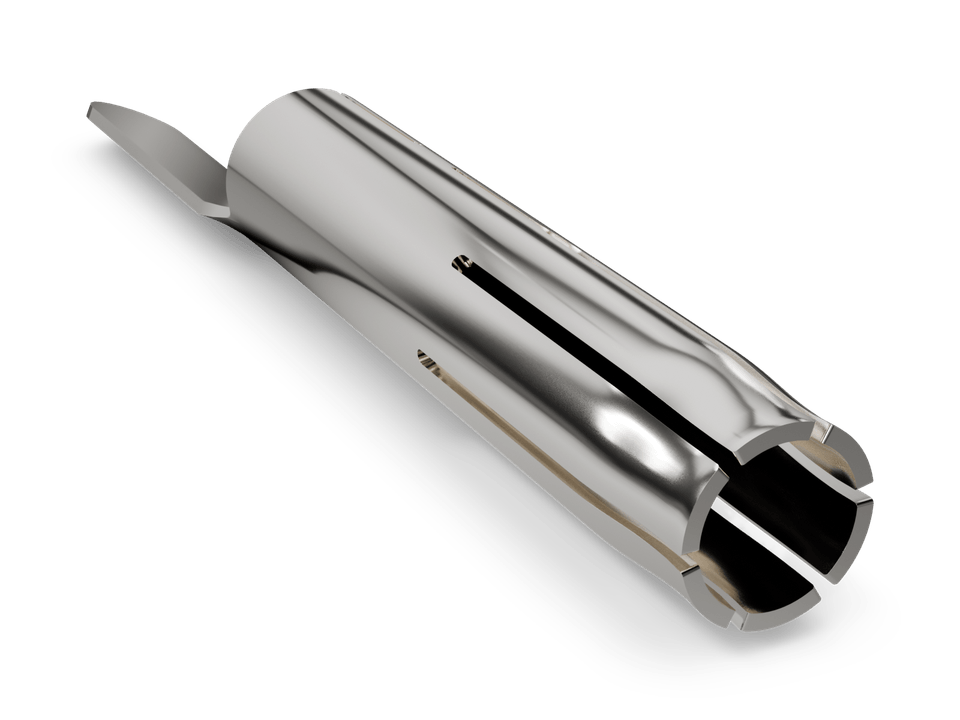
Round pin and socket contacts
Stamped flat, then rolled into a pin or a sleeve
-
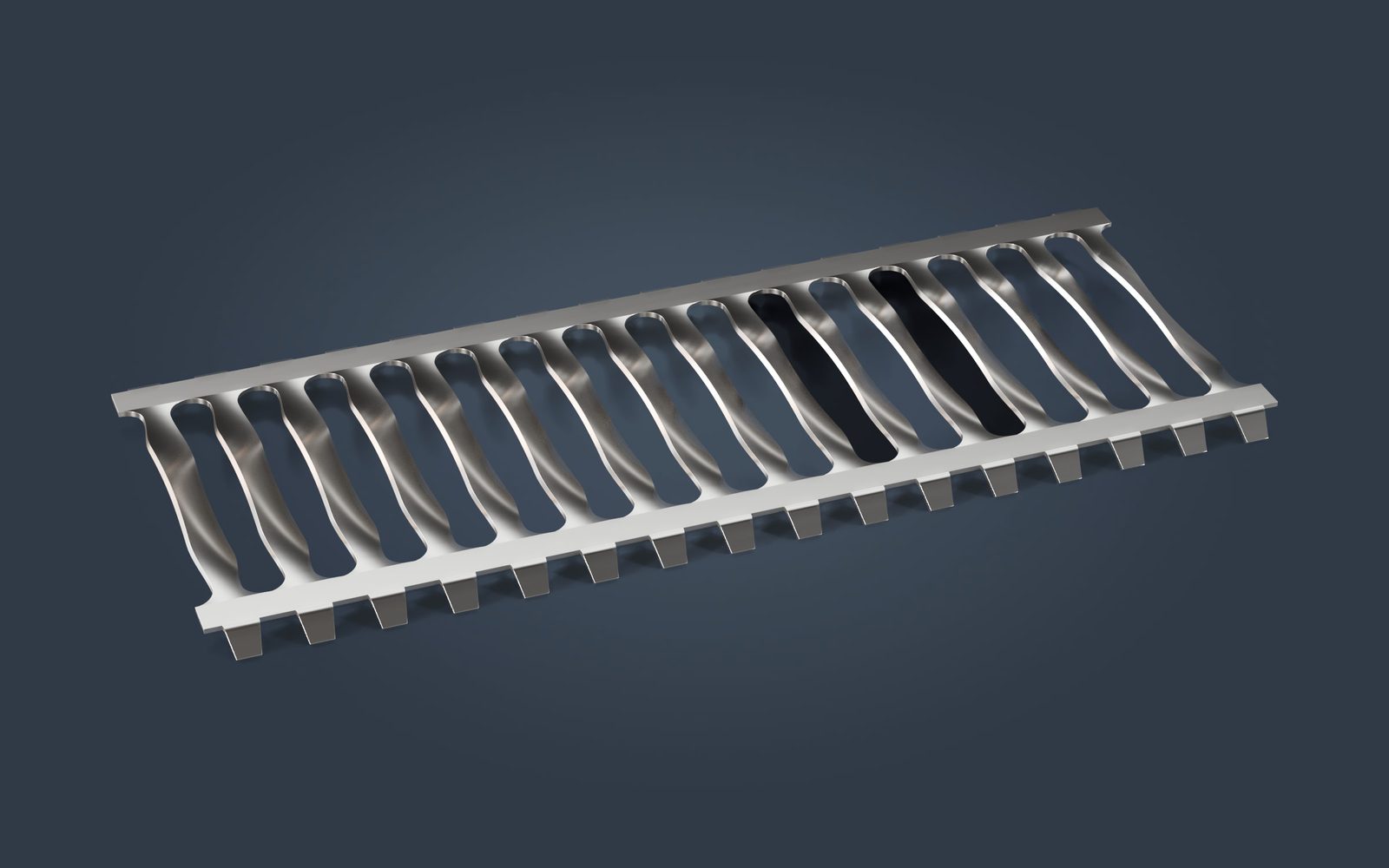
Contact types compared
Which contact type suits your current, mating cycles and space
-
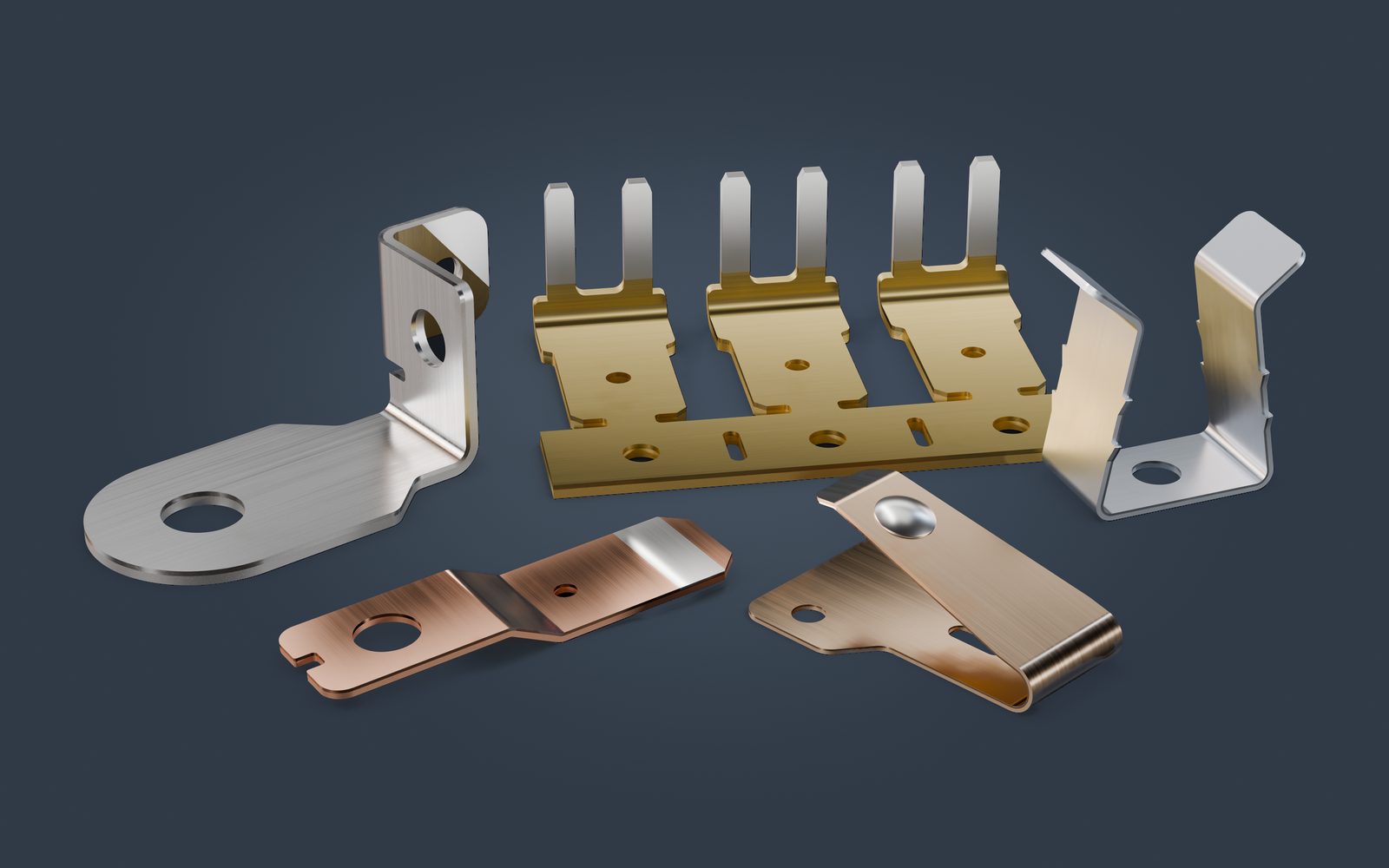
Materials and finishes
Copper alloys, spring steels and contact platings compared
-
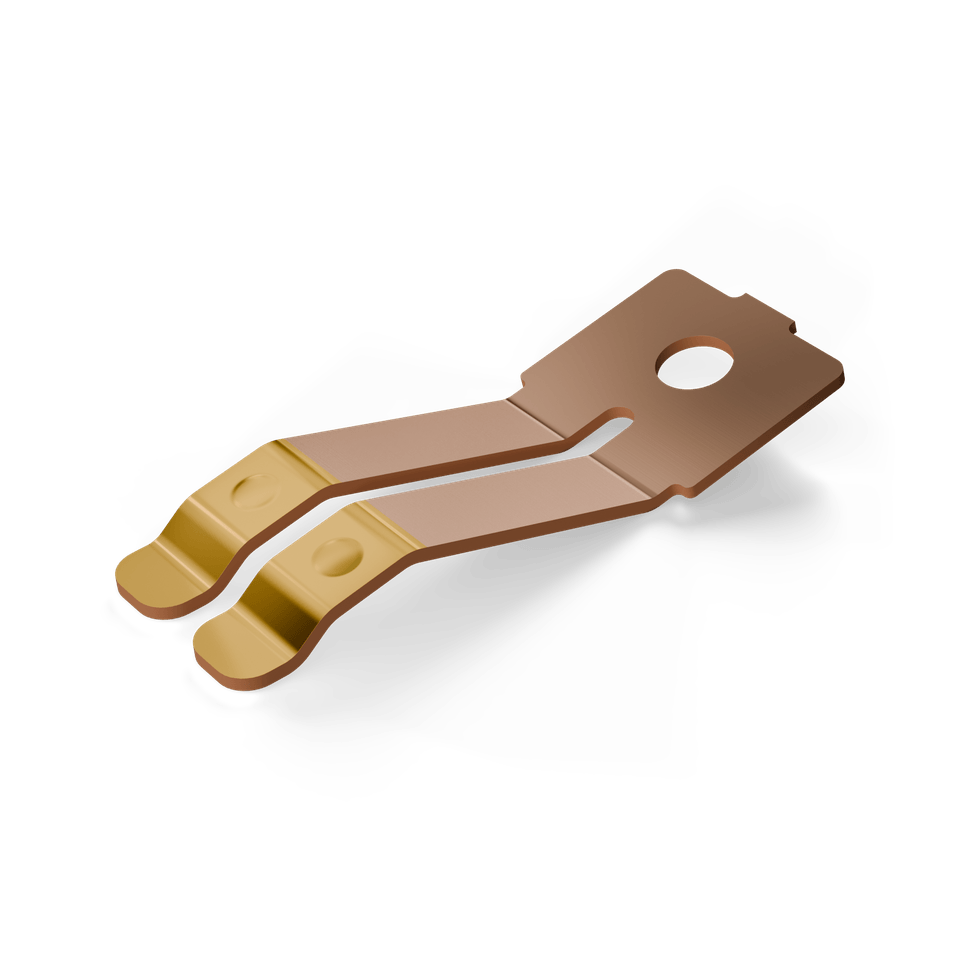
Prototypes and low-volume production
Samples and small batches before the series tool
-
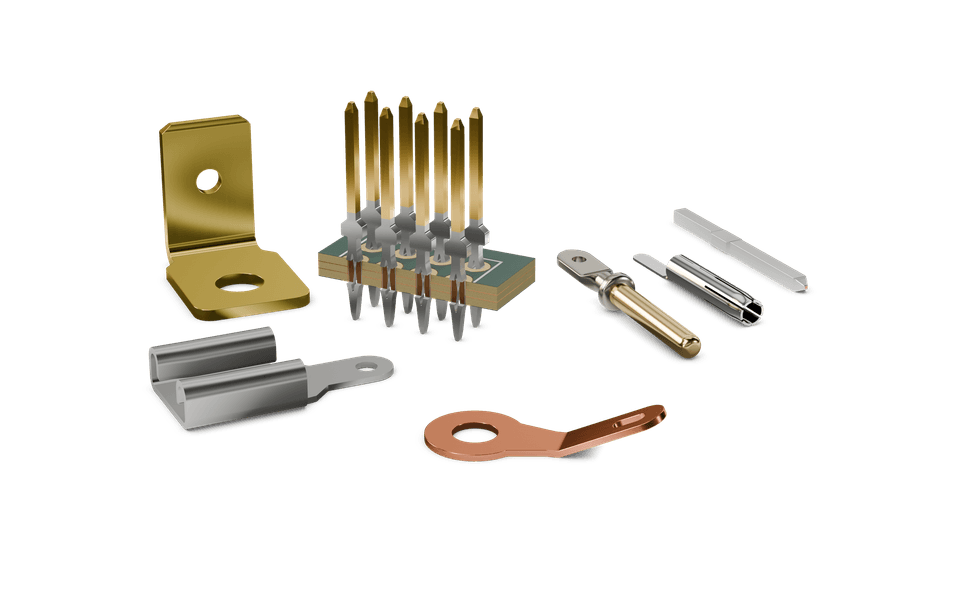
Plug contacts
Press-fit pins, flat tabs, round pin, socket and fork contacts
-
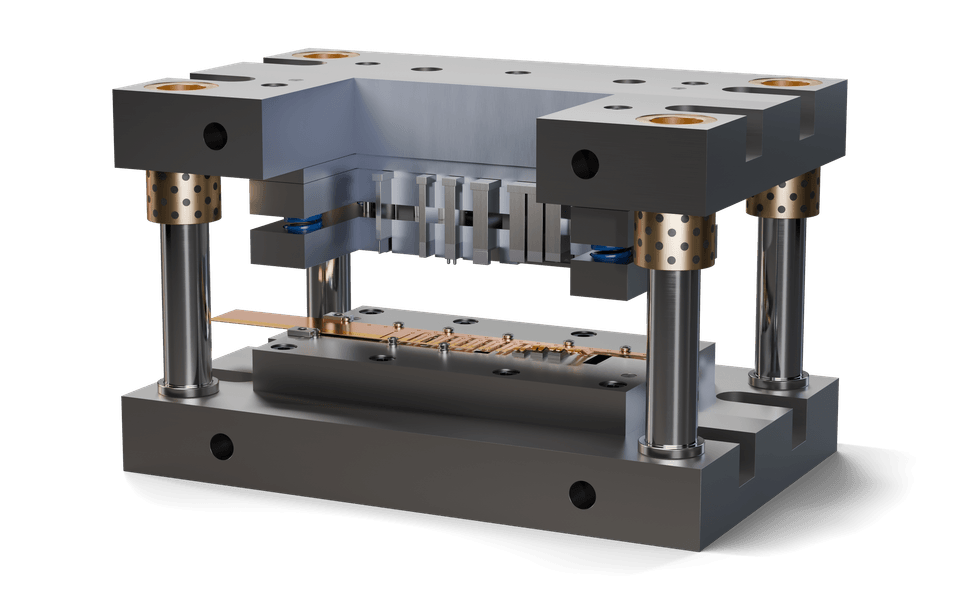
Tool making
Stamping and bending tools from our own toolroom
Request a quote
Request contact lamellae
Configure standard sizes directly in the configurator above. For special sizes, send us your drawing with mating diameter, current and quantity, and we will choose the right design and lay out the lamella with you.