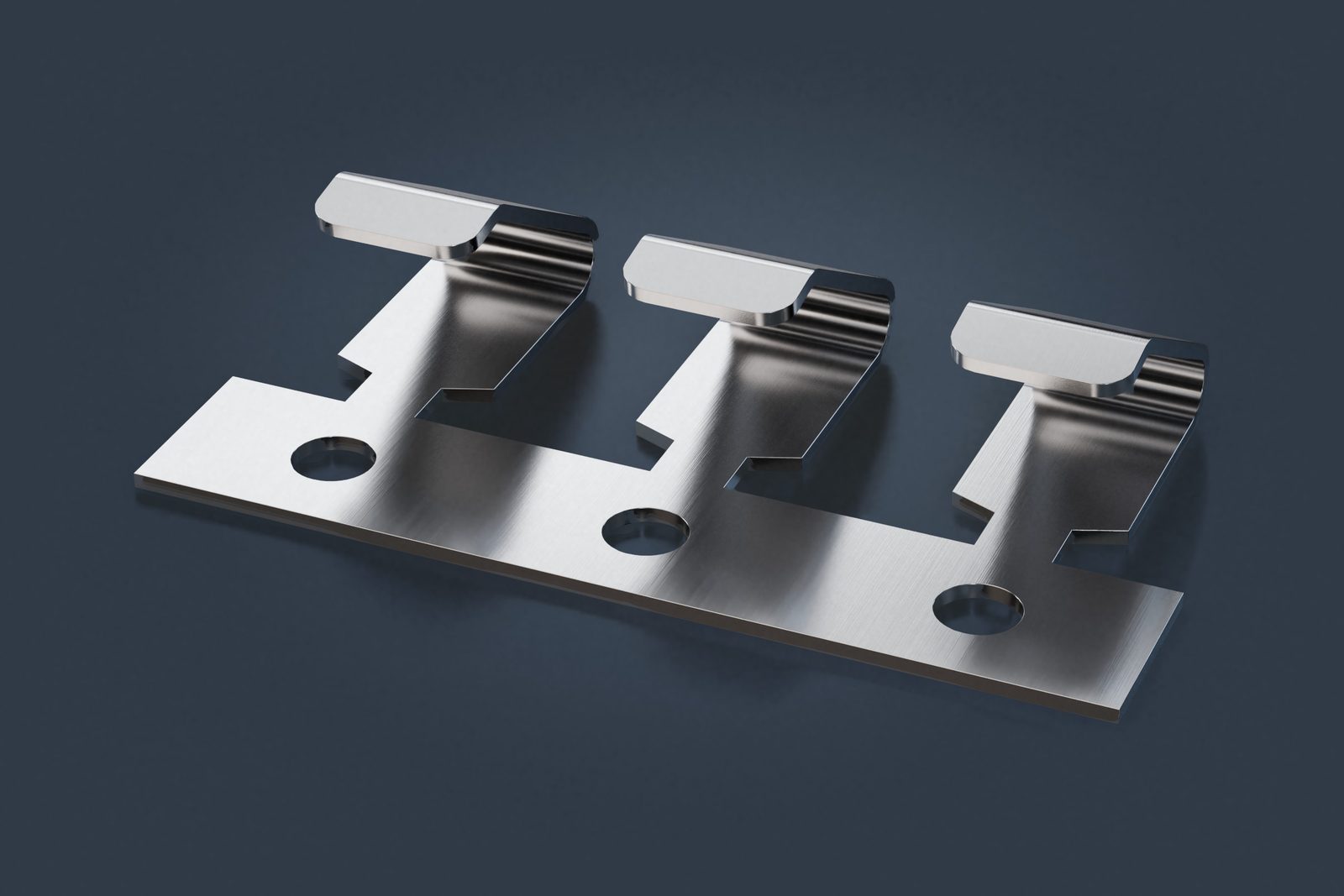
Terminal parts
Clamp bodies, clamp frames, cage and leaf springs
Services
ACA Atlas Contacte in Wehr (Baden), Germany, supplies stamped and bent parts with cut or formed threads, including formed threads in extruded holes, with captive nuts or as riveted and welded assemblies. Thread cutting and assembly are part of the scope of our ISO 9001:2015 quality management system.
01 Overview
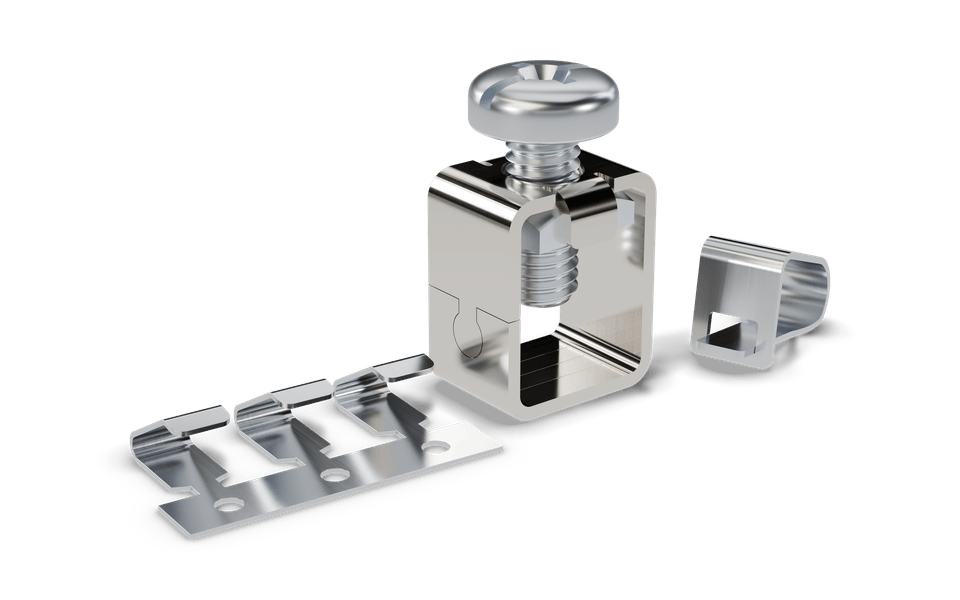
Tapping, thread forming and assembly are secondary operations that turn a stamped part into a component ready for installation. A stamped part is rarely the end of the chain: terminal clamp bodies need a thread, clamp frames a nut, contact bridges a riveted contact.
The more of these steps the manufacturer of the stamped part carries out, the fewer parts, suppliers and incoming inspections end up with you. At ACA they run in the same plant as the stamping and within the same quality management system.
02 Threads
| Criterion | Tapping (thread cutting) | Thread forming |
|---|---|---|
| Principle | The tap cuts the thread into the pilot hole, producing chips. | The forming tap presses the thread into the material without chips. |
| Chips | are produced and must be removed reliably | none |
| Thread flanks | grain flow interrupted | work-hardened by cold forming, continuous grain flow |
| Pilot hole | matched to the tap | larger than for cutting, matched to the forming tap |
| Suited to | hard or less formable materials | readily formable materials such as steel and many copper alloys, parts where chips are a risk |
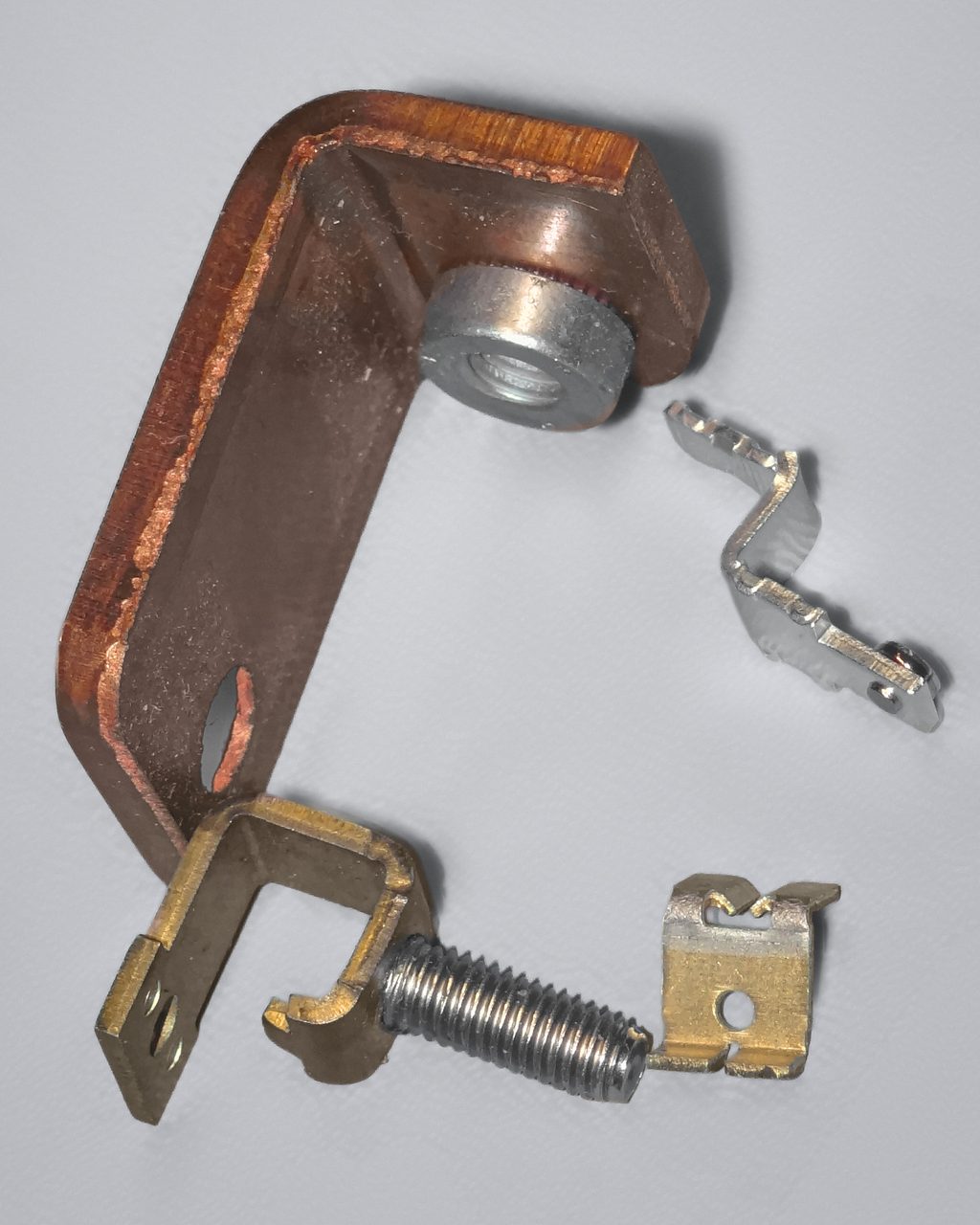
For electrical components there is a strong case for forming: a loose chip in a terminal or a switching device can cause a short circuit. Which process fits depends on material, sheet thickness and thread size. At ACA, formed threads are made inline in the stamping die, with no separate operation.
03 Extruded holes
An extruded hole is a hole whose edge is drawn up into a collar during stamping. A thread in an extruded hole is longer than the sheet is thick, so it carries more thread turns than a thread in flat sheet.
ACA Atlas Contacte forms threads in extruded holes without chips, like all formed threads inline in the stamping die. The part stays a single stamped and bent part, with no extra nut and no chips. We check on your drawing whether the extruded hole is enough for your tightening torque or whether a captive nut is needed.
04 Captive nuts
In thin sheet, the load-bearing thread turns are often not enough for the required tightening torque. A captive nut solves this and allows a compact design. Our terminal parts page shows examples: terminal clamp bodies and clamp frames for screw-type terminals.
We decide from your drawing whether a formed thread in the sheet, a thread in an extruded hole or a captive nut is the better solution. Sheet thickness, material, tightening torque and the available space are what matter.
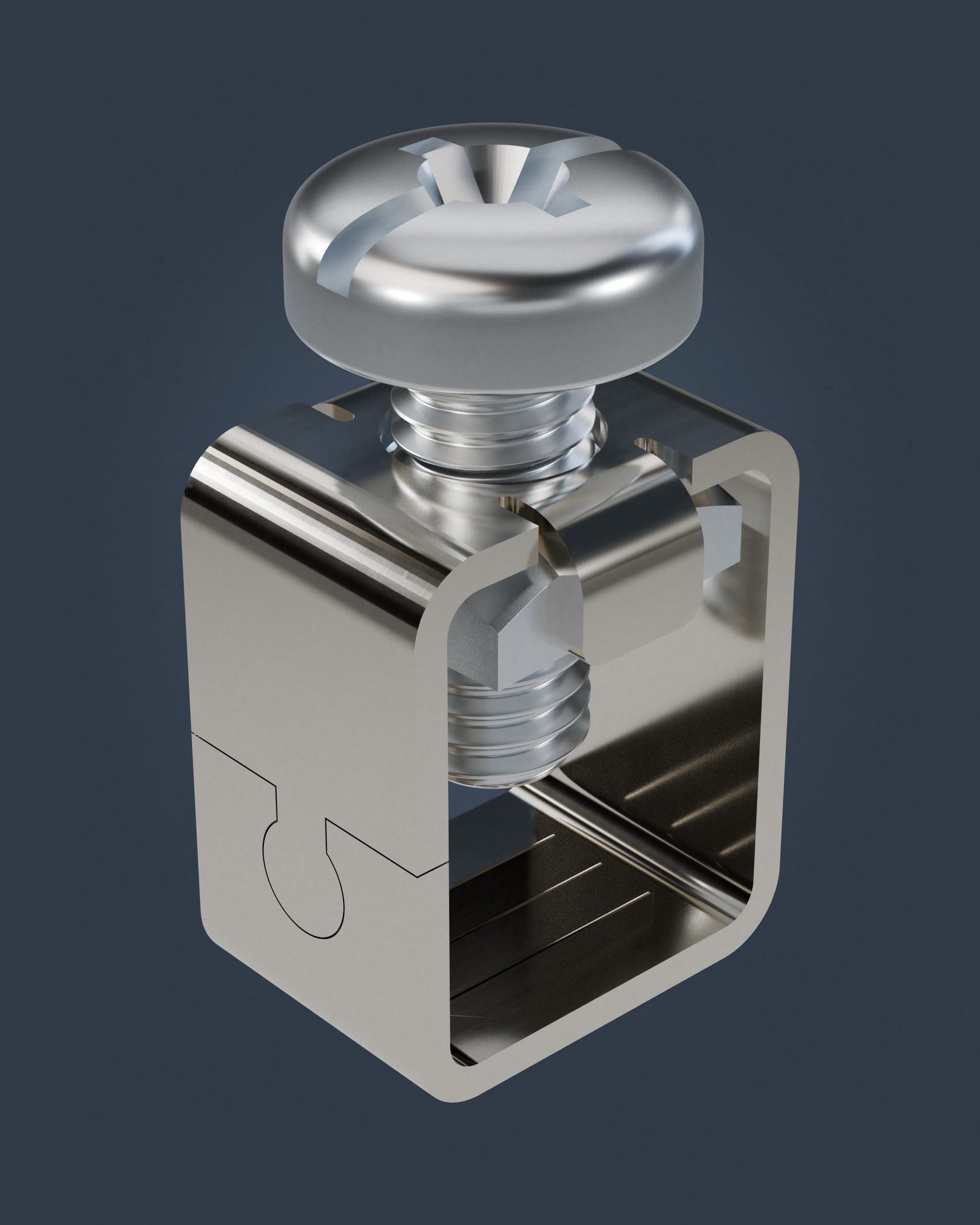
Drag to rotate, scroll or pinch to zoom. Keyboard: arrow keys rotate, plus and minus zoom, 0 resets the view.
05 Assembly
At ACA, assembly means joining stamped parts to each other and to contact pieces to form a metal assembly, riveted or welded, and completing it. You receive one inspected component instead of several individual parts that you have to put together yourself.
How far assembly should go for your part depends on volume, inspection effort and your own production. We agree the joining methods and the inspection scope with you. See assemblies for the parts and contact welding and riveting for the joining methods.
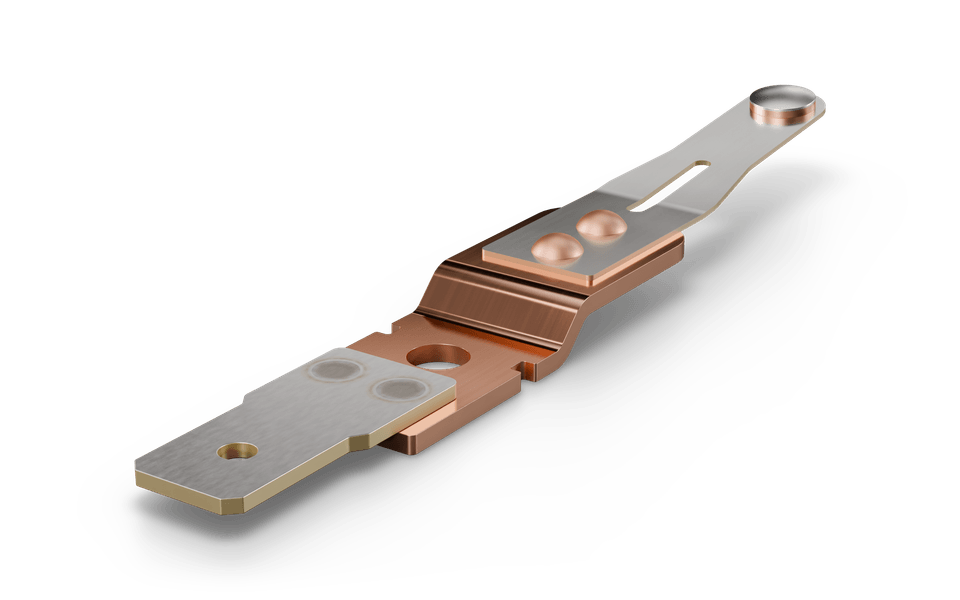
Drag to rotate, scroll or pinch to zoom. Keyboard: arrow keys rotate, plus and minus zoom, 0 resets the view.
06 Delivery forms
For manual assembly and feeding systems, as long as the parts do not tangle.
Parts on the carrier strip for automatic processing on your assembly line.
Individual parts in tape for automatic placement.
Parts arranged in magazines, for example springs that would tangle as bulk goods.
FAQ
Yes. ACA Atlas Contacte cuts and forms threads in stamped and bent parts. For electrical components, chipless thread forming is often the better choice, because no chips are produced and the thread flanks are work-hardened by cold forming. At ACA, formed threads are made inline in the stamping die.
Yes. ACA Atlas Contacte also forms threads in extruded holes, where the hole edge is drawn up into a collar. This makes the thread longer than the sheet is thick, so it carries more thread turns. Like all formed threads, it is made inline in the stamping die.
The possible thread size depends on material and sheet thickness. Tell ACA Atlas Contacte the thread, material, sheet thickness and required tightening torque, and we will check feasibility and, for thin sheet, propose a captive nut if needed.
A captive nut is fitted into the stamped part by the manufacturer so that it cannot be lost, for example in a terminal clamp body. This provides a load-bearing thread even where the sheet itself would be too thin, and keeps the component compact.
Yes. Assembly is part of the ISO 9001 certified scope of ACA Atlas Contacte. Stamped parts are riveted or welded, joined to contact pieces and completed into ready-to-install assemblies.
Clamp bodies, clamp frames, cage and leaf springs
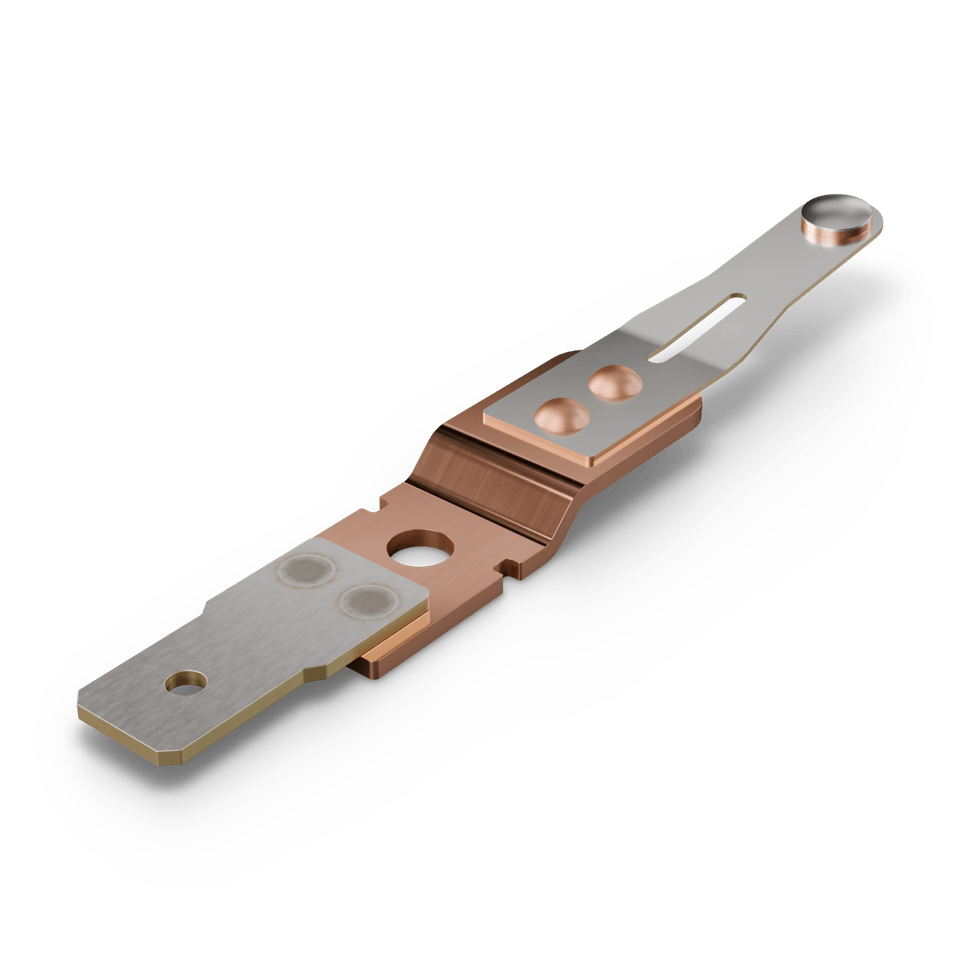
Riveted and welded assemblies
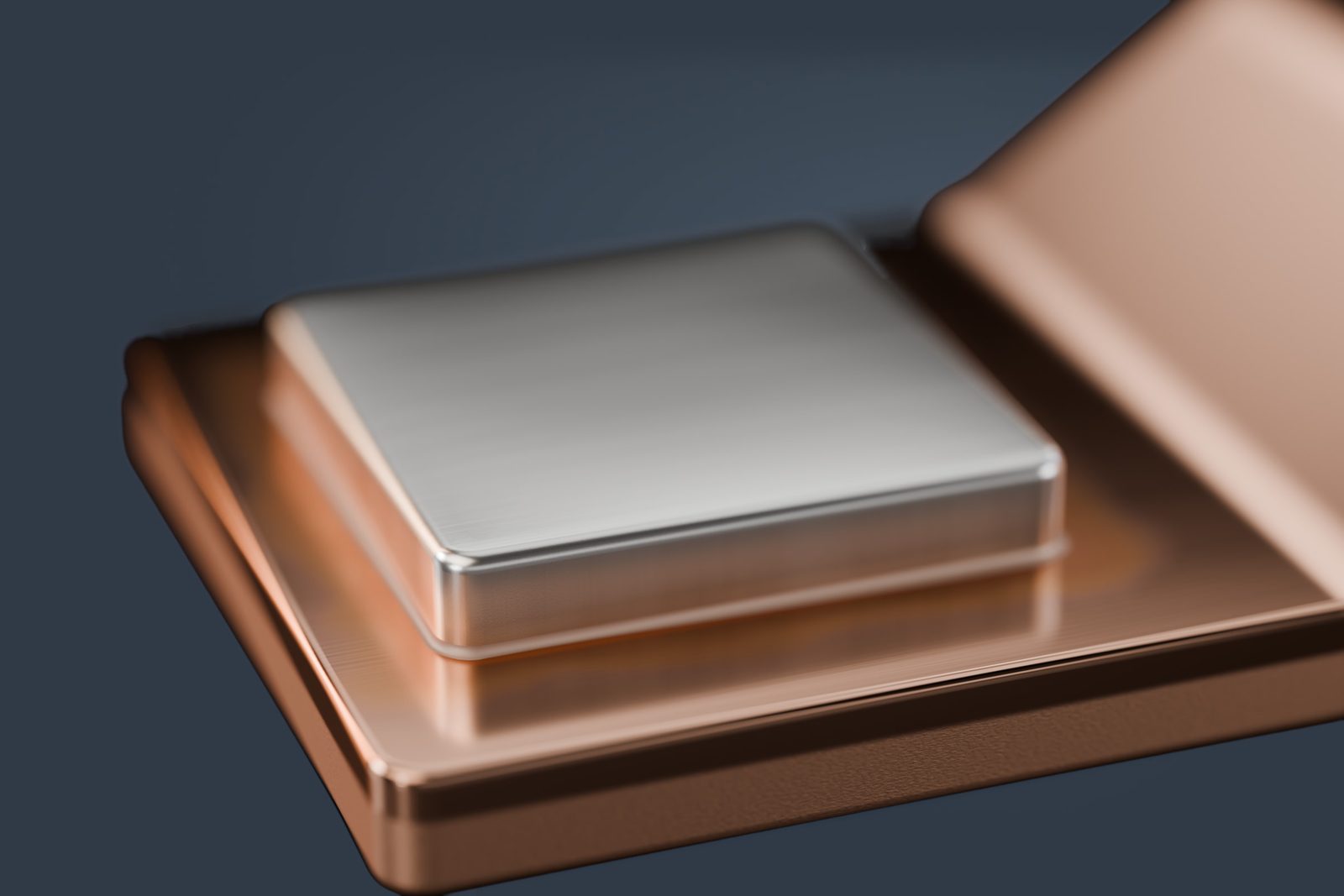
Resistance welding and riveting in-house
Request a quote
Send us your drawing or parts list with thread specification, tightening torque and quantity. We will tell you which operations we can take on and quote for the ready-to-install part.