Plug contacts
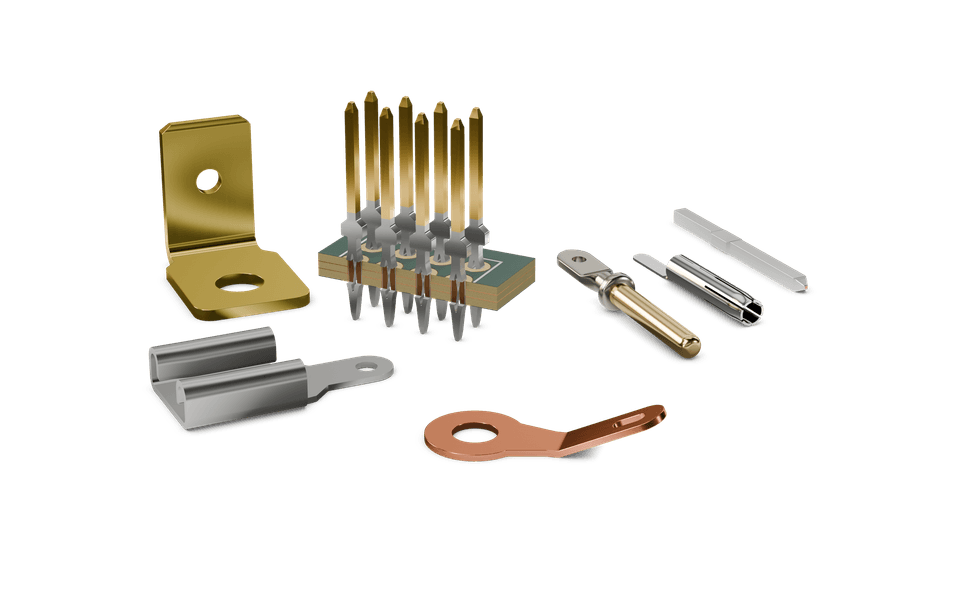
Press-fit pins, flat tabs, round pin, socket and fork contacts
Plug contacts
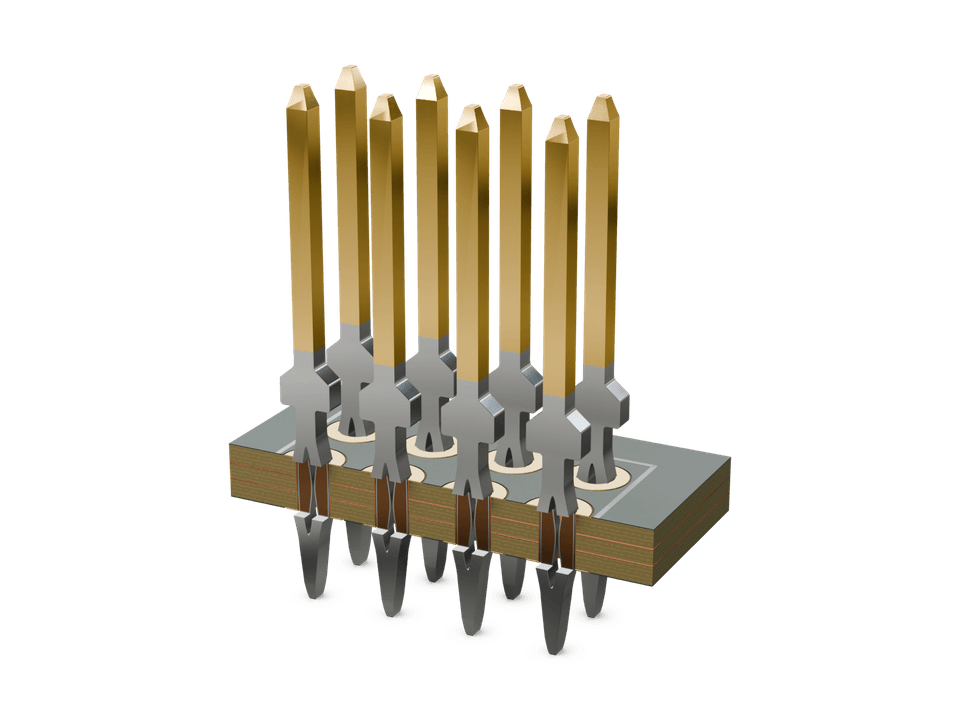
Press-fit pins, also called press-in contacts, connect a PCB to a connector without a solder joint. ACA Atlas Contacte in Wehr (Baden), Germany, stamps them with a press-fit zone to your drawing, loose or on carrier strip.
01 Principle
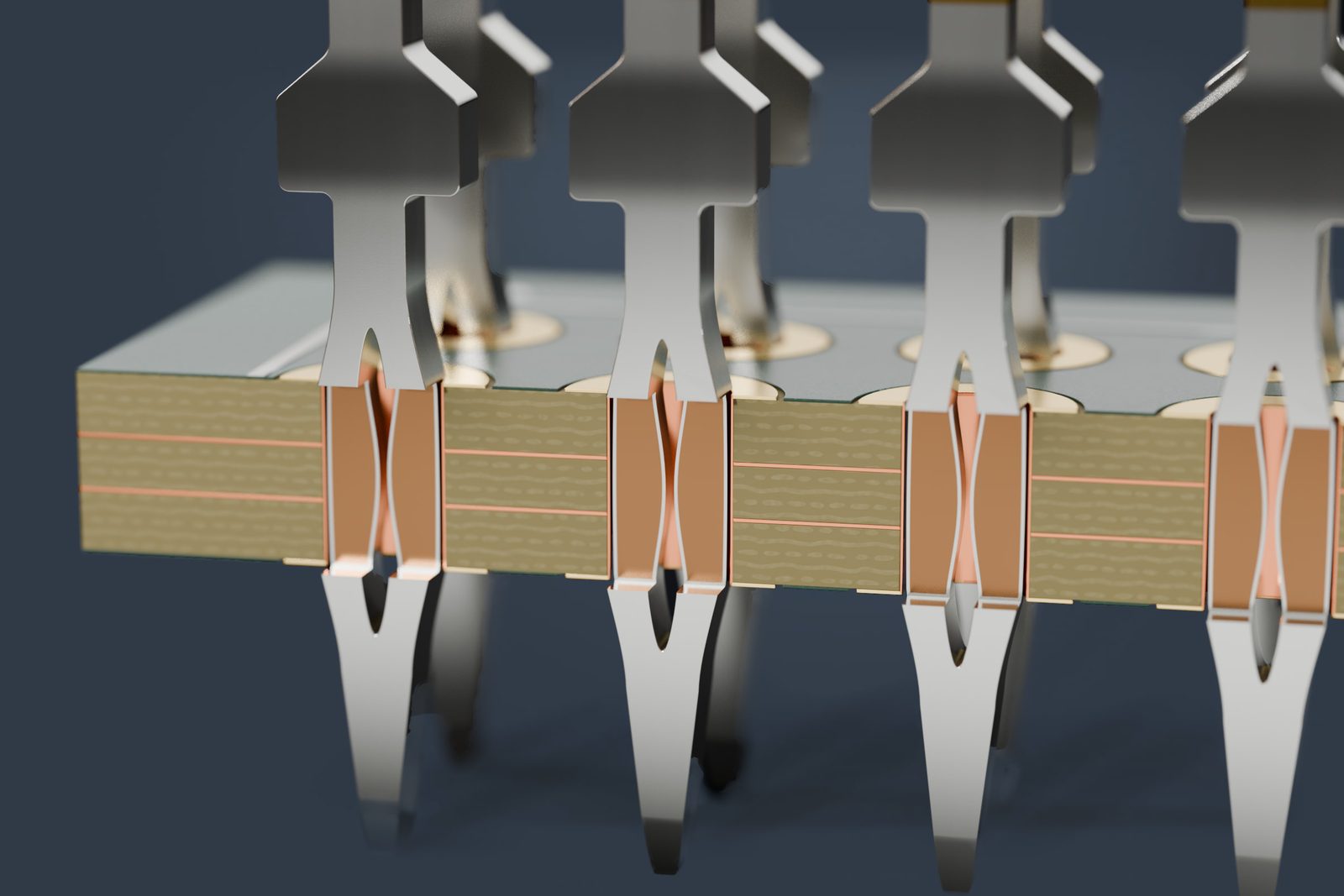
A press-fit pin is a contact pin with a press-fit zone slightly larger than the plated through-hole of the PCB. During pressing, the zone deforms, the hole wall deforms, or both. The result is a cold-formed, gas-tight joint with a high normal force between pin and copper barrel. Solder, flux and an extra soldering pass, with its heat load on the populated board, are no longer needed.
Requirements, test methods and application guidance for these joints are described in IEC 60352-5 (DIN EN 60352-5), part 5 of the series on solderless connections. It is the usual reference when connector and equipment manufacturers qualify a press-fit connection. What is qualified is always the system of pin, PCB and pressing process, and that qualification is the user's responsibility. We supply the press-fit pin with the agreed characteristics and the samples for your tests.
The press-fit zone is the most demanding feature of the part. Its cross-section, edge condition and burr position decide whether the hole survives pressing intact or is damaged. We check the zone on your drawing for manufacturability, build the tool stations for it in our own tool shop and adjust them there if your press-in tests call for a correction.
02 Press-fit zones
| Criterion | Compliant press-fit zone | Solid press-fit zone |
|---|---|---|
| Principle | The zone deflects during pressing and holds the normal force through its spring-back | The zone stays largely rigid and the hole wall deforms |
| Typical shape | Eye-of-needle or slotted zone | Solid cross-section with defined edges |
| Press-in force | lower | higher |
| Hole tolerance requirement | covers a wider tolerance range | needs a tight tolerance range |
| Stress on the PCB | lower | higher |
Qualitative overview based on the general state of the art. The right zone depends on board thickness, hole build-up and contact geometry and is defined from your hole specification.
03 Design
A press-fit pin starts with the PCB, not with the pin. Only once the hole diameter, tolerance and barrel build-up are fixed can the press-fit zone be designed. We settle these points before tool making starts.
04 Advantages
No solder, no flux, no additional heat load on the board and its components.
The high normal force between zone and barrel keeps the contact interface sealed against the environment.
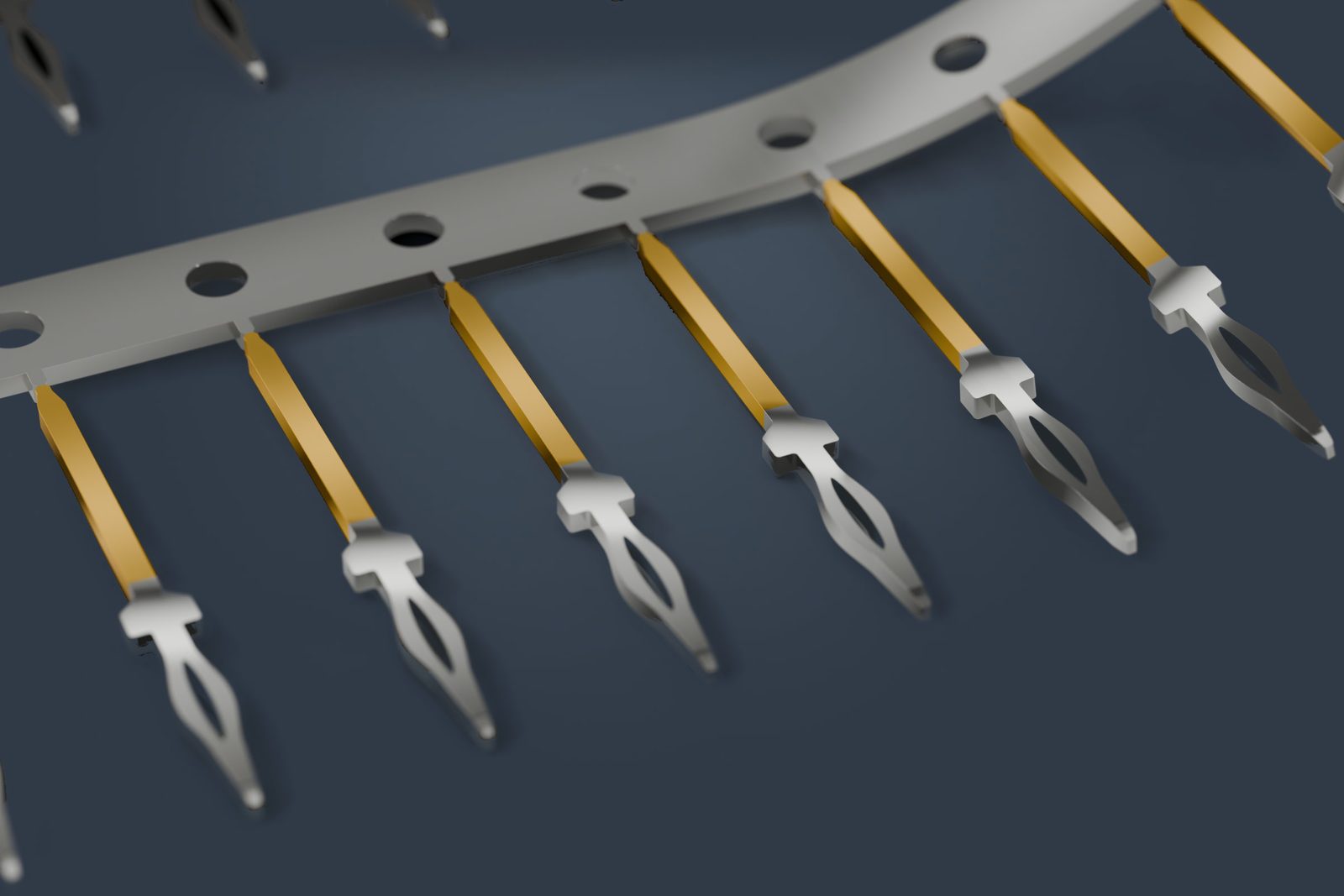
Press-fit pins on carrier strip or taped can be fed and pressed automatically, even after the other components have been soldered.
With selective plating, a pin can carry gold on the mating end and tin on the press-fit zone, for example.
05 Technical data
| Property | Value |
|---|---|
| Designs | Press-fit pins, press-in pins, contact pins with press-fit zone |
| Press-fit zone | to customer drawing |
| Reference standard | IEC 60352-5 (DIN EN 60352-5), press-in connections |
| Materials | Copper alloys to your specification |
| Finishes | tin, silver, gold, nickel, also selective (via plating partners) |
| Delivery forms | loose, on carrier strip (reeled), taped |
| Press-in and retention force | on request, per project |
| PCB hole diameter | to your specification |
| Quantities | Samples to large series |
We cite IEC 60352-5 (DIN EN 60352-5) as the reference standard for designing and testing press-fit connections. This does not imply that our parts are certified to it. Forces and dimensions are defined per project.
Last updated:
06 Process
Hole, tolerance, barrel build-up, board thickness and the finish required on the mating end.
We check the press-fit zone on your drawing for manufacturability and build the tool stations in our own tool shop.
You check press-in and retention force and the condition of the holes on your boards. We make any corrections directly in the tool.
Delivered loose, on carrier strip or taped to suit your press-fit machine.
FAQ
A press-fit pin is a contact pin whose press-fit zone is slightly larger than the plated through-hole of a PCB. Pressing it in creates a cold-formed, gas-tight joint without solder. IEC 60352-5 (DIN EN 60352-5) defines the requirements and tests.
No, we do not hold a certification to this standard. The standard defines requirements and test methods for the press-fit connection as a system of pin, PCB and process, and that qualification is carried out by the user. We make the pins with the agreed characteristics and supply samples for your tests. Any additional testing is agreed per project.
Finished hole diameter and tolerance, board thickness, build-up and finish of the copper barrel, and the planned press-in depth. With these data the press-fit zone can be designed.
By the general state of the art, compliant zones such as the eye-of-needle need less press-in force and cover wider hole tolerances. Solid zones need tighter tolerances and higher forces. The choice depends on the PCB specification and the loads in service. We advise you from the manufacturing side.
Yes. With selective plating through our plating partners, the mating end can be gold-plated and the press-fit zone tin-plated, for example.
Yes. We supply press-fit pins loose, on carrier strip wound on reels, or taped, matched to the feeder of your press-fit machine.
Press-fit pins, flat tabs, round pin, socket and fork contacts
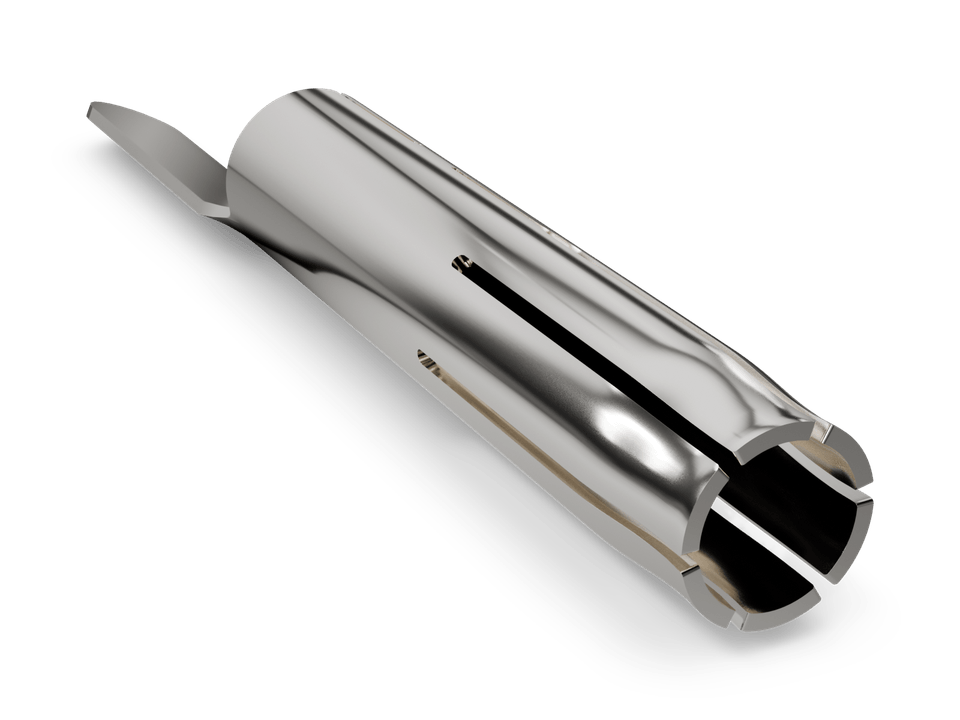
Stamped flat, then rolled into a pin or a sleeve
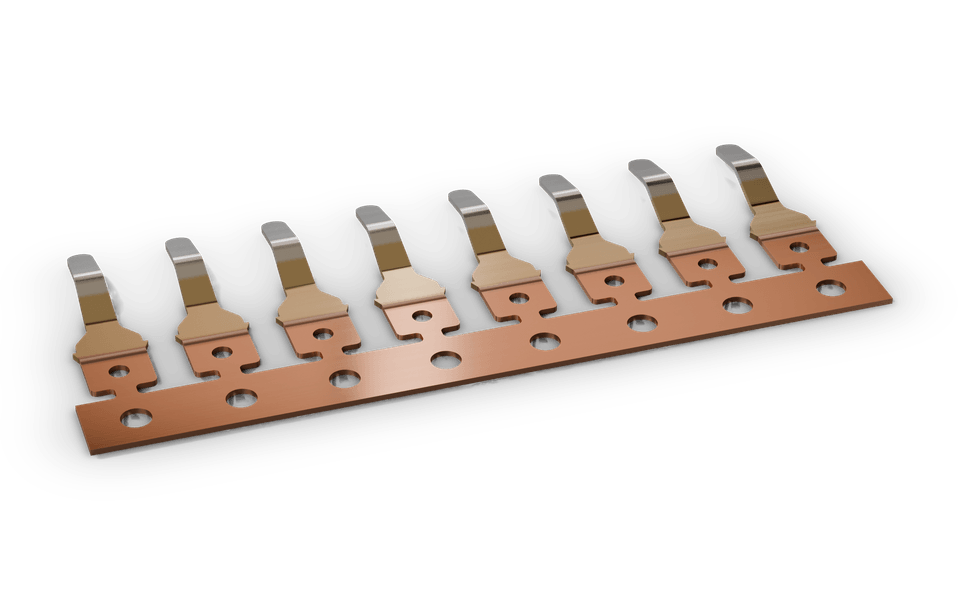
Single and multi-component strips, selectively plated on request
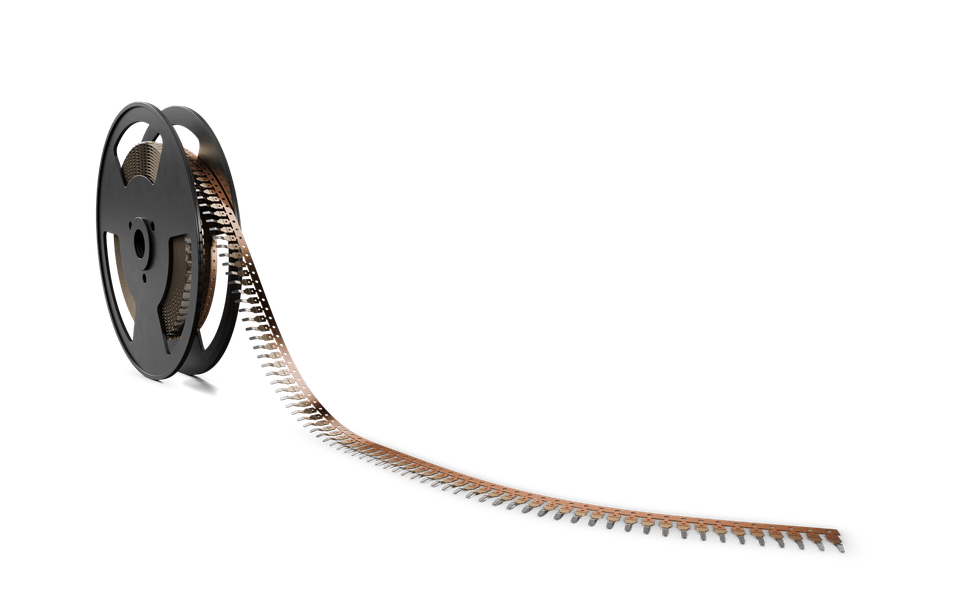
Electroplated finishes through qualified partners
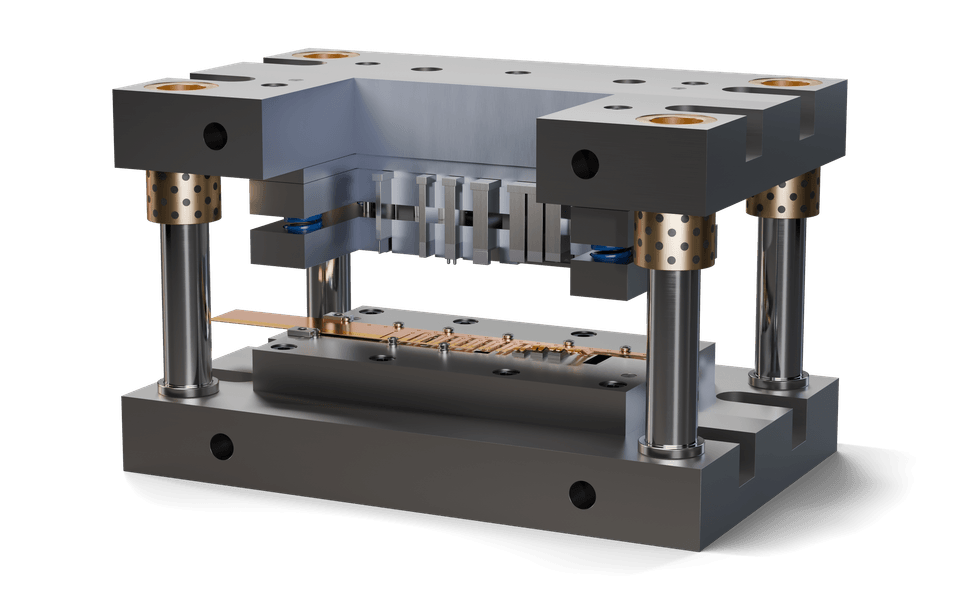
Stamping and bending tools from our own toolroom
Rules of thumb for bend radii, hole diameters, web widths and tolerances
Request a quote
Send us the pin drawing and the hole specification of your PCB. We review both together and send you a quote with a sample plan.