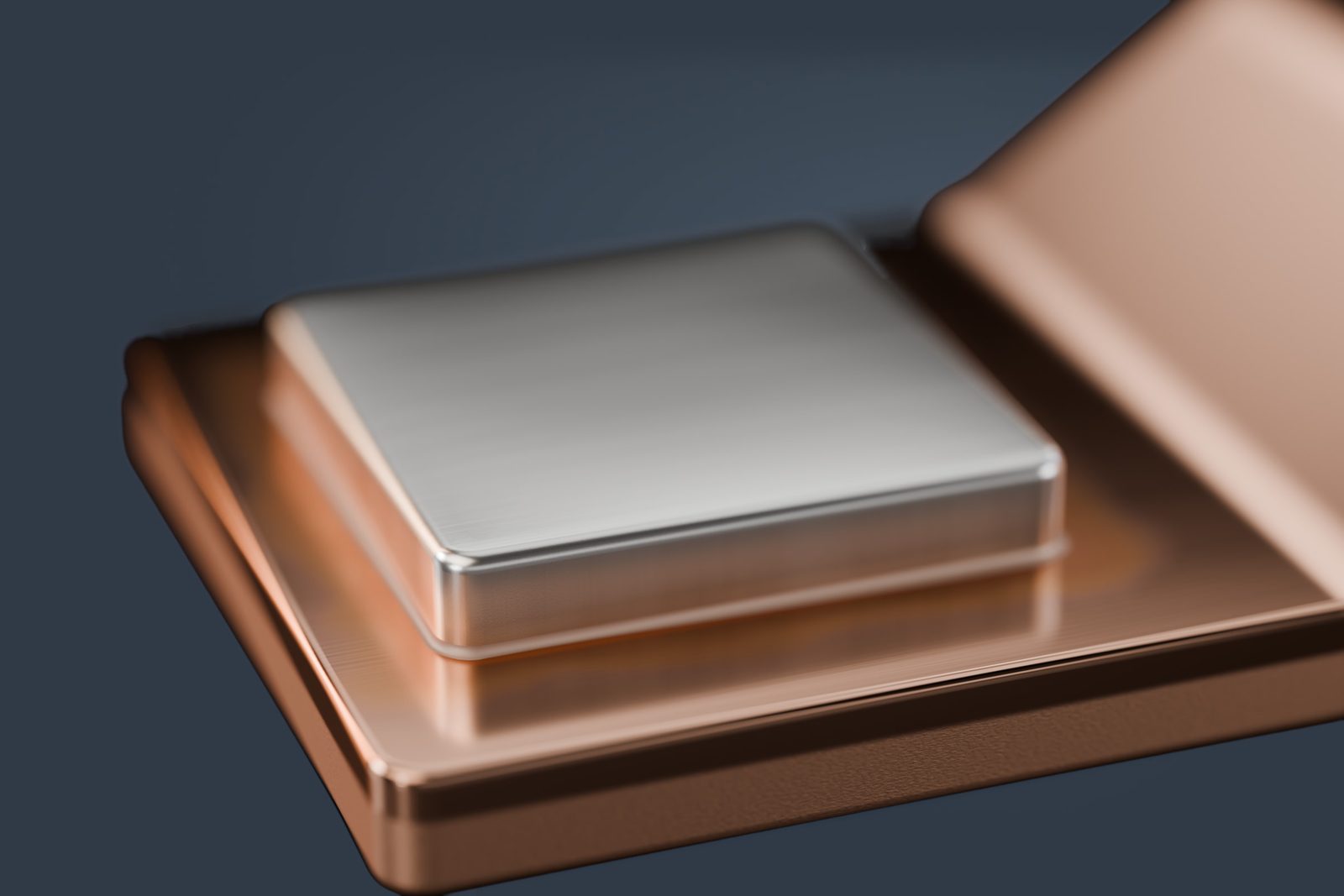
Riveted and welded contact parts
Contacts welded inline in the stamping process or riveted on our own riveting station
Products
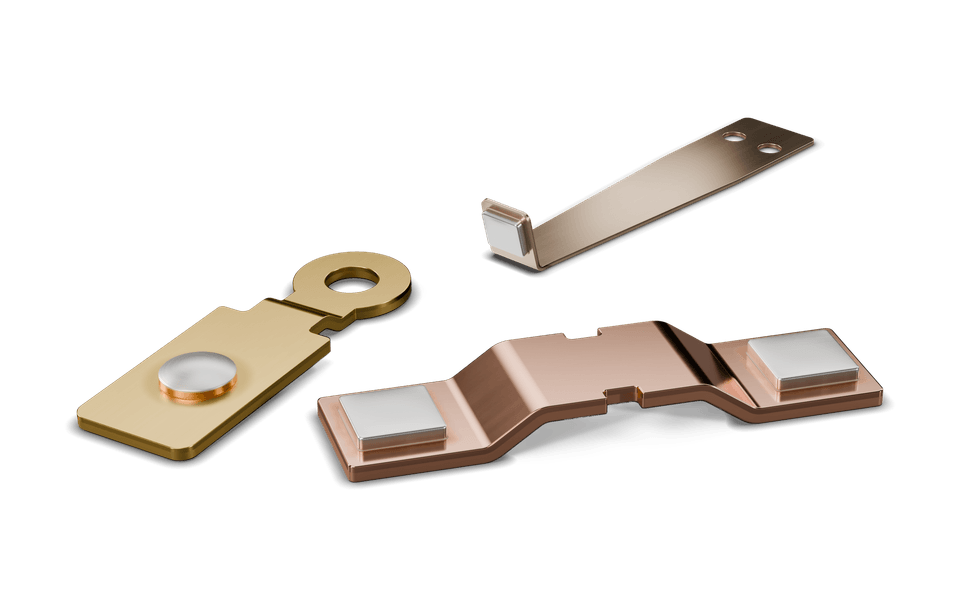
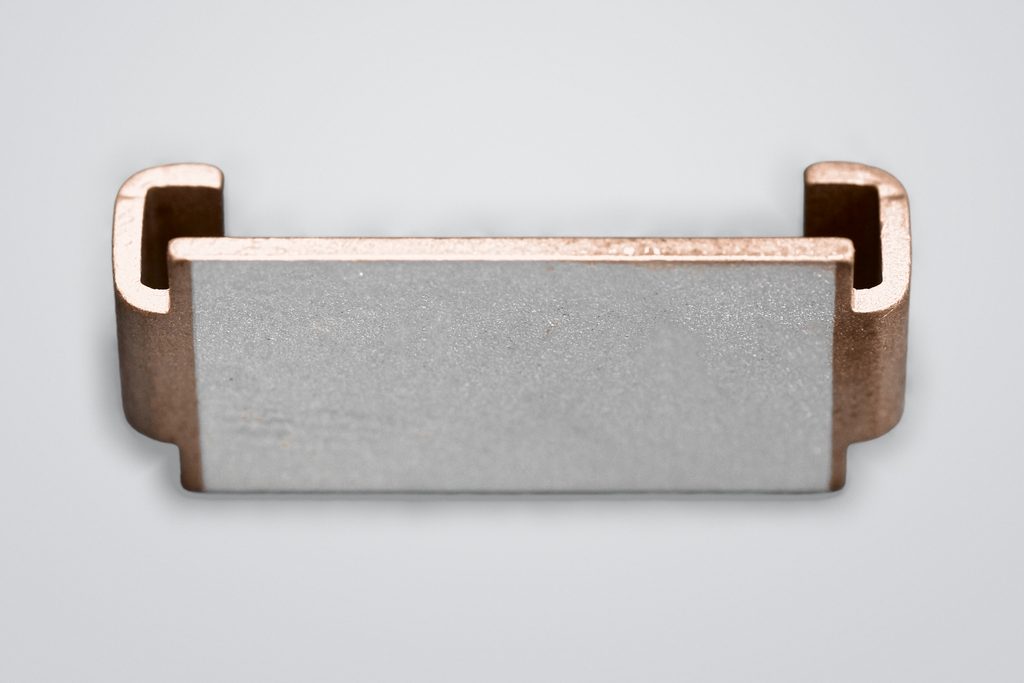
Switching contacts, switching contact pieces, contact bridges and contact carriers for switches and switching devices: stamped, formed and fitted with a riveted or welded contact. ACA Atlas Contacte in Wehr (Baden), Germany, makes the carrier and joins the contact in-house.
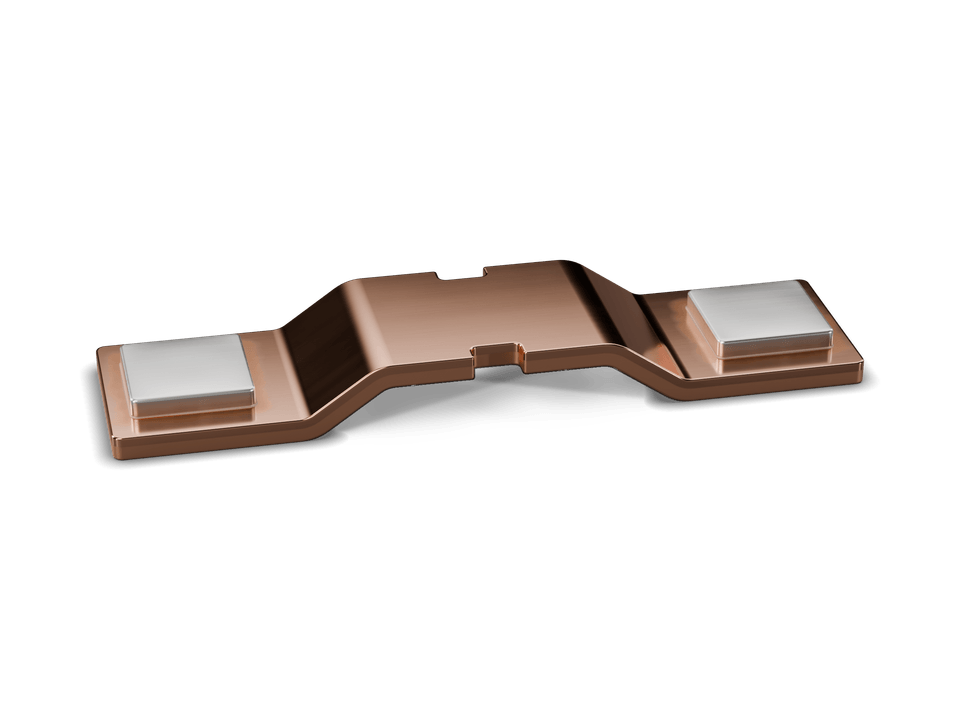
Drag to rotate, scroll or pinch to zoom. Keyboard: arrow keys rotate, plus and minus zoom, 0 resets the view.
01 Overview
In a switching device, the contact tip opens and closes the circuit. It is carried by a stamped and bent part: a contact bridge, a contact carrier or a contact spring. This carrier conducts the current, applies the contact force and holds the tip exactly where the device needs it. We make the switching contact as a complete unit, from strip to the finished, tipped part.
There are three ways to combine carrier and contact material: riveting, welding, or stamping the part directly from clad strip or contact profile. Clad strip is a two-layer contact material, also called bimetal, of carrier material and contact layer. We handle all three in-house: welding inline in the stamping process, riveting on a separate riveting station. The joining processes are described on the page contact welding and riveting.
Switching capacity, service life and contact material are specified by the device manufacturer. Our contribution is a switching contact that meets these requirements reliably in series production: contact position, contact height, secure fixing of the tip and spring force of the carrier.
02 Portfolio
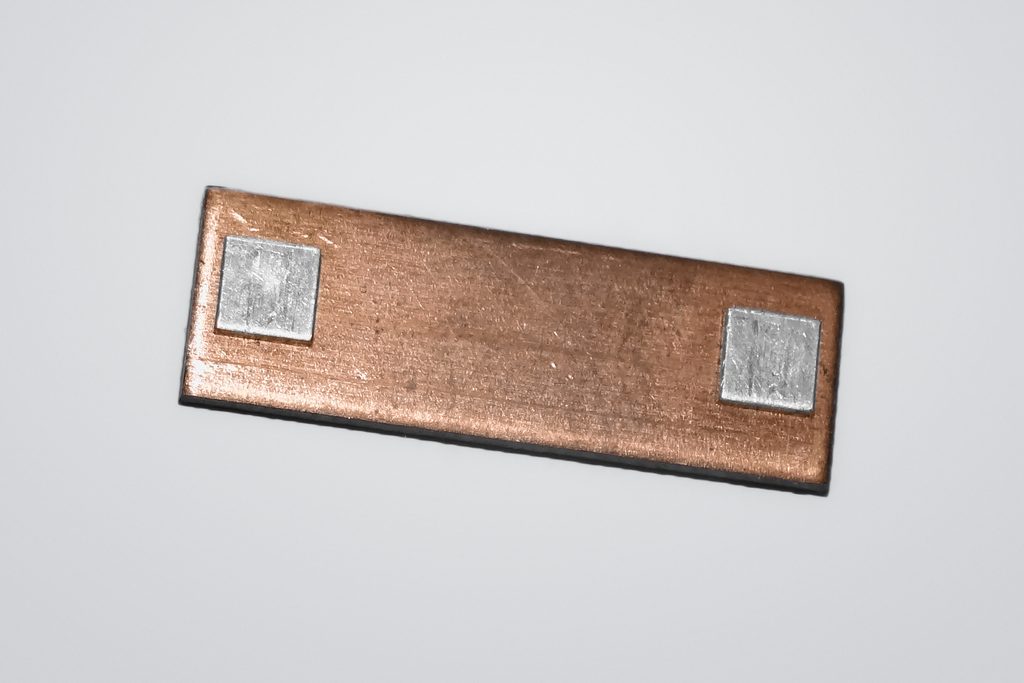
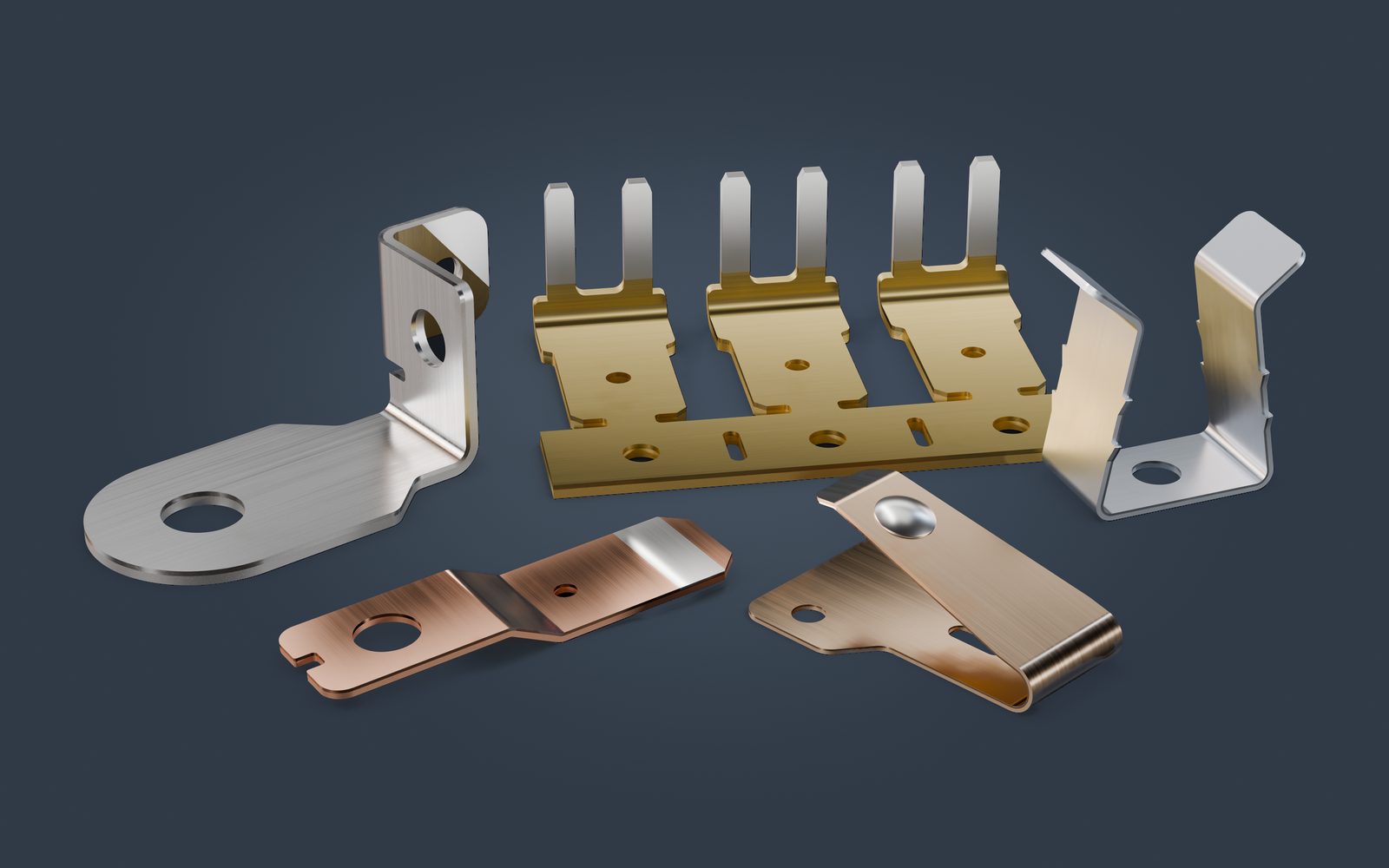
A selection of the switching contacts we make to customer drawings.
03 Methods
| Criterion | Riveted | Welded | Clad strip or contact profile |
|---|---|---|---|
| Joint | mechanical joint (form and force fit) via the rivet heads | metallurgical bond by resistance welding | contact material is part of the semi-finished strip |
| Hole in the carrier | required | not required | not required |
| Back of the carrier | closing head protrudes | flat | flat |
| Contact material placed | locally at the contact point | locally at the contact point | as a stripe along the strip |
| Production at ACA | in-house, on a separate riveting station | inline in the stamping process | stamping and forming from clad strip |
Qualitative overview. The right route depends on contact material, carrier geometry, quantities and your inspection requirements.
04 In depth
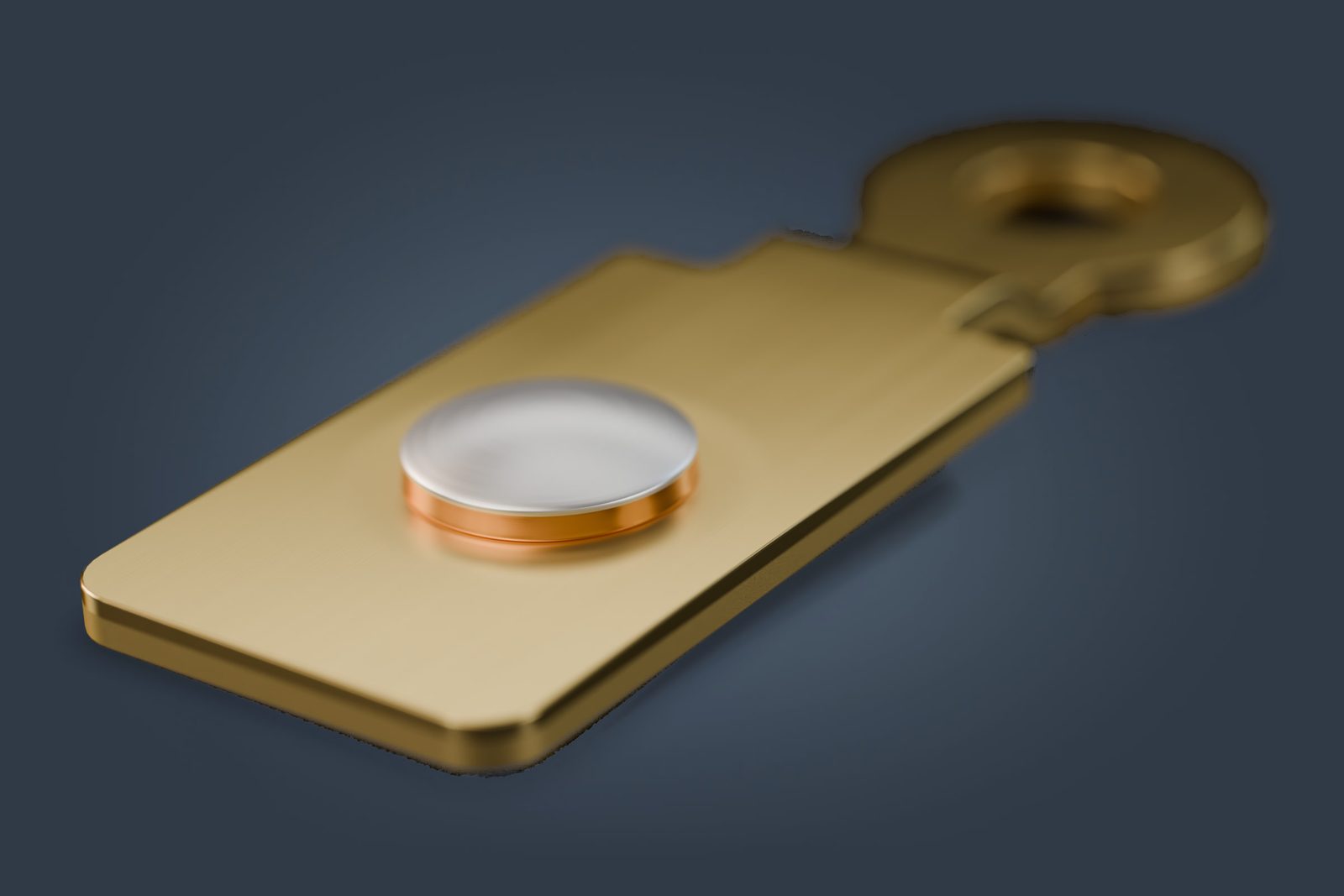
In inline welding, we resistance-weld the contact tip onto the carrier inside the progressive die, with no hole and a flat back. A riveted contact is held by form and force fit between set head and closing head, largely independent of whether the material pair can be welded. Riveting does not take place in the progressive die but on a separate riveting station in-house.
The page riveted and welded contact parts covers the process in the die and design notes. Both joining methods are compared on the page contact welding and riveting.
05 Characteristics
The tip must sit where the mating contact strikes. We dimension it with you from the functional surfaces of the carrier, not from its outer contour.
Cross-section and material of the carrier determine heating and voltage drop. High-conductivity copper alloys are therefore the norm.
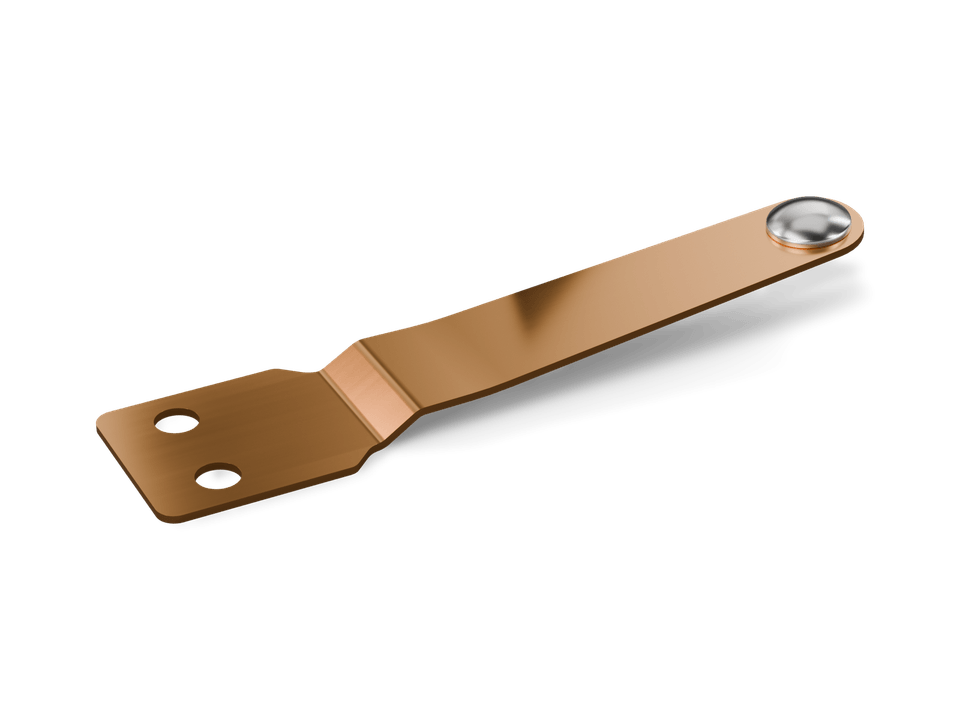
On contact springs with a contact tip, the joint sits outside the highly stressed spring zone so that the spring characteristic is preserved.
Position, height and secure fixing of the contact tip are agreed with you as inspection characteristics. Among other methods, we check dimensions optically on our image measuring system.
06 Technical data
| Property | Value |
|---|---|
| Designs | Contact bridges, contact carriers, tipped contact springs |
| Joining methods | Riveting in-house on a separate riveting station, resistance welding inline in the stamping process |
| Alternative without joining | Stamped parts from clad strip (two-layer contact material, bimetal) or contact profile |
| Contact material | to your specification |
| Carrier materials | Copper alloys, steel, stainless steel and other non-ferrous metals |
| Secondary operations | Threading, assembly, finishes via plating partners |
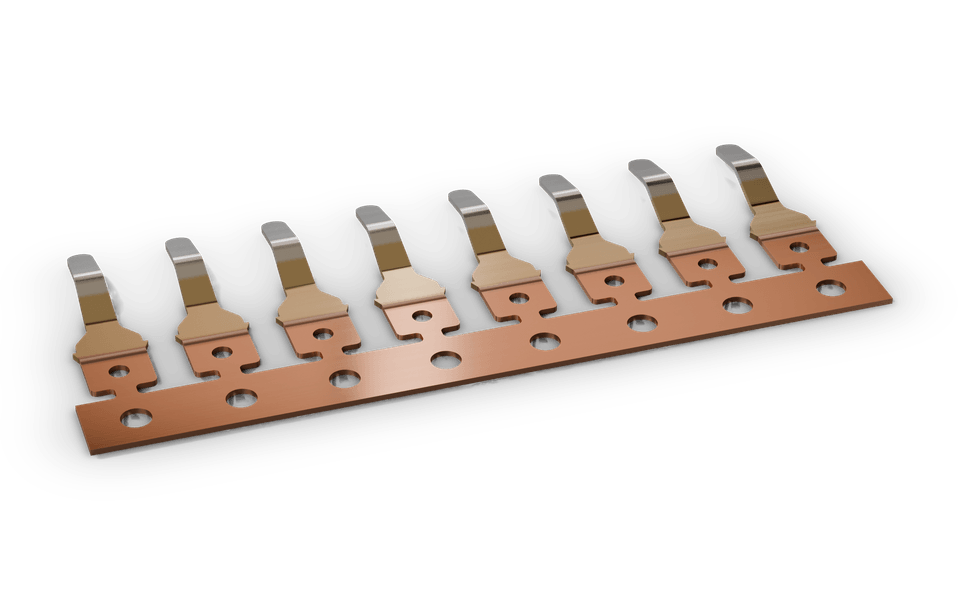
| Delivery forms | loose, on carrier strip (reeled), taped, in magazines |
| Contact tip dimensions | on request |
| Quality management | ISO 9001:2015 (DQS), scope including contact welding |
We make switching contacts to customer drawings. Dimensions of contact tips and carriers are given per project on request.
Last updated:
07 Process
You specify contact material, contact geometry, carrier material, quantities and inspection requirements.
We recommend riveting, welding or clad strip and define the sequence of stamping, joining, forming and plating.
A progressive die for the carrier, with an integrated welding station or for subsequent riveting on the separate riveting station, built in our own tool shop.
First parts off the tool for your switching tests, with measurement of the agreed characteristics.
Production in Wehr, loose or on carrier strip, with in-process inspection.
FAQ
A switching contact piece is the contact part that opens and closes the circuit in a switch or switching device, usually a stamped carrier with a riveted or welded contact tip. The matching contact pieces of one device form a contact set. ACA Atlas Contacte makes switching contact pieces and contact sets of metal parts to customer drawings, while the device manufacturer defines switching capacity and contact material.
You specify the contact material, usually a silver-based one. We check with you whether it suits riveting or welding on your carrier material. Whether we source the contact rivets and contact material or you supply them is agreed in the quotation.
No. Switching capacity, service life and contact material are defined by the manufacturer of the switching device. We make the switching contact to those requirements and advise on everything that concerns production: carrier geometry, joining method, tolerances.
Yes. Besides loose parts we supply parts on carrier strip, taped or in magazines, matched to your assembly line.
Yes, provided they consist of metal parts that are riveted or welded. See assemblies.
Contacts welded inline in the stamping process or riveted on our own riveting station
Clamping, grounding, basket, push-button and retaining springs
Single and multi-component strips, selectively plated on request
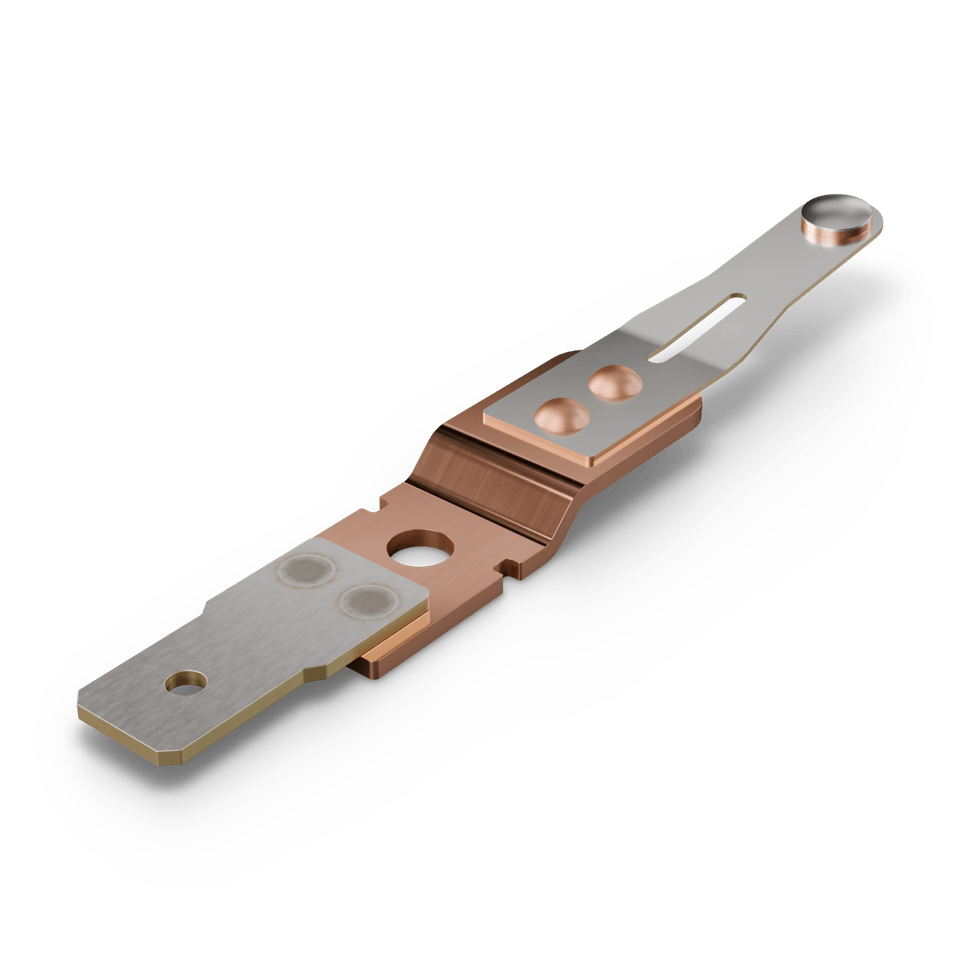
Riveted and welded assemblies
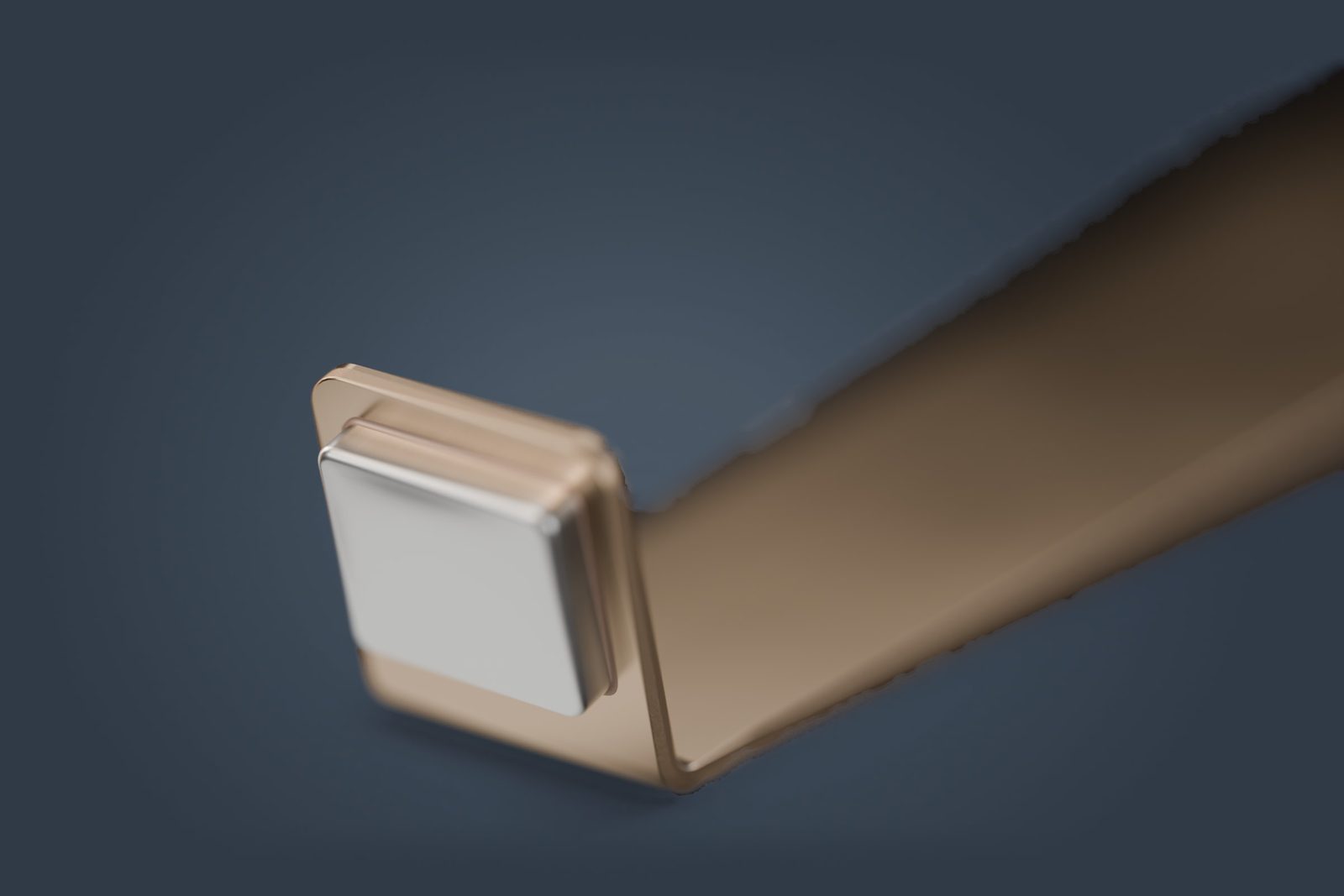
Resistance welding and riveting in-house
Copper alloys, spring steels and contact platings compared
Request a quote
Send us the drawing of the switching contact with contact material, carrier material and quantities. We will reply with a joining concept and a quote.