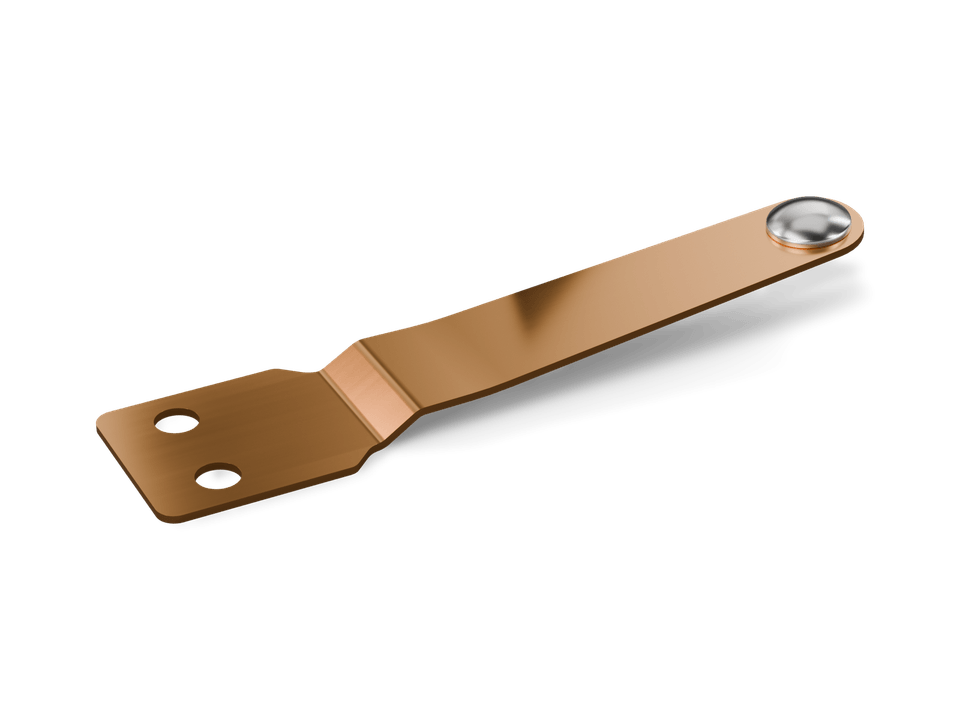
Contact springs
Clamping, grounding, basket, push-button and retaining springs
Products
ACA Atlas Contacte in Wehr (Baden), Germany, makes terminal clamp parts to drawing: clamp bodies and clamp frames for screw terminals with a captive nut or formed thread, plus cage springs (cage-type clamping springs) and leaf springs for spring-clamp terminals.
01 Overview
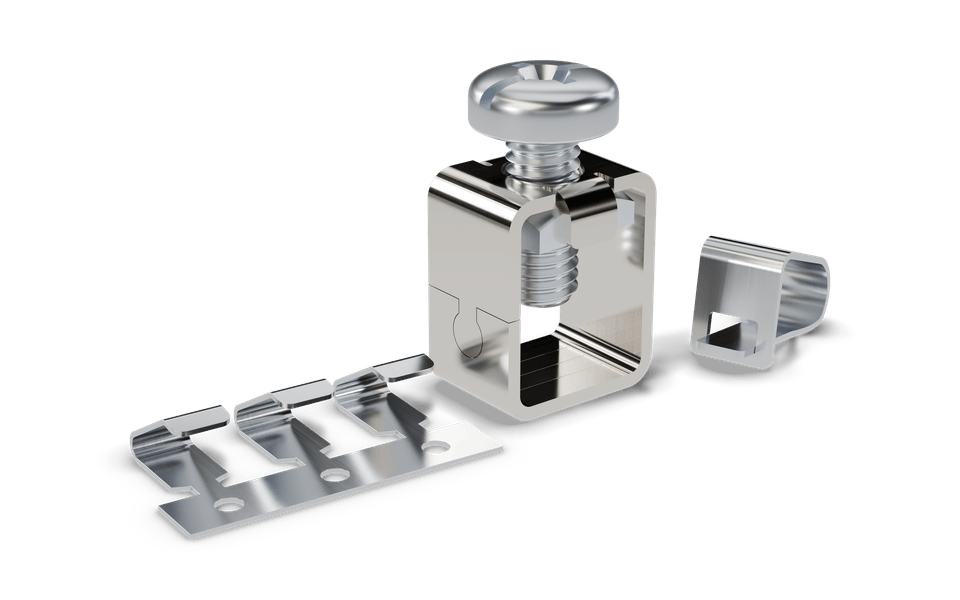
Terminal clamp parts are the metal components of a terminal block that clamp the conductor, made as stamped and bent parts. ACA Atlas Contacte in Wehr (Baden) makes them to drawing for manufacturers of terminals and equipment. We do not sell catalogue terminal blocks. You develop the terminal, and we supply clamp bodies, clamp frames and clamping springs, stamped, bent and pre-assembled on request.
We cover both common connection technologies. In screw terminals, a screw clamps the conductor in a clamp body or clamp frame. In spring-clamp terminals, a cage spring or leaf spring does the job, without a screw and with a spring force that needs no retightening.
We produce the thread for the clamping screw in two ways: as a captive nut, which allows a compact clamp body, or as a thread formed directly in the sheet metal, inline in the stamping die. Both methods are described under threading and assembly.
02 Screw clamps
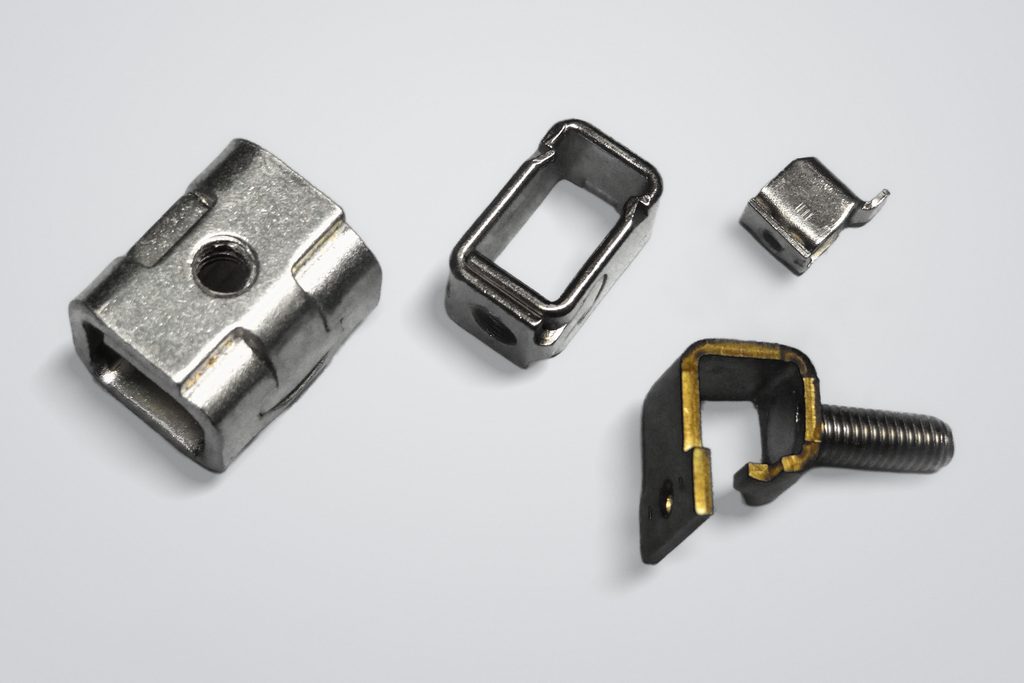
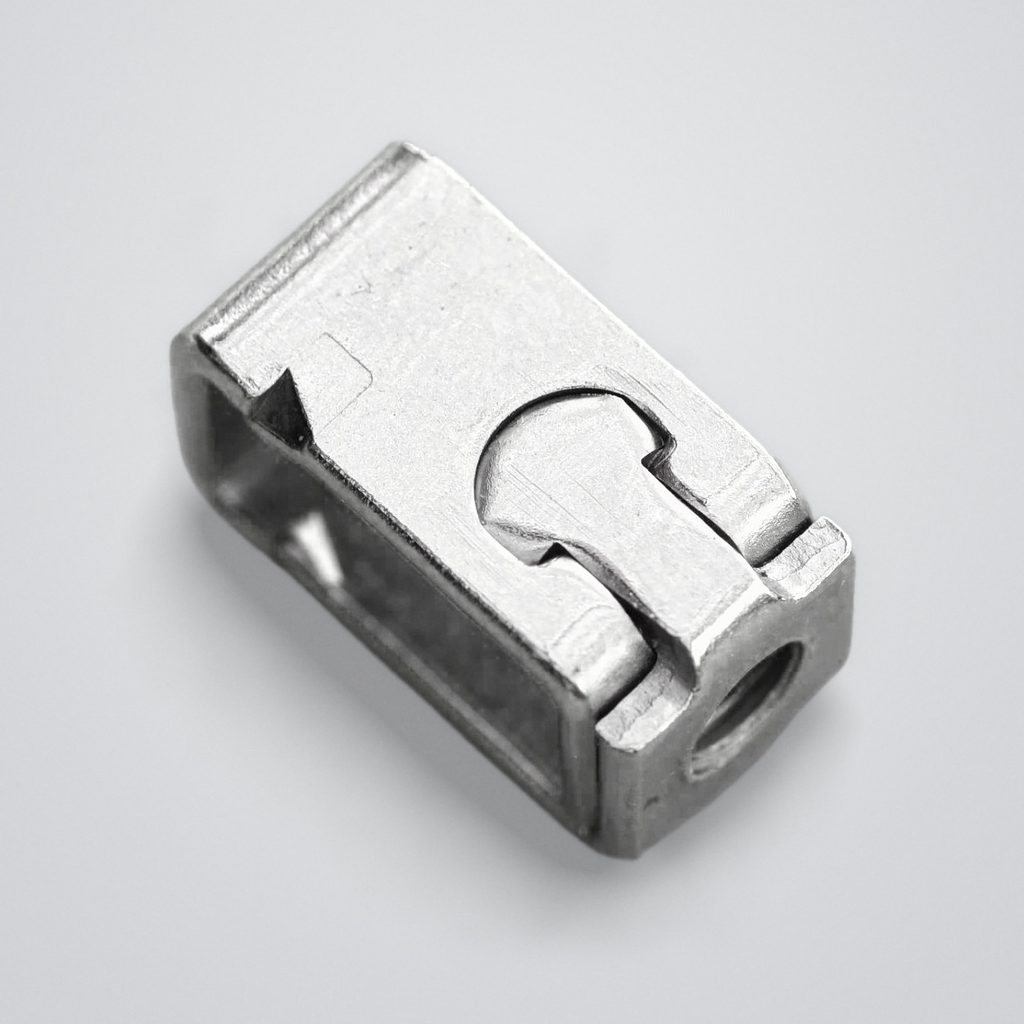
In the box-clamp principle the thread sits in the clamp frame. When the screw is tightened, the frame rises and clamps the conductor across its full width between the underside of the frame and the contact part. We make clamp frames in the hooked-in version as well as clamp bodies.
There are two routes to the thread. A captive nut provides the full thread length regardless of sheet thickness and so allows a compact design. A formed thread is produced without cutting and inline in the die, in the same run as stamping and bending: the material is displaced rather than removed, leaving no chips that could interfere inside the terminal later. Where the drawing requires it, we also cut threads.
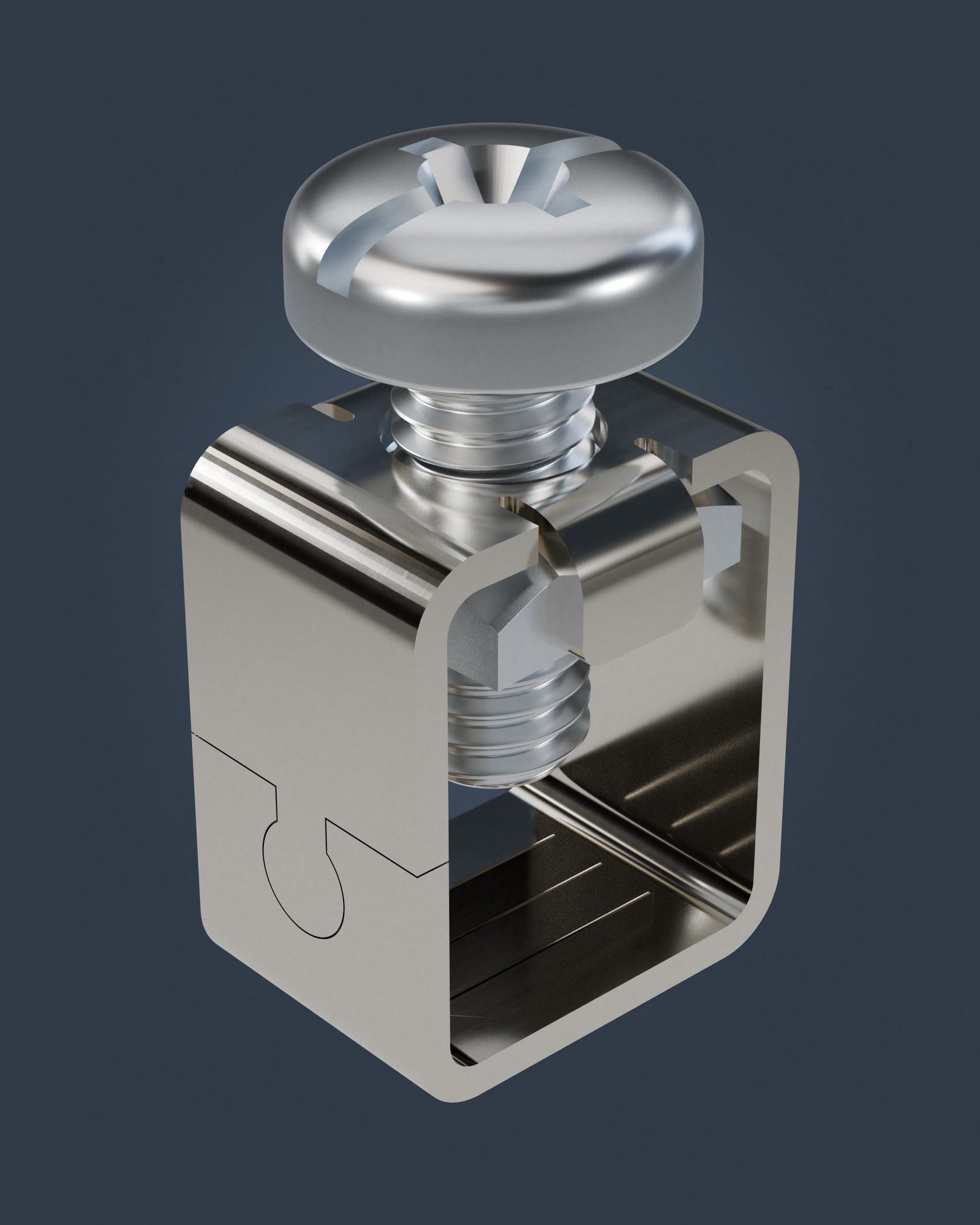
Drag to rotate, scroll or pinch to zoom. Keyboard: arrow keys rotate, plus and minus zoom, 0 resets the view.
03 Spring clamps
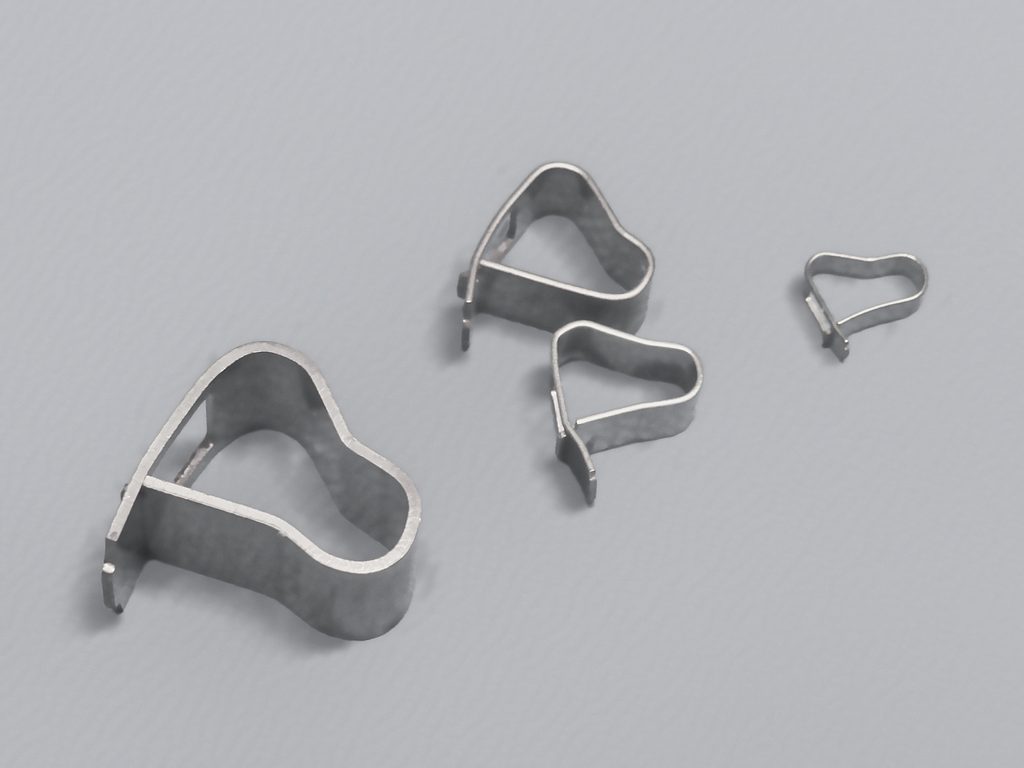
In a spring-clamp terminal a spring holds the conductor with a force that needs no retightening. Cage springs enclose the conductor and press it against the contact part. Leaf springs clamp it with a sprung leg.
What matters for a clamping spring is that its force lasts through temperature cycles and years of service. We design material, thickness and bend geometry for the required clamping force and the conductor range of your terminal. On request we check force-deflection requirements during series production, as we do for contact springs.
04 Comparison
| Criterion | Screw terminals | Spring-clamp terminals |
|---|---|---|
| Clamping force comes from | the tightening torque of the clamping screw | the preload of the spring |
| Typical ACA parts | Clamp bodies, clamp frames, captive nut, formed thread | Cage springs, leaf springs, clamping springs |
| What matters | Load capacity of the thread, dimensional accuracy of the frame | Clamping force over the service life, stress relaxation of the spring material |
05 Technical data
| Property | Value |
|---|---|
| Connection technologies | Screw clamping, spring clamping |
| Parts | Clamp bodies, clamp frames (hooked-in), cage springs, leaf springs, clamping springs |
| Thread | Formed inline in the die or cut, alternatively captive nut |
| Thread sizes | on request |
| Materials | Steel, stainless steel, spring steel, copper alloys |
| Finishes | Nickel, tin, zinc or silver plated, or to specification (through plating partners) |
| Clamping force | to your specification, on request |
| Secondary operations | Fitting nuts, thread forming, thread cutting, assembly |
| Delivery forms | Loose, on reel, in magazines |
| Batch sizes | Samples, prototypes, small to large series |
Thread sizes, material thicknesses and clamping forces depend on your terminal. We confirm them in our quotation for your drawing.
Last updated:
06 Benefits
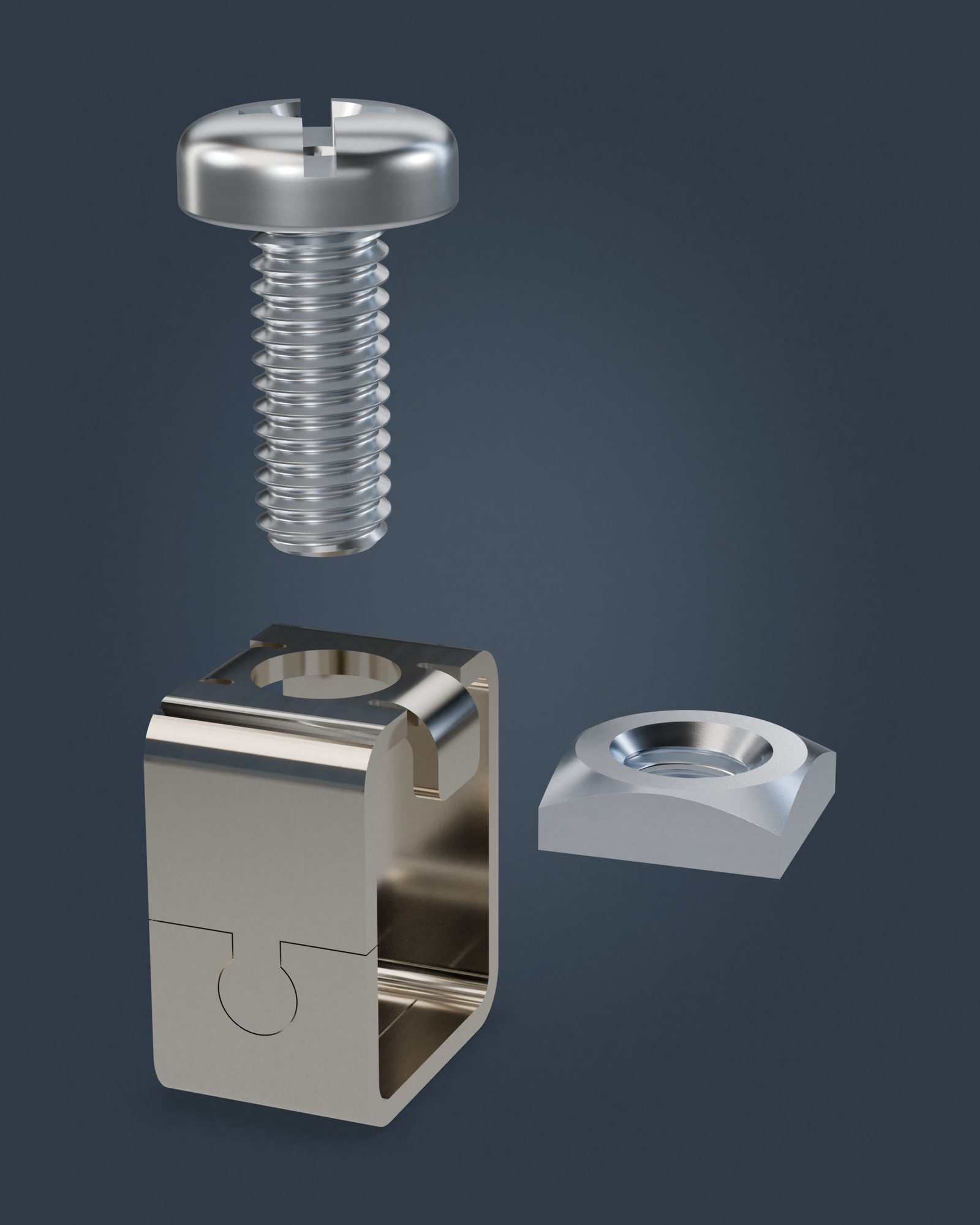
Formed threads are produced without chips in the sheet, inline in the stamping die. No chips are left that could interfere in the finished terminal.
The nut is fitted into the clamp body and allows a compact terminal design.
Clamp bodies, clamp frames, cage springs, leaf springs and the captive nut from one supplier, pre-assembled if required.
On request we check force-deflection requirements for cage springs and leaf springs during series production, as we do for our contact springs.
Loose, on reel or in magazines, matched to the feeding system on your assembly line.
07 Portfolio
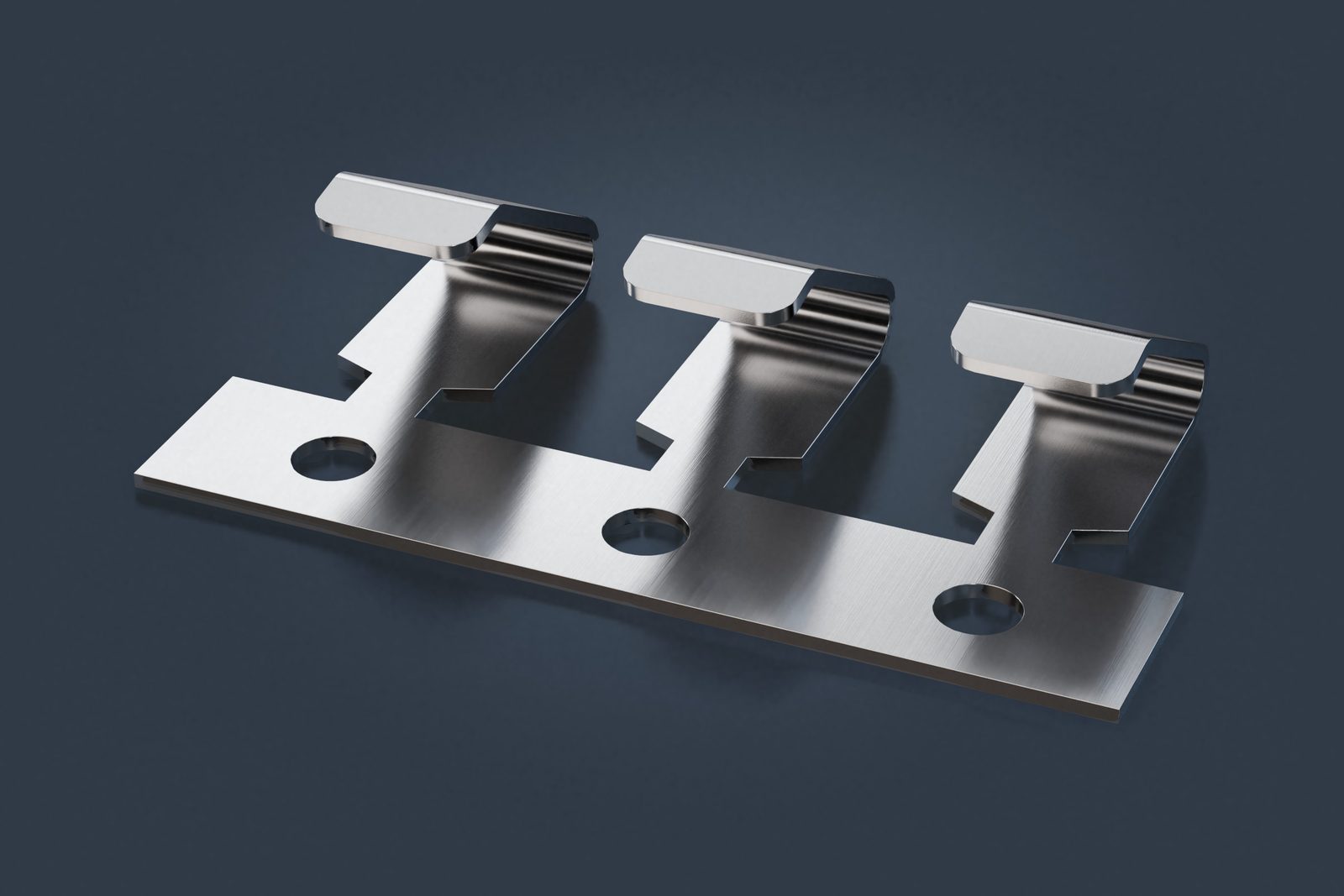
We make these terminal parts to customer drawings:
08 Process
We discuss connection technology, conductor range and clamping force and review your drawing for manufacturability.
We define thread type, material and strip layout: captive nut or formed thread, spring steel or copper alloy.
The tool is built in our own tool shop. Threading and assembly are planned in from the start, see threading and assembly.
Samples for your terminal tests, with a measured spring curve for cage springs and leaf springs on request.
Small and large series, inspected to your specification and in the delivery form your assembly needs.
FAQ
No. ACA Atlas Contacte makes terminal clamp parts to customer drawings: clamp bodies, clamp frames, cage springs and leaf springs. The complete terminal is developed and sold by the terminal manufacturer.
A formed thread is produced without cutting, because the material is displaced rather than removed, so no chips are created. A cut thread is produced by machining. ACA Atlas Contacte offers both methods for terminal parts.
A captive nut provides the full thread length regardless of sheet thickness, so the clamp body can be made more compact. ACA Atlas Contacte fits the nut while producing the clamp body.
Cage springs are usually made of spring steel, often stainless spring steel. They only generate the clamping force, while the contact part carries the current. ACA Atlas Contacte selects the material according to clamping force and operating conditions.
Yes. ACA Atlas Contacte makes terminal parts from samples through low-volume runs to high-volume production, with its own tool shop in Wehr (Baden), Germany.
Clamping, grounding, basket, push-button and retaining springs
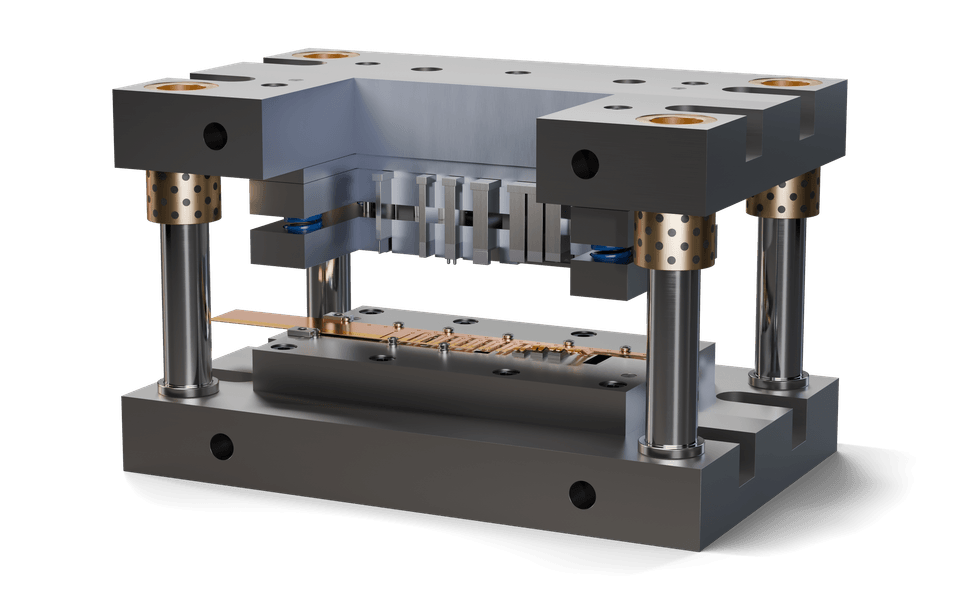
Stamping and bending tools from our own toolroom
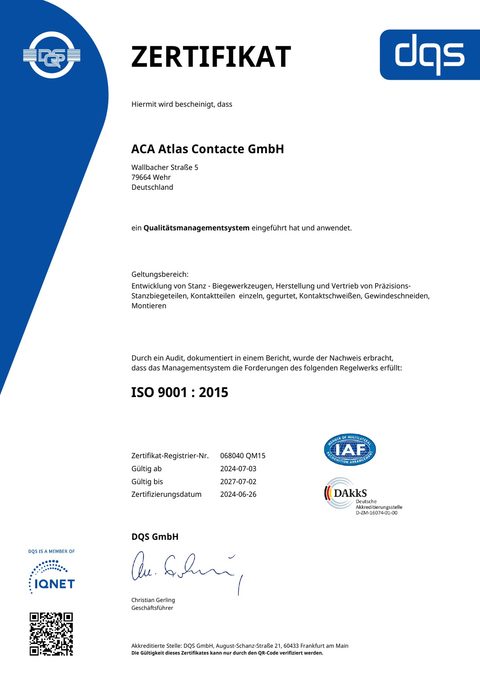
ISO 9001:2015 certified by DQS, inspection to your drawing
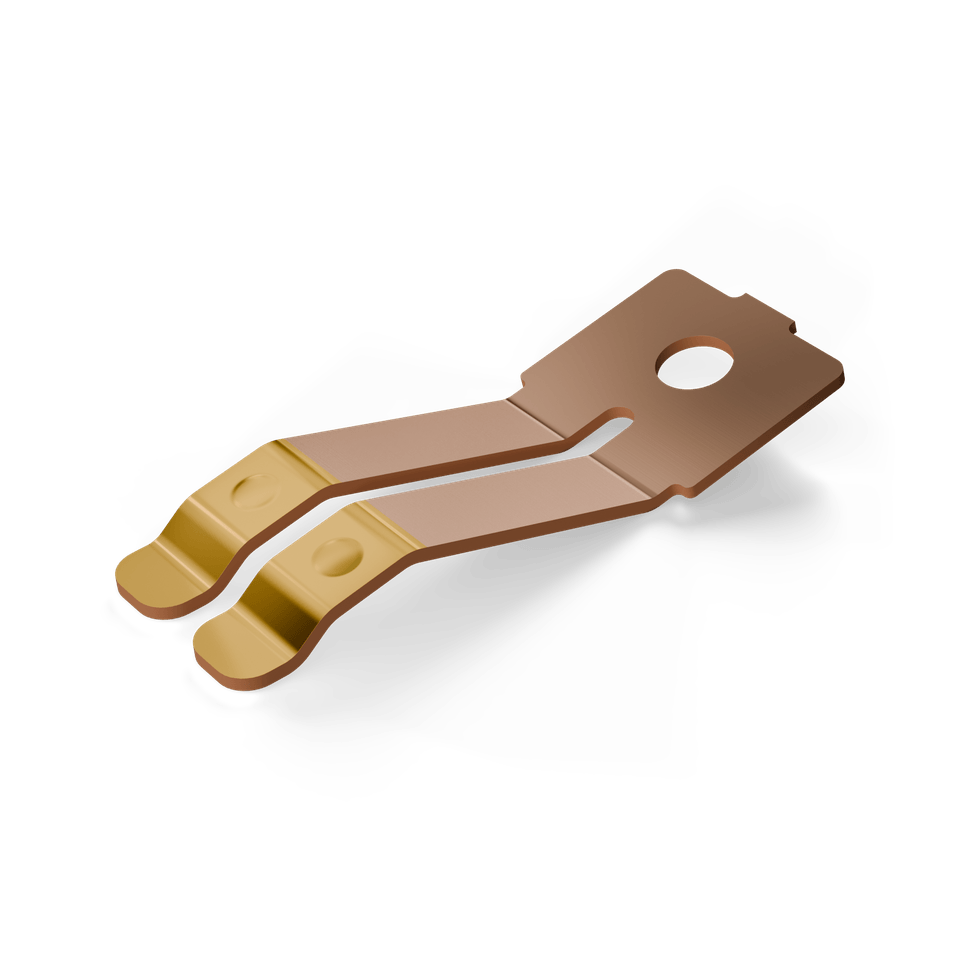
Rules of thumb for bend radii, hole diameters, web widths and tolerances
Request a quote
Send us your drawing or 3D model with material, thread or clamping force and annual quantity. We check manufacturability and come back with a quotation.