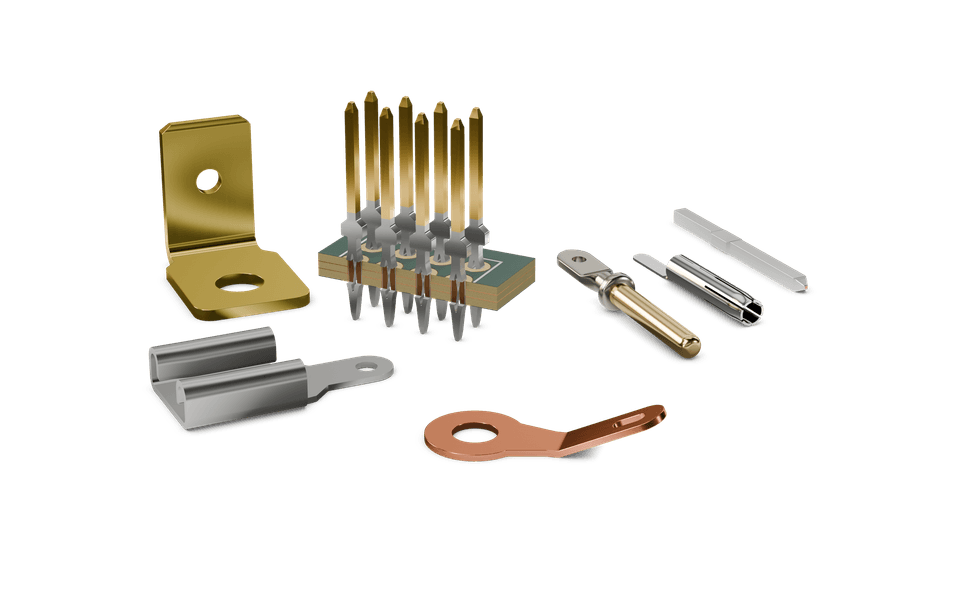
Plug contacts
Press-fit pins, flat tabs, round pin, socket and fork contacts
Plug contacts
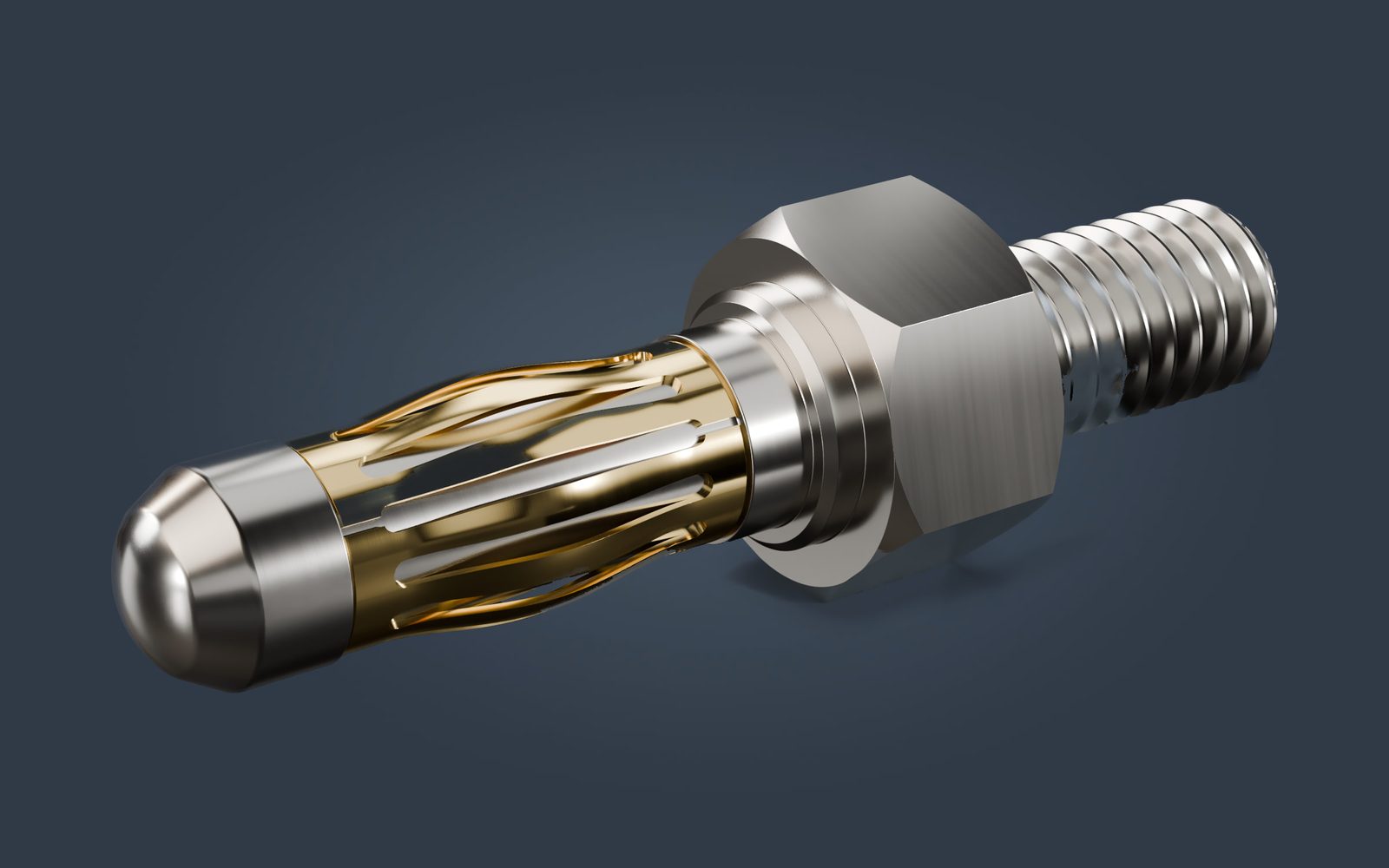
Round plug contacts from strip: round pins, round sockets and rolled contacts are stamped flat and then rolled into a sleeve or pin. ACA Atlas Contacte in Wehr (Baden), Germany, makes them to your drawing, loose or on carrier strip.
01 Principle
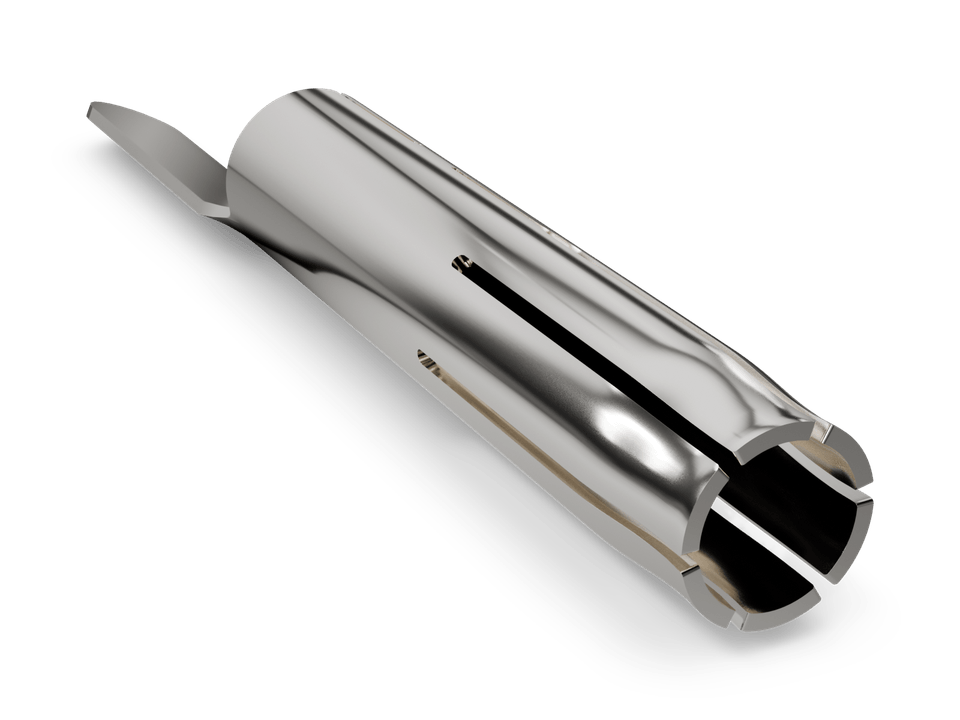
Many engineers think of round contacts as turned parts first. For many round pins and sockets, a rolled contact made from strip is the more economical choice. The blank is stamped flat and rolled into a sleeve over several stations of a progressive die. No chips are produced, and features such as spring fingers, a solder tag, a press-fit zone or the carrier strip for delivery on strip come from the same tool.
Three properties set a rolled contact apart from a turned one: its wall thickness equals the strip thickness, a longitudinal gap (the seam) runs along the sleeve, and its surface is that of the strip, not of a turned face. For most signal and power contacts this is no drawback.
02 Production
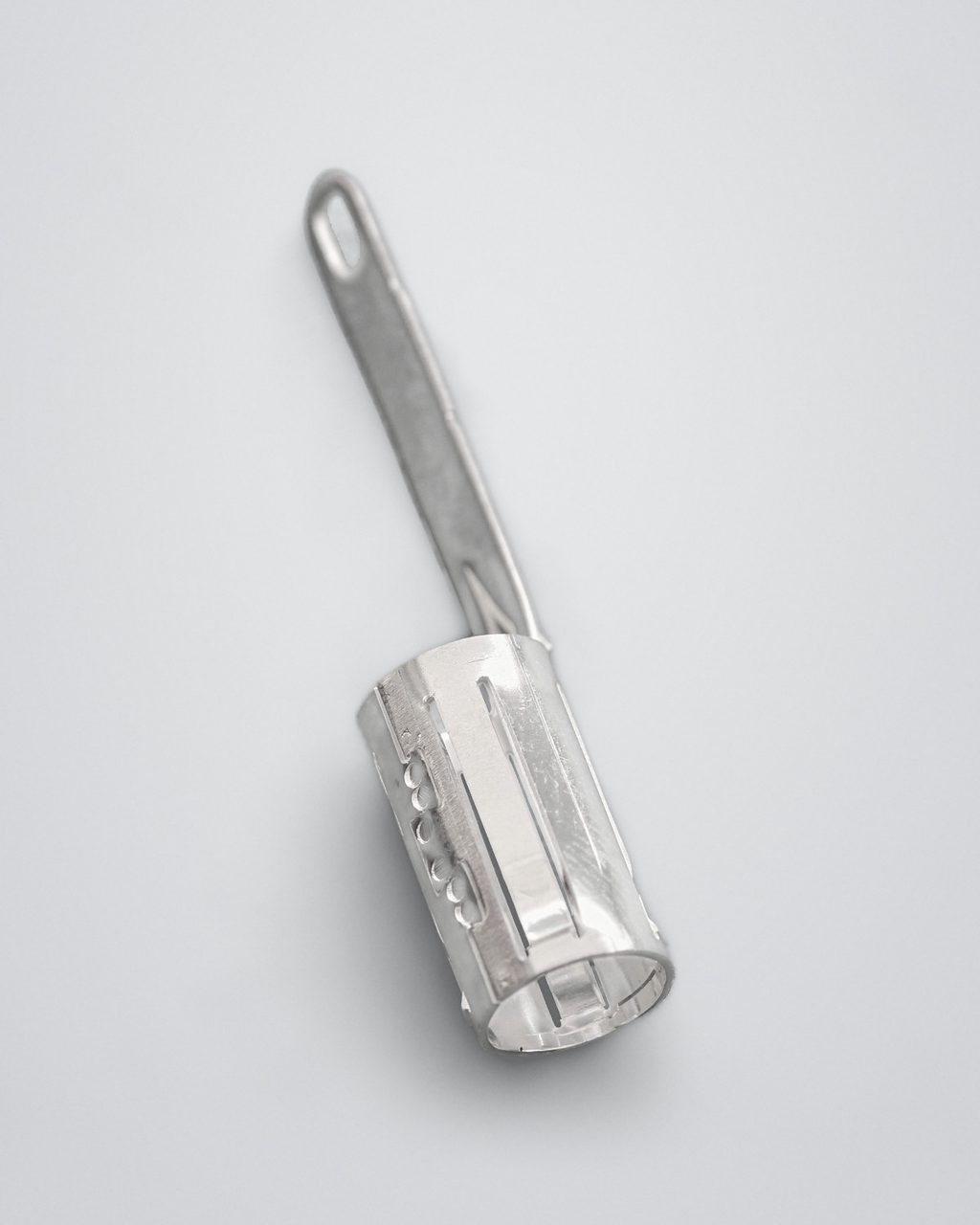
The developed contour of the sleeve is cut from the strip. It stays attached to the carrier strip by small webs.
Spring slots, embossings, solder tag or press-fit zone are made while the part is still flat.
Over several stations the blank is bent into a U and then into an open tube.
The last station closes the sleeve to its nominal size. The seam ends up exactly where the drawing places it.
The finished contact is separated or stays on the carrier strip for automatic processing.
03 Comparison
| Criterion | Rolled from strip | Turned from bar |
|---|---|---|
| Wall thickness | equals strip thickness, uniform | freely chosen, can be stepped |
| Longitudinal gap | seam along the sleeve | none |
| Integral features | spring fingers, solder tag, press-fit zone and carrier strip in one tool | by additional machining |
| Process | chipless stamping and rolling | machining (turning) |
| Delivery form | loose or on carrier strip | loose |
| Economical for | medium to large quantities | small quantities and solid cross-sections |
Qualitative overview based on the general state of the art. For lamella contacts in turned parts we supply the contact lamella, and you or your turned-parts supplier provide the turned body.
04 Spring sockets
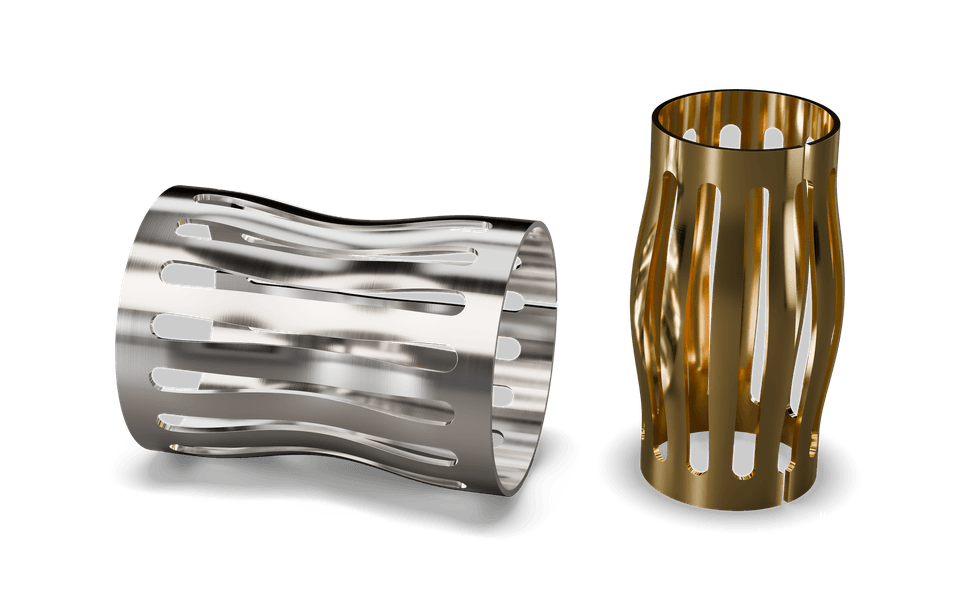
A round socket contacts the pin through spring fingers. Longitudinal slots divide the sleeve, and a constriction presses the fingers inwards. When the pin is inserted, the fingers spread and generate the contact force. ACA Atlas Contacte makes rolled sockets to your drawing only, and your design defines the contact principle.
The number and length of the slots, the depth of the constriction and the material temper determine contact force and insertion force. We define these with you and match them to the tolerance of your mating pin.
05 High currents
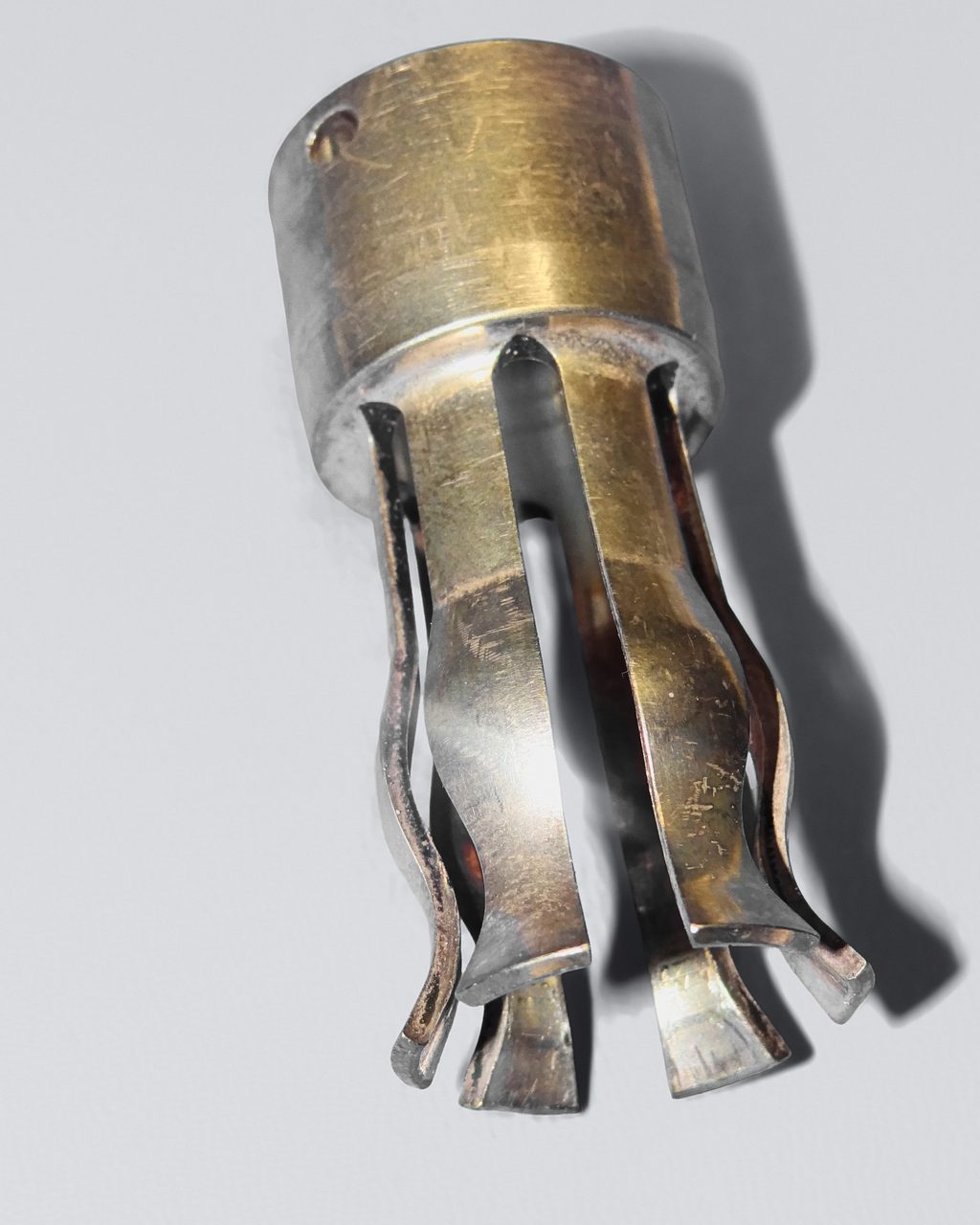
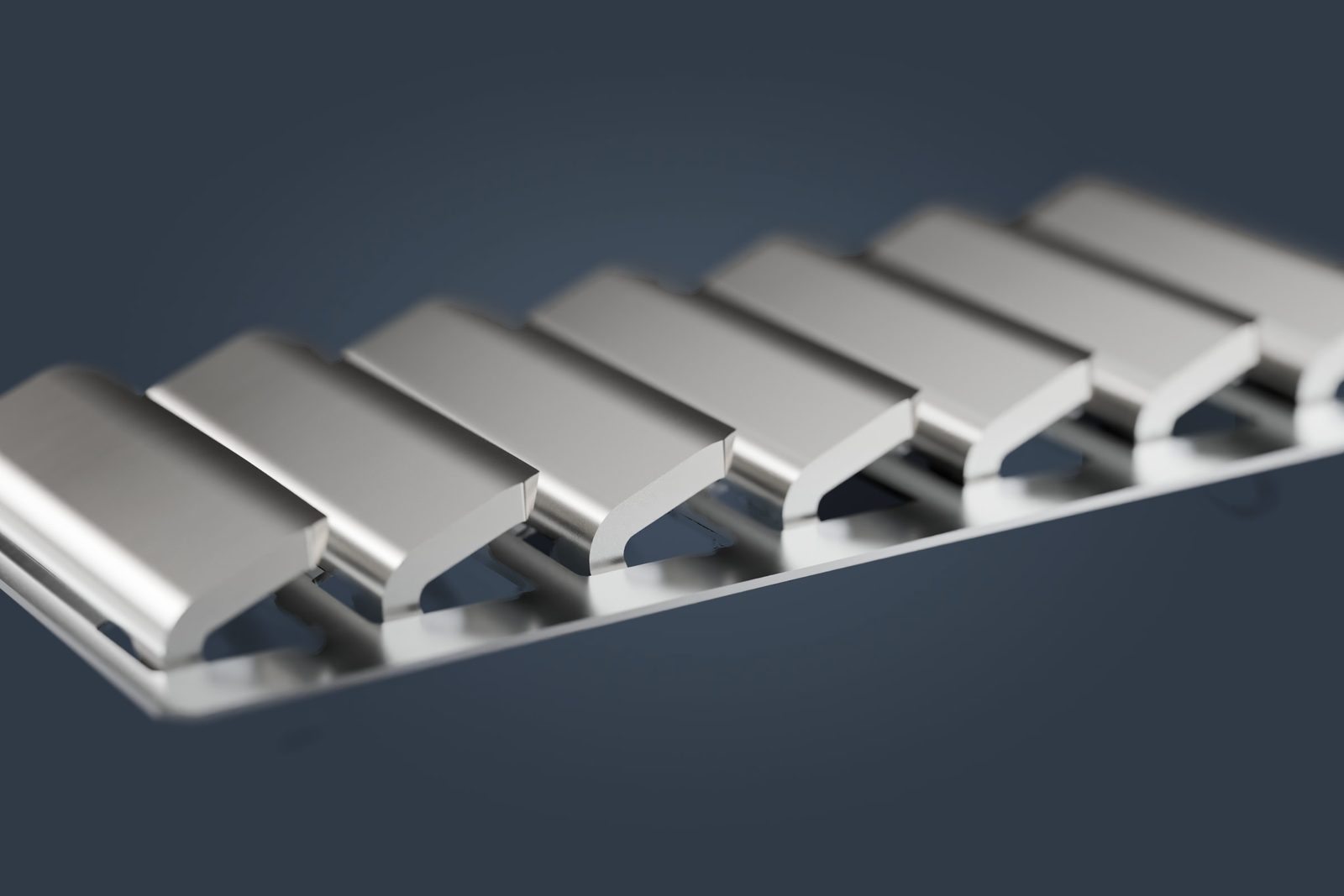
When a round plug contact has to carry very high currents or survive many mating cycles, a contact lamella is the better choice. It sits in a groove on the pin or in a recess in the socket and spreads the current over many parallel lamella webs. We supply leaf spring contact lamellae from a mating diameter of 1.5 mm, and the torsion spring contact band is typically used in larger connectors from a mating diameter of 8 mm.
06 Technical data
| Property | Value |
|---|---|
| Designs | Round pins, round sockets, rolled sockets, rolled contacts |
| Socket contact principle | to drawing |
| Termination | Solder tag, solder pin, press-fit zone or integral with a stamped part |
| Diameter | on request |
| Materials | Copper alloys, steel, stainless steel to your specification |
| Finishes | tin, silver, gold, nickel, also selective (via plating partners) |
| Delivery forms | loose, on carrier strip (reeled) |
| Insertion and contact force | on request, to your specification |
We make rolled round contacts to customer drawings. Diameters and tolerances depend on strip thickness and material and are agreed on request.
Last updated:
FAQ
That depends on current, mating cycles and mechanical load. The wall of a rolled socket is as thick as the strip, and the seam remains. For many signal and power contacts that is sufficient. For very high currents we recommend a turned contact body with a contact lamella.
Define the seam position relative to the functional surfaces, for example opposite the spring fingers, and state a permissible gap. That keeps the seam out of the contact zone.
Yes. A solder tag, solder pin or press-fit zone is made in the same tool as the sleeve while the part is still flat on the carrier strip.
The achievable diameter depends on strip thickness, material and formability. Send us your drawing and we will check feasibility and tell you the limits for your part.
Yes. Rolled contacts can stay on the carrier strip and be supplied reeled to suit your automatic insertion.
Press-fit pins, flat tabs, round pin, socket and fork contacts
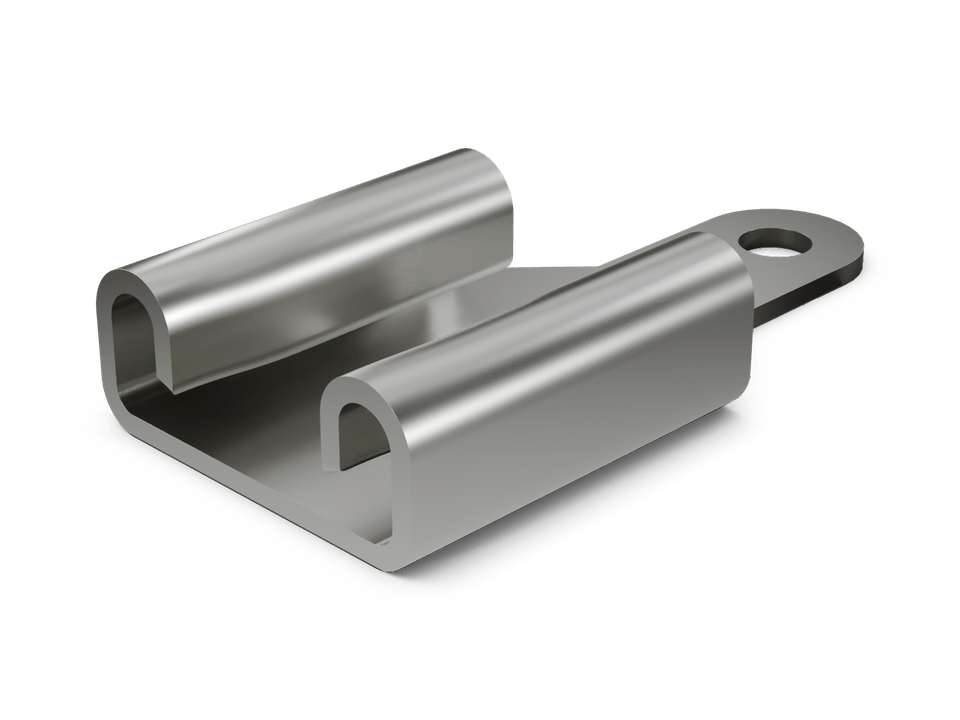
As single parts, as integral terminal tabs or on carrier strip
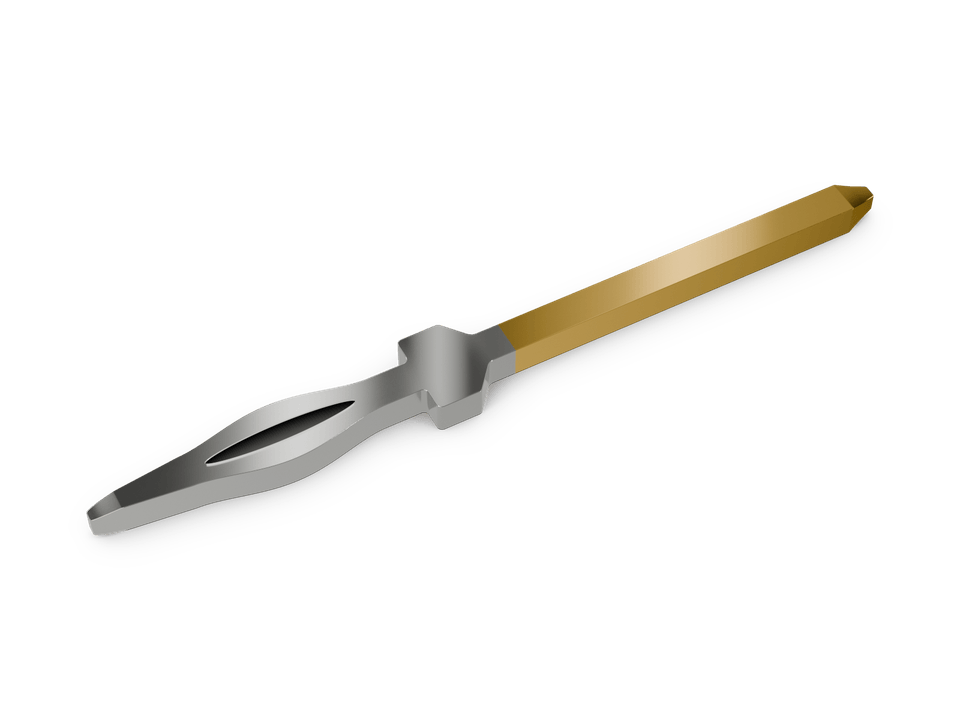
Solderless connection between PCB and connector, stamped to your drawing
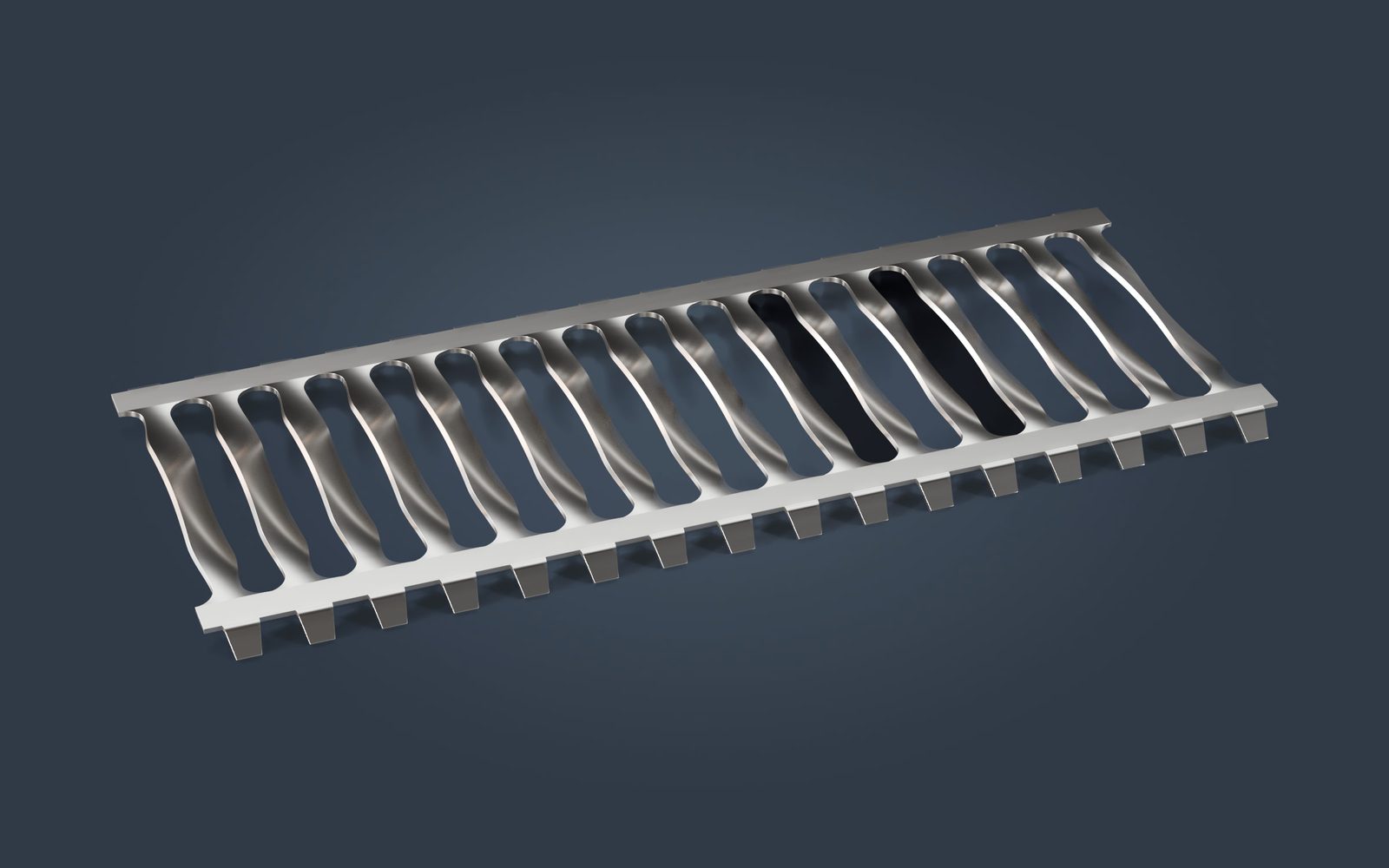
Louvered contact bands with many parallel contact points
Compact beryllium copper contact lamella from 1.5 mm mating diameter
Which contact type suits your current, mating cycles and space
Request a quote
Send us the drawing of the socket or pin and the dimensions of the mating part. We check whether your part can be rolled and send you a quote with a tooling concept.