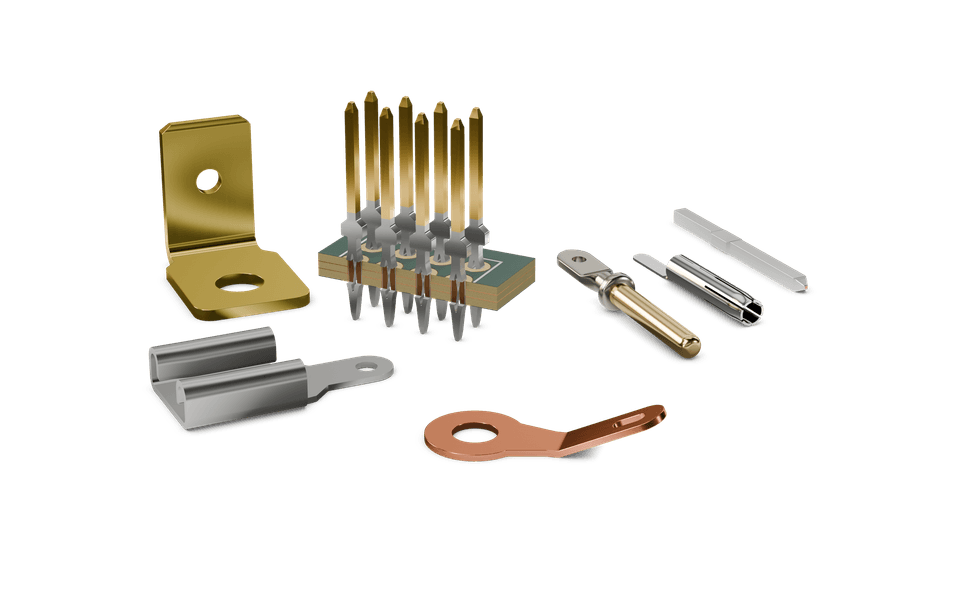
Plug contacts
Press-fit pins, flat tabs, round pin, socket and fork contacts
Plug contacts
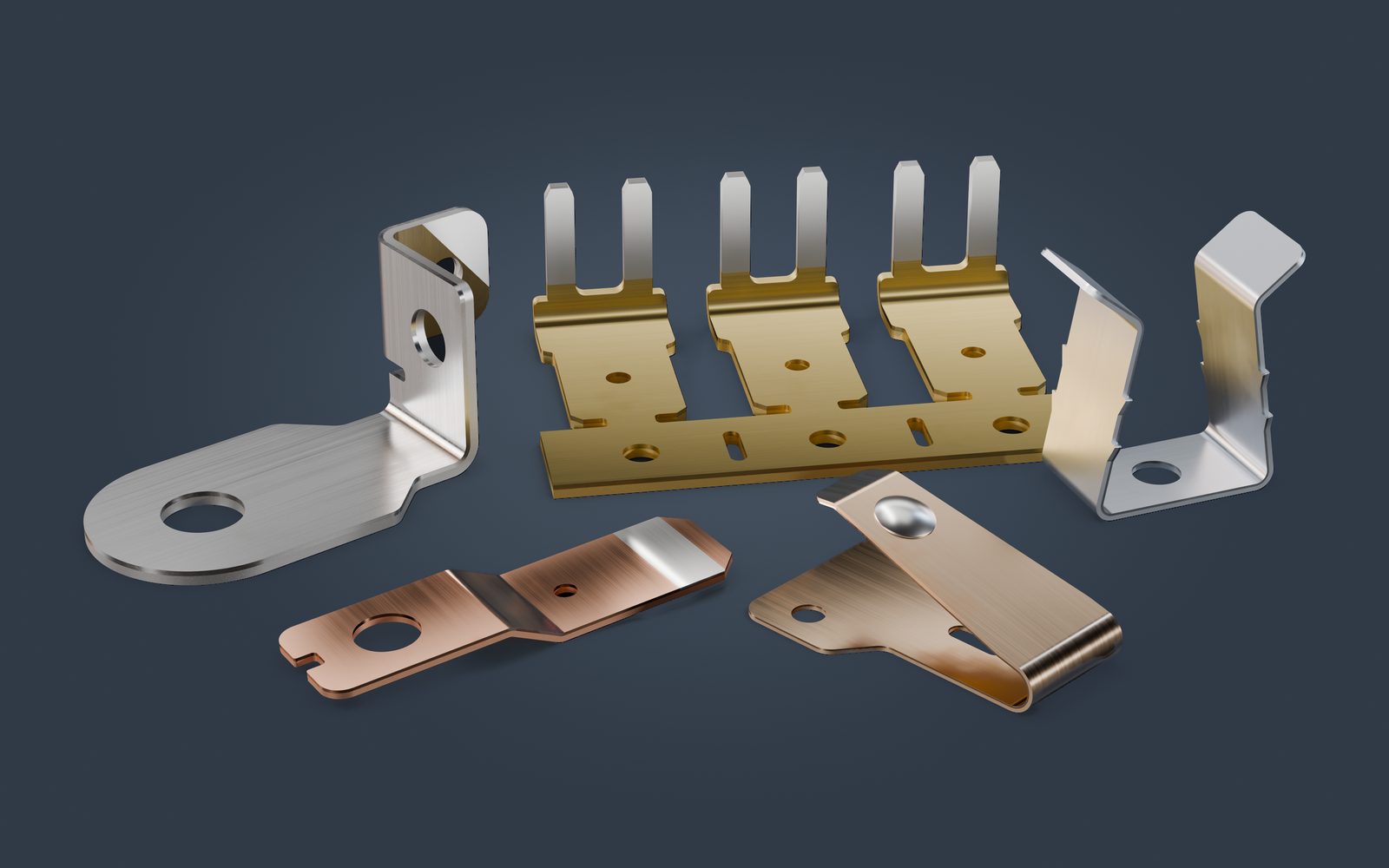
Flat tabs and flat receptacles to your drawing: as single parts, as an integral terminal tab on a larger stamped part, or on carrier strip for automatic processing. ACA Atlas Contacte in Wehr (Baden), Germany, stamps and forms them and has them selectively plated where required.
01 Overview
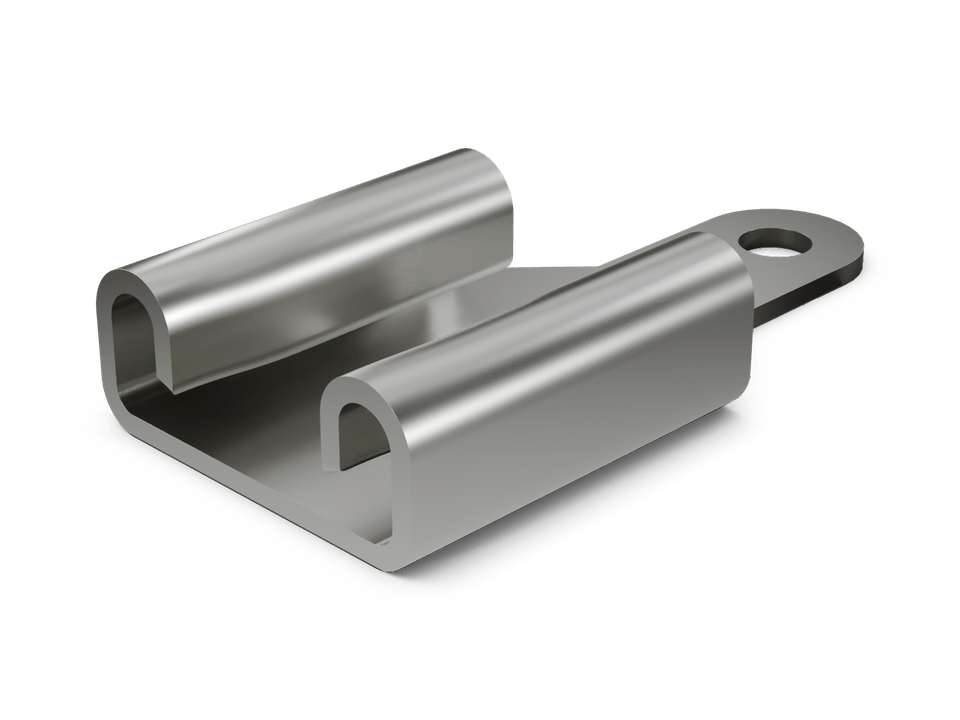
A flat tab and its receptacle, also known as spade terminals, form one of the most widely used detachable connections in equipment and plant engineering. The tab is a rigid blade, and the receptacle grips it with two spring arms. Common sizes are tab widths of 2.8 mm, 4.8 mm and 6.3 mm, with the 6.3 mm family especially common in appliances and equipment. Dimensions and tests for these flat quick-connect terminations are described in IEC 61210 (DIN EN 61210). We make parts to your drawing, not from a catalogue.
Our strength lies where the flat tab does not need to be a separate part. As an integral terminal tab, it comes out of the same progressive die as a terminal clamp body, a switching contact, a contact spring or a grounding spring. That saves a joint, an extra contact interface and an assembly step. For the other side we make the matching flat receptacle, with spring arms designed the same way as our contact springs.
02 Comparison
| Criterion | Flat tab | Flat receptacle |
|---|---|---|
| Function | Rigid blade | Spring socket gripping the blade |
| Defined by | Tab width and material thickness | Spring arm geometry and material temper |
| Critical features | Lead-in chamfer, detent, edge condition | Contact force, latching lance, burr-free entry |
| Integration | Formed onto clamp bodies, switching contacts, contact springs or grounding springs, or as a single part | Single part or part of a stamped component, with solder termination or press-fit zone |
03 Integral tabs
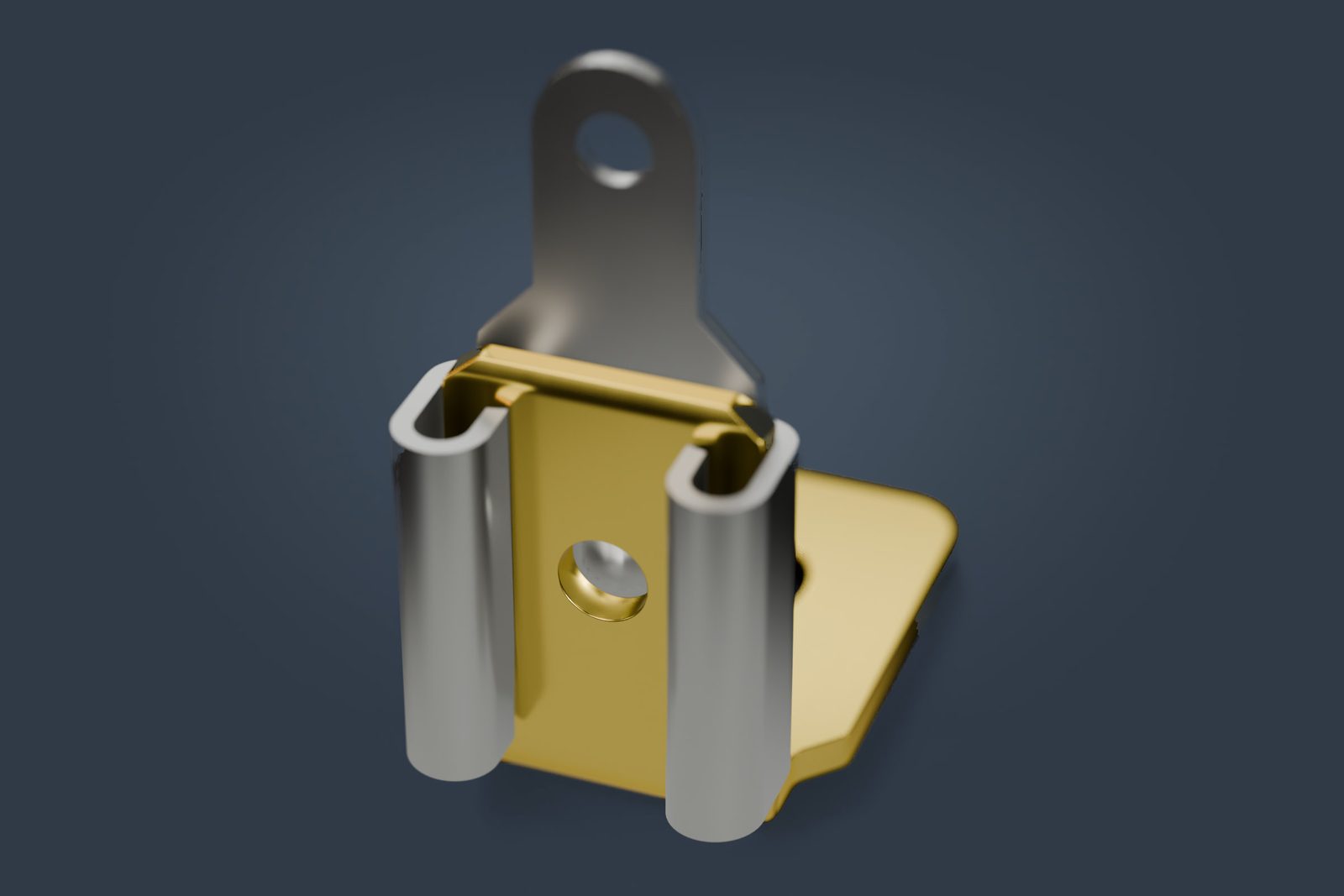
Many flat tabs do not sit loose in a housing but belong to a functional part: a clamp body for terminal blocks, the carrier of a switching contact, a grounding spring or another contact spring. If we form the blade directly onto it, current flows from the functional part into the connection without a riveted or welded joint.
The blade then has the thickness of the strip that the whole part is made from. That is why we define strip thickness and material for the functional part and the flat tab together. If the thicknesses do not match, we look at whether a separate flat tab, riveted or welded on, is the better solution.
04 Design
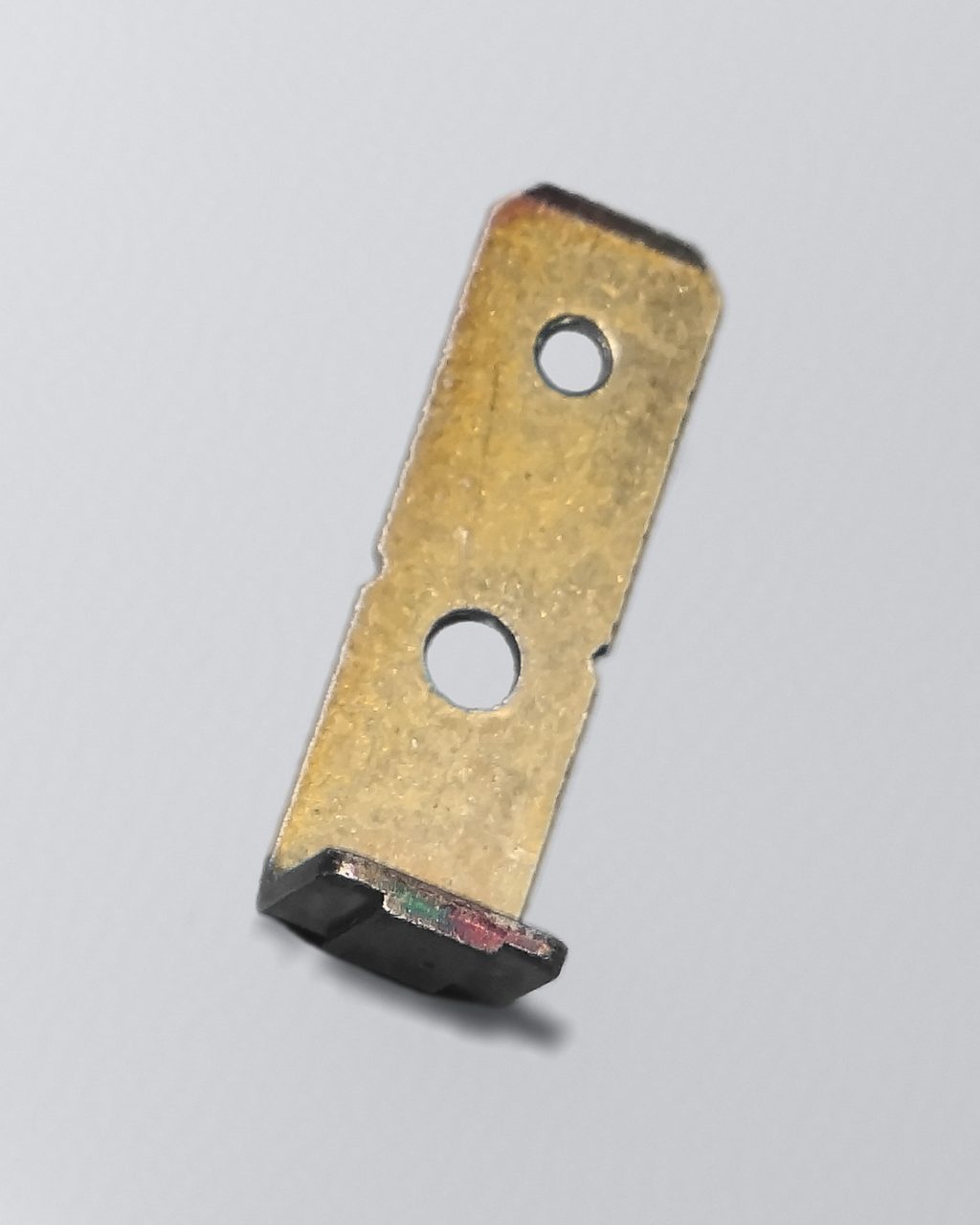
The thickness of the flat tab comes straight from the strip. Choose it to suit the mating side, and take the width from the drawing.
The stamping burr on the blade edges affects insertion force and wear of the finish. State on the drawing which side it may be on.
A detent hole or dimple secures the receptacle. Dimension its position and shape from the tip of the blade.
Tab and receptacle should carry the same finish, for example tin on tin. Mixed pairings such as tin on gold are considered prone to fretting corrosion. See our guide to materials and finishes.
A bend close to the root of the blade can impair its flatness. Allow sufficient distance. Details in our guide to designing stamped parts.
05 Technical data
| Property | Value |
|---|---|
| Designs | Flat tabs straight or angled, flat receptacles, integral terminal tabs |
| Tab width | to drawing, e.g. 2.8 / 4.8 / 6.3 mm |
| Material thickness | to suit the mating part, on request |
| Detent | Detent hole or dimple to drawing |
| Materials | Copper alloys, steel, stainless steel to your specification |
| Finishes | tin, silver, gold, nickel, also selective (via plating partners) |
| Receptacle termination | Solder termination, press-fit zone or integral with a stamped part |
| Delivery forms | loose, on carrier strip (reeled), taped |
| Insertion and withdrawal force | on request, to your specification |
Tab widths such as 2.8, 4.8 or 6.3 mm are common examples, not catalogue sizes. Parts are made to your drawing.
Last updated:
FAQ
Yes, if your drawing specifies them. We work to drawing, and if yours names a common size such as 6.3 mm or refers to IEC 61210 (DIN EN 61210), we check the dimensions against it.
Yes, and it is often the most economical solution. Blade and functional part come out of the same tool, so one joint disappears. The condition is that both work with the same strip thickness.
Tin is common. Silver is an option for higher currents, gold for very small signal currents and demanding corrosion requirements. What matters is that tab and receptacle match. We plate through partners, selectively on the blade only if required.
Yes. We supply flat tabs and receptacles loose or on carrier strip. We place the cut-off point so that no burr is left on the contact surface.
Press-fit pins, flat tabs, round pin, socket and fork contacts
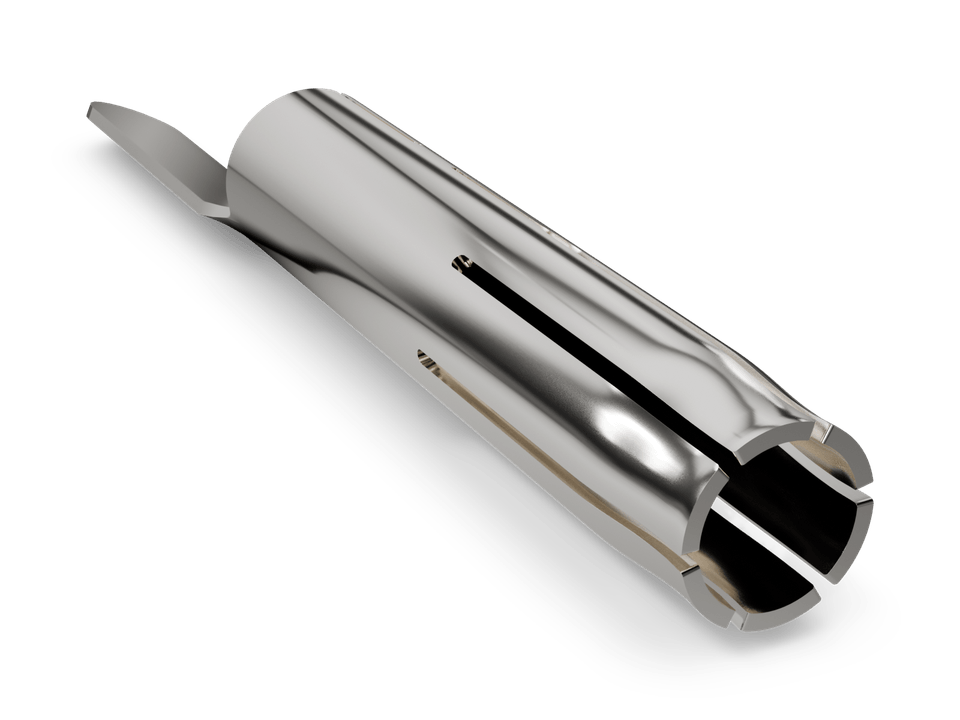
Stamped flat, then rolled into a pin or a sleeve
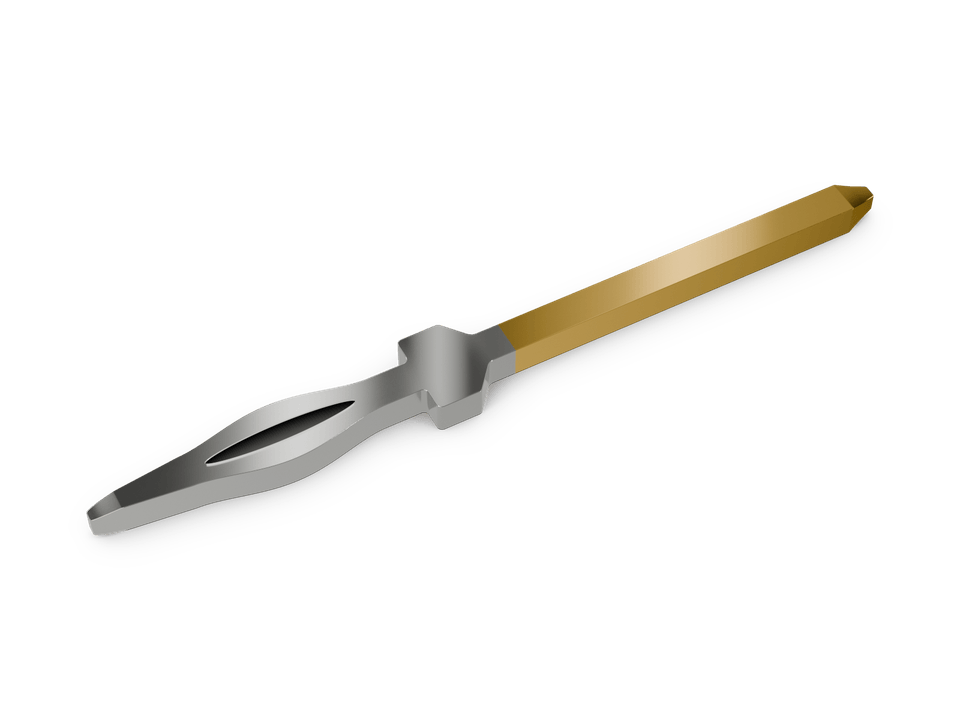
Solderless connection between PCB and connector, stamped to your drawing
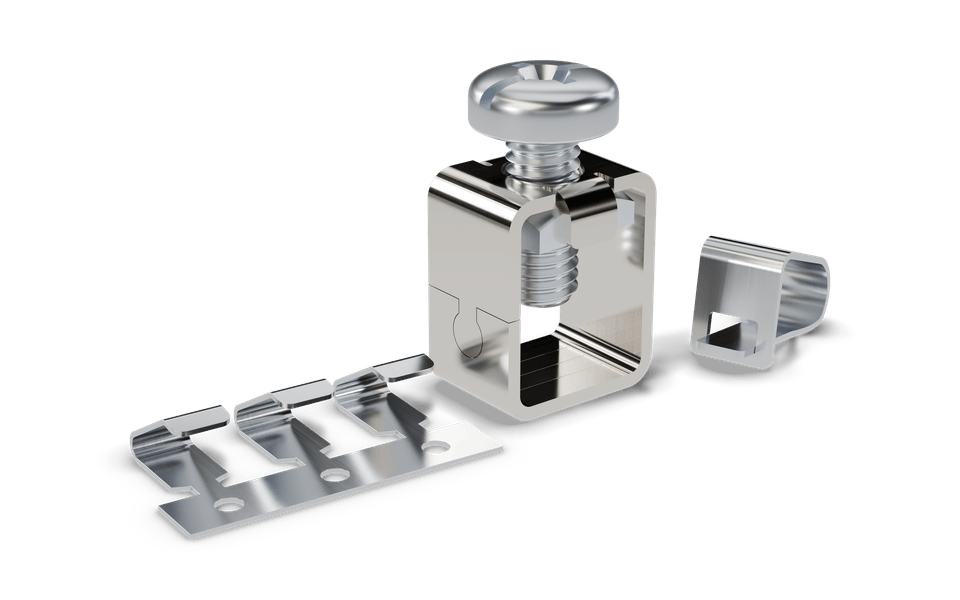
Clamp bodies, clamp frames, cage and leaf springs
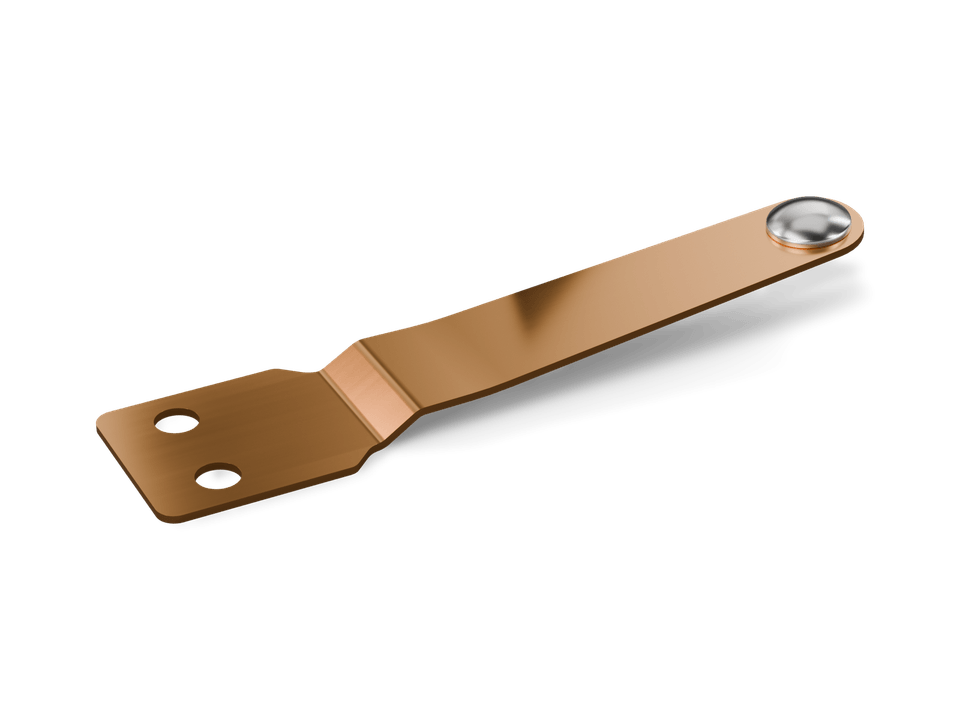
Clamping, grounding, basket, push-button and retaining springs
Copper alloys, spring steels and contact platings compared
Request a quote
Send us your drawing and tell us what the connection mates with. If the flat tab is to be formed onto a larger part, include the whole part.