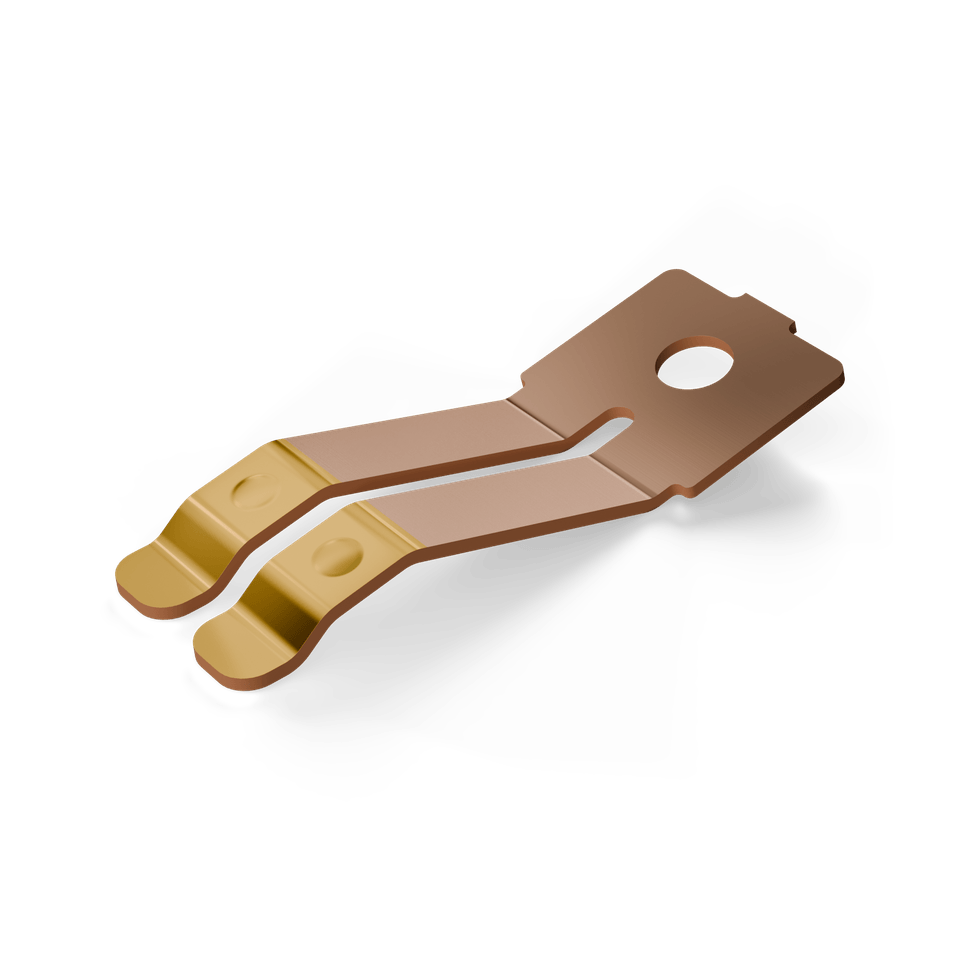
Designing stamped parts
Rules of thumb for bend radii, hole diameters, web widths and tolerances
Services
Most of the cost of a stamped and bent part is fixed at the design stage. ACA Atlas Contacte in Wehr (Baden), Germany, offers DFM consulting for stamped parts: we advise on material, finish and tolerances and optimise your part for stamping before the tool is built.
01 Principle
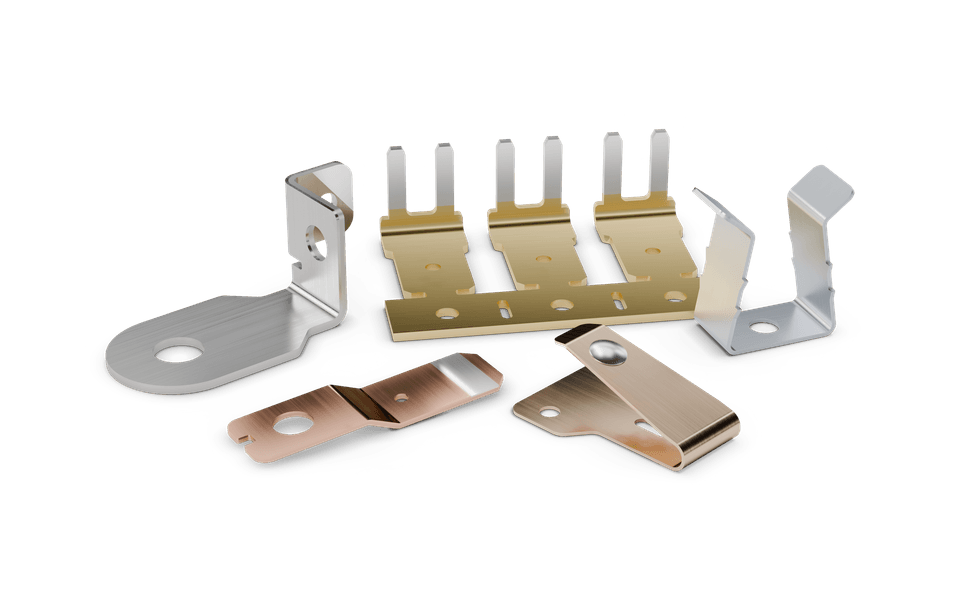
Design for stamping means shaping a stamped and bent part so that it can be produced reliably and economically in a progressive die or on a stamping and bending machine. A bend radius that is too tight, a hole too close to a bend or a tolerance without a function adds stations to the tool and leads to rework and scrap in series production.
That is why every project at ACA starts with a careful look at your drawing. We ask questions, propose changes and explain the reasons. You decide what to adopt. This applies to a new part just as much as to an existing one that costs more than it should. If there is no finished drawing, we design the part from a sketch, a 3D model or a specification, or re-engineer it from a sample part.
Design, tool making and production are located at one site in Wehr. The people who assess your part know the tools and machines it will later run on. The development of stamping and bending tools is part of the scope of our ISO 9001:2015 quality management system.
02 Consulting
Steel, stainless steel, non-ferrous metals or copper alloys, as strip or wire. For contacts, conductivity, spring properties and stress relaxation matter most. For retaining and clamping parts, it is strength and formability. Background in our guide to materials and finishes.
Silver, tin, gold or nickel, all-over or selective. We recommend the coating by function: current, mating cycles, environment and solderability. Read more about surface finishes.
Contact force, spring travel and current rating belong in the design, not just in the test. We meet your force-displacement requirements for contact springs and check them throughout the series.
Progressive die or stamping and bending machine, contact welded or riveted, thread cut or formed, delivery loose or on reel. These decisions drive tooling effort and unit price.
Which dimensions are critical to function, how they are measured and which tolerance the tool can hold over the series. The result is an inspection plan that our production and your incoming inspection interpret the same way.
03 Process
We read the drawing, 3D model, sketch or sample part, quantities and requirements and mark the features that drive tool cost and price.
You get feedback on radii, distances, tolerances and material, with proposals where a change reduces tooling effort or unit cost.
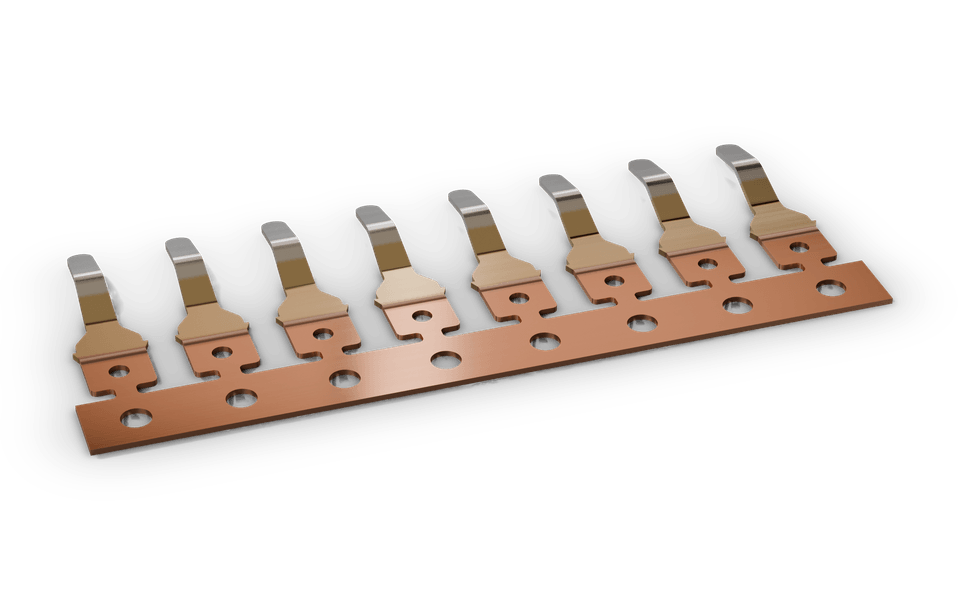
We develop the flat pattern and define the strip layout: sequence of stations, connection to the carrier strip, material utilisation.
On this basis we design the tool, which our tool shop then builds and runs in.
On request we produce samples for your approval before series production. Series production starts after your approval.
04 Design rules
In a drawing review we look first at a few features that decide a large share of the tooling effort. We check them on every drawing we receive. Rules of thumb and explanations for each rule are in the design guide for stamped and bent parts.
05 Example
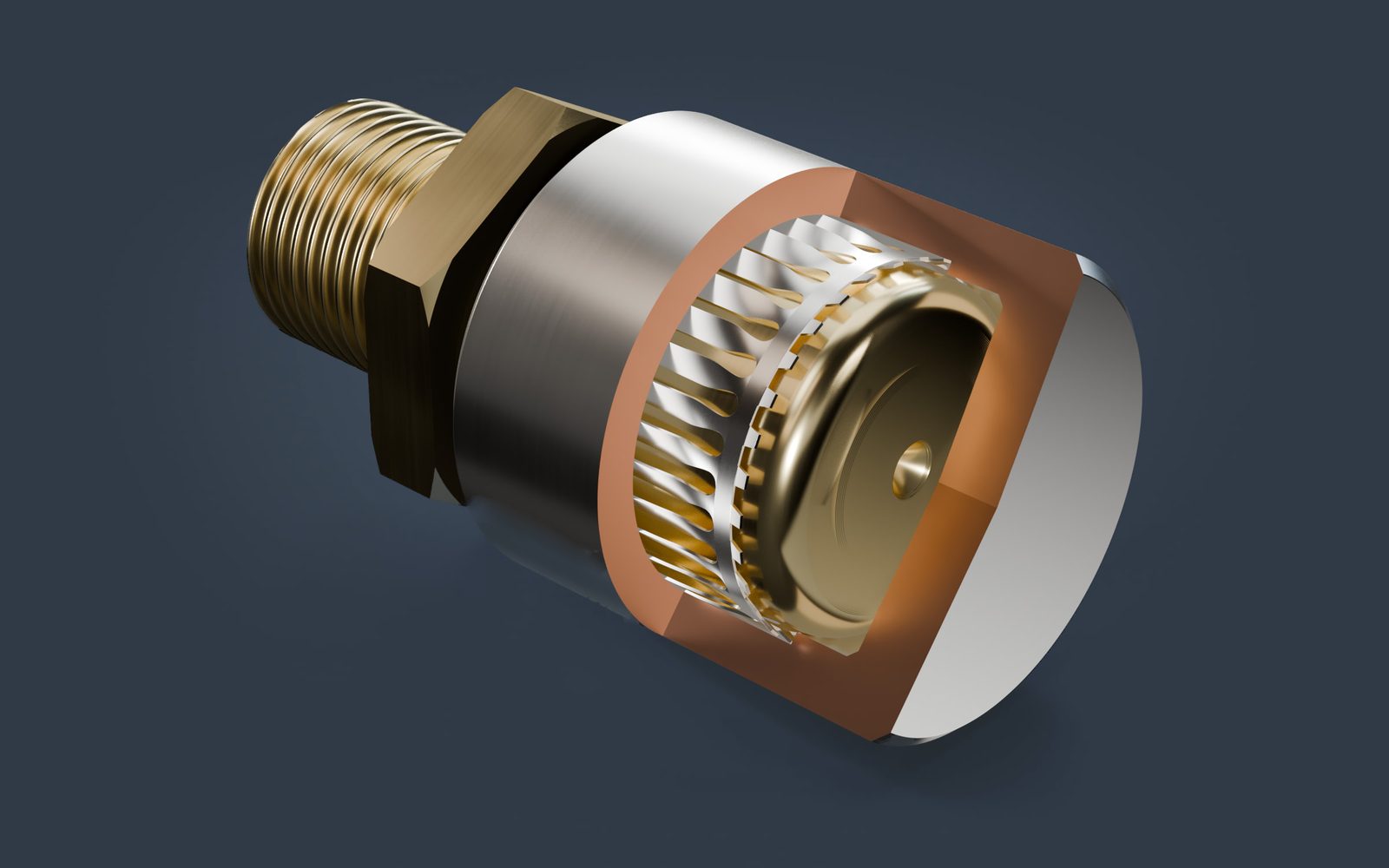
In plug connections with contact lamellae, the mating side helps determine contact force and current rating. We define the groove, bore diameter and pin diameter with you. The drawings of our leaf spring and torsion spring lamellae specify the bore as D 0/+0.05 mm and the pin as D −0.03/0 mm.
The material of the mating contact also matters. The current values in our datasheets apply to silver-plated copper mating contacts. With silver-plated brass, the datasheet says to multiply them by a factor of 0.6. Measurements in the actual application remain necessary in every case. See contact lamellae for the designs.
FAQ
For a feasibility review ACA Atlas Contacte ideally needs a toleranced part drawing and a 3D model, plus material, finish, estimated annual volume, delivery form and a short description of the function.
Often, yes. Typical starting points are tolerances without a function, unfavourable bend radii, a strip layout with a lot of scrap or a coating applied all over instead of selectively. ACA Atlas Contacte reviews the drawing and shows which change has which effect on tool and unit price.
Yes. The development of stamping and bending tools is part of the ISO 9001 certified scope of ACA Atlas Contacte. The tools are designed, built and maintained in the company's own tool shop in Wehr (Baden), Germany.
Yes. ACA Atlas Contacte clarifies function, mounting space, material and volume with you and designs a part that is ready for stamping, with flat pattern and manufacturing concept. A sketch, a 3D model or a specification is enough to start.
Yes. If there is only a sample part and no drawing, ACA Atlas Contacte re-engineers the part from the sample and designs it for stamping, with flat pattern and manufacturing concept. We agree functional dimensions, tolerances and material with you before the tool is built.
Rules of thumb for bend radii, hole diameters, web widths and tolerances
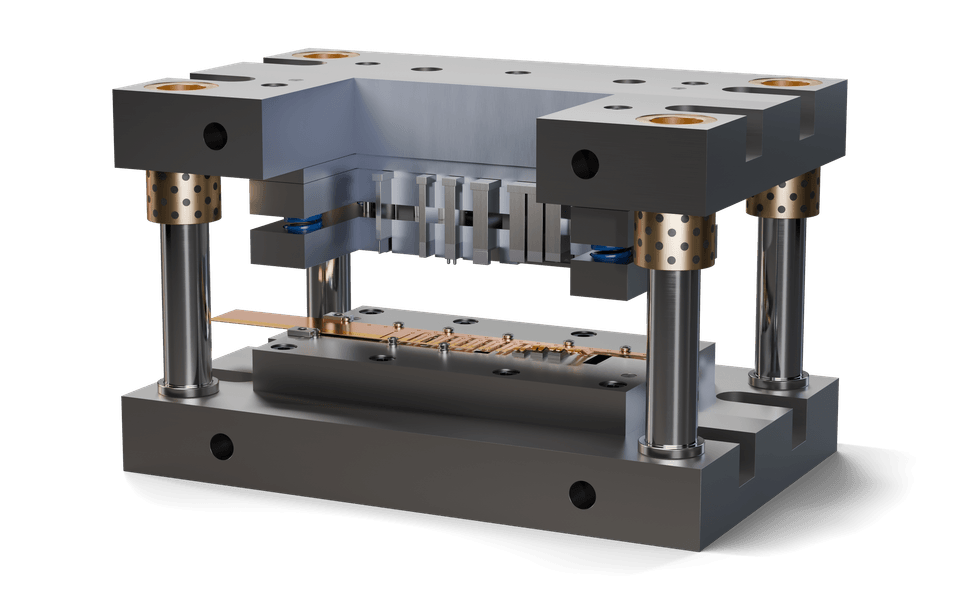
Stamping and bending tools from our own toolroom
Copper alloys, spring steels and contact platings compared
Request a quote
Send us your drawing or 3D model with quantities, material and the function of the part. We will come back with questions, concrete proposals and a quotation.