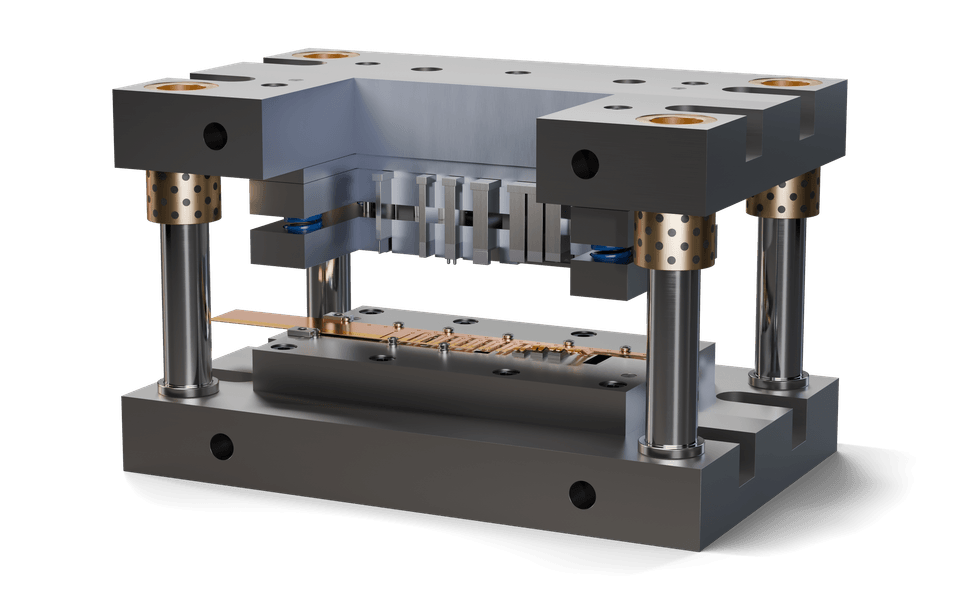
Tool making
Stamping and bending tools from our own toolroom
Products
ACA Atlas Contacte in Wehr (Baden) is a German manufacturer of custom stamped and bent parts and precision metal stampings from strip and wire. We produce them in progressive dies or on servo-controlled stamping and bending machines for strip and wire, from first samples to high-volume series.
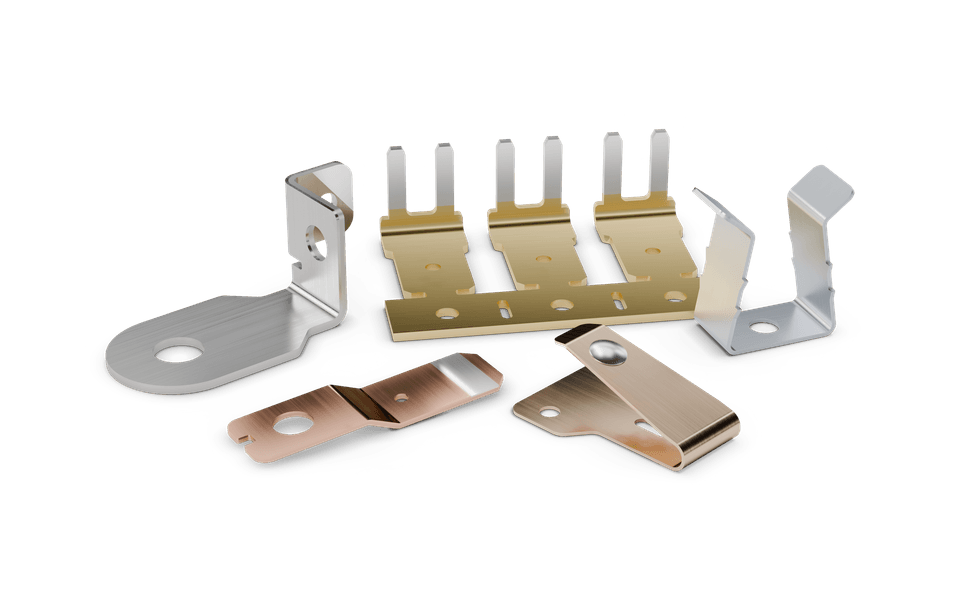
Drag to rotate, scroll or pinch to zoom. Keyboard: arrow keys rotate, plus and minus zoom, 0 resets the view.
01 Overview
Stamped and bent parts, also called stamped and formed or punched and bent parts, are metal components cut and formed from strip or wire in a single tool. ACA Atlas Contacte makes them to customer drawings, today in Wehr (Baden): a family business, founded in 1987, with the experience of more than a thousand successful projects. Its quality management has been certified to ISO 9001 since 2000. Our focus is current-carrying parts in copper and copper alloys, alongside retaining, clamping and spring parts in steel and stainless steel.
Design, tool making and production are under one roof. The stamping tool, whether a progressive die or a tool for the stamping-bending machine, is built in our own tool shop, tried out here and maintained here. When your drawing changes, we change the tool directly, with no detour through an outside toolmaker.
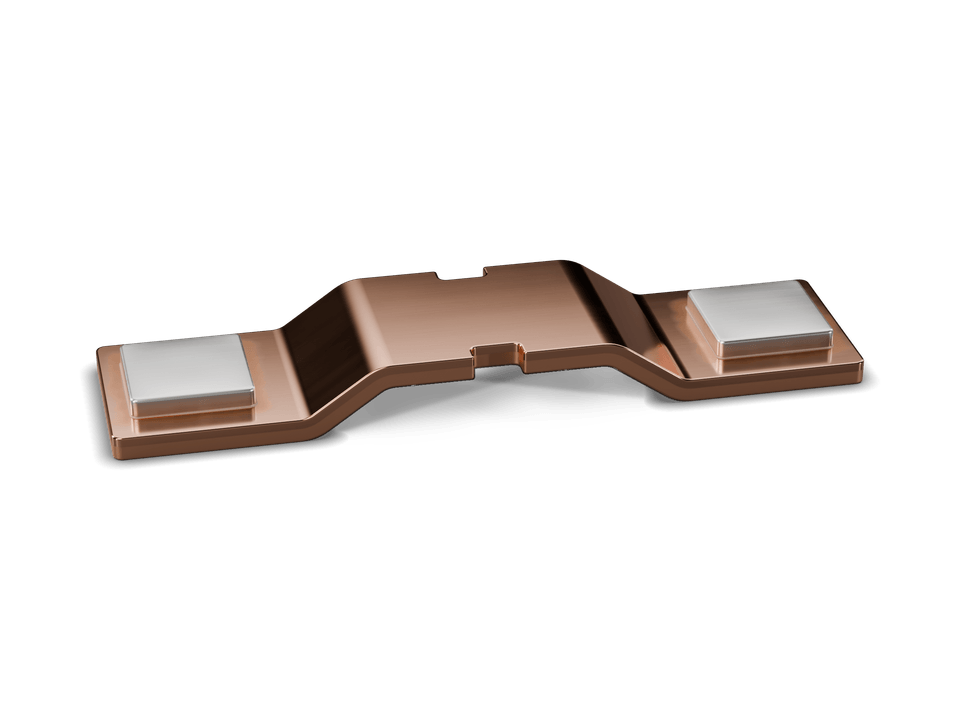
Many parts leave the press as more than a bare stamping. Where required, we resistance-weld contact material on during stamping. We form threads inline in the die. Contacts are riveted on a separate riveting station, and on request we build the part into an assembly. You receive a ready-to-fit part in the delivery form your assembly line needs.
02 Technical data
| Property | Value |
|---|---|
| Manufacturing methods | Progressive die, servo-controlled stamping and bending machines for strip and wire |
| Raw material | Strip and wire |
| Materials | Steel, stainless steel, non-ferrous metals, copper and copper alloys |
| Materials processed | among others Cu-ETP, CuSn, CuZn, CuFeP, CuNiSi, CuBe, stainless spring steel 1.4310 and carbon spring steel C75S, and many more |
| Forming in the die | Bending, coining of contact dimples, beads and reduced cross-sections, thread forming inline |
| Finishes | Silver, gold, nickel or tin plated, all-over or selective, also zinc plated (through plating partners) |
| Material thickness | on request |
| Tolerances | to drawing, on request |
| Secondary operations | Contact welding (inline resistance welding), riveting, thread forming and thread cutting, assembly |
| Delivery forms | Loose (bulk), on reel as carrier strip, taped (bandoliered), in magazines |
| Batch sizes | Samples, prototypes, small to large series |
| Quality management | ISO 9001:2015, DQS, reg. no. 068040 QM15 |
Material thickness, strip width and achievable tolerances depend on material, geometry and quantity. We confirm them in our quotation for your drawing. Quality management: ISO 9001:2015 certificate (PDF, 138 KB, German).
Last updated:
03 Progressive die
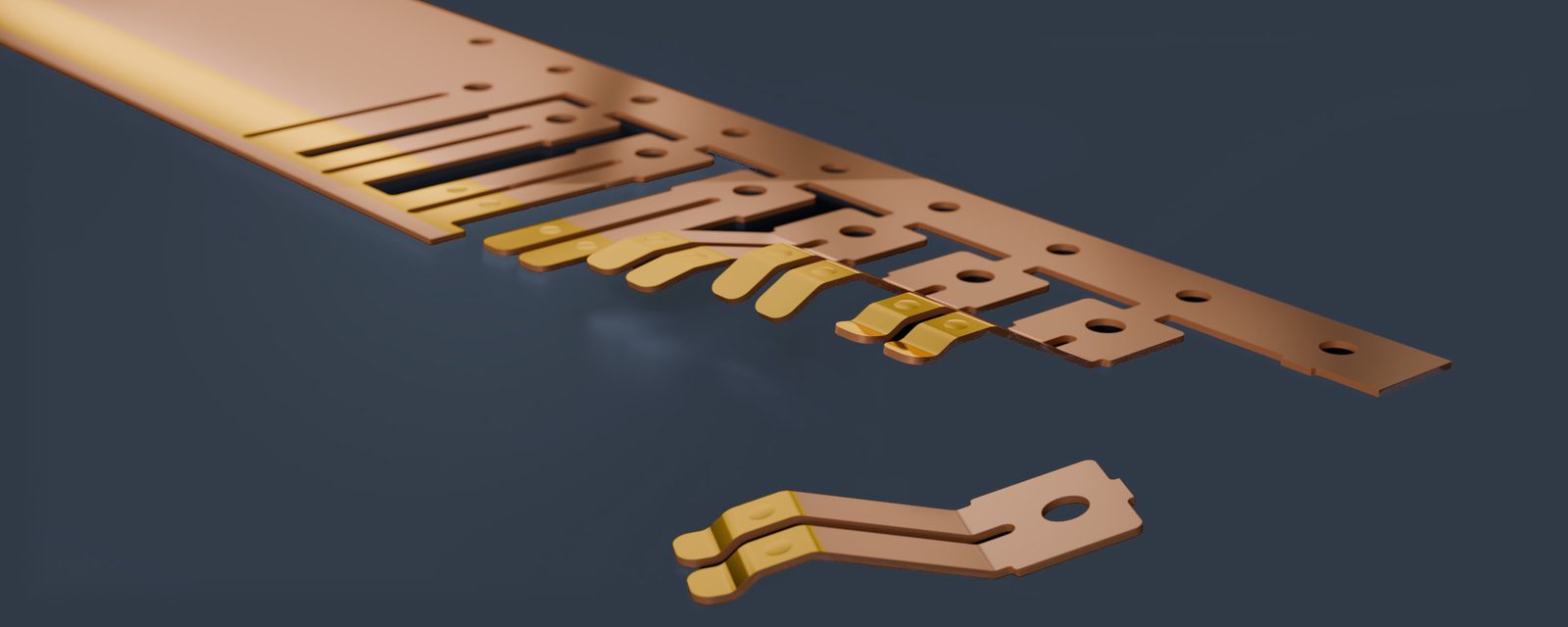
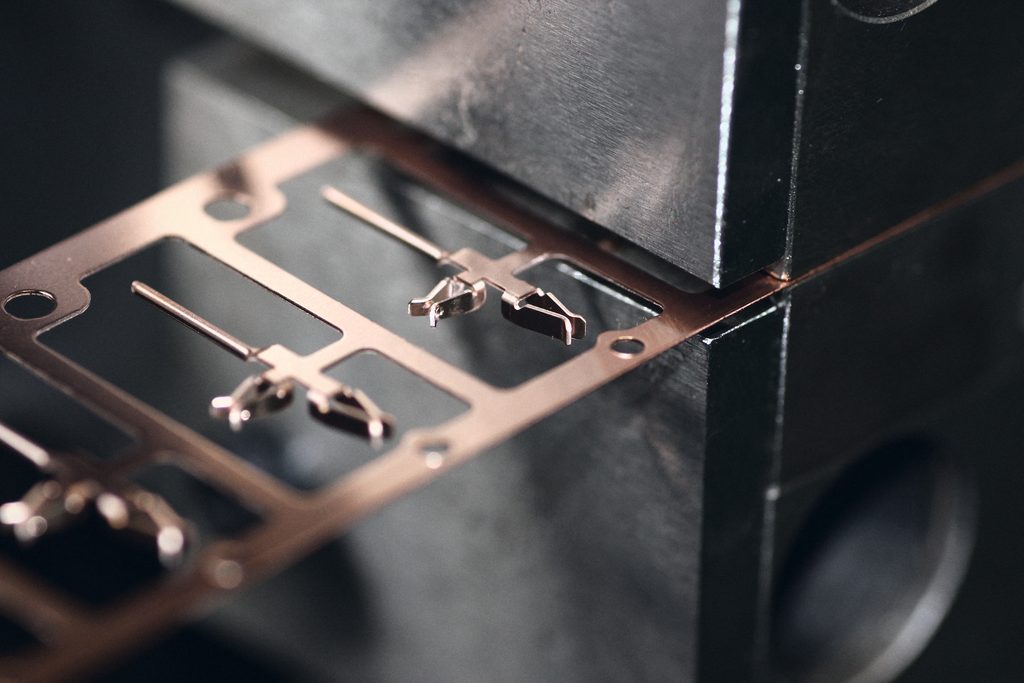
The strip runs from the coil into the die and advances by exactly one pitch per stroke. Pilot pins register the strip as it passes through the die so that positional errors do not accumulate.
Punches pierce holes and notch the outline. The part stays attached to the carrier strip by small webs and is carried reliably to the next station.
The following stations bend, coin and offset the part, step by step, until it reaches its final geometry. Depending on the part, coining punches form contact dimples, beads or reduced cross-sections.
Where the drawing calls for it, we resistance-weld contact material on in the same pass. This saves a separate operation and an extra handling step.
At the end, the die separates the finished part from the strip. Alternatively the parts stay on the carrier strip and are wound onto a reel for automated processing.
04 Multi-slide
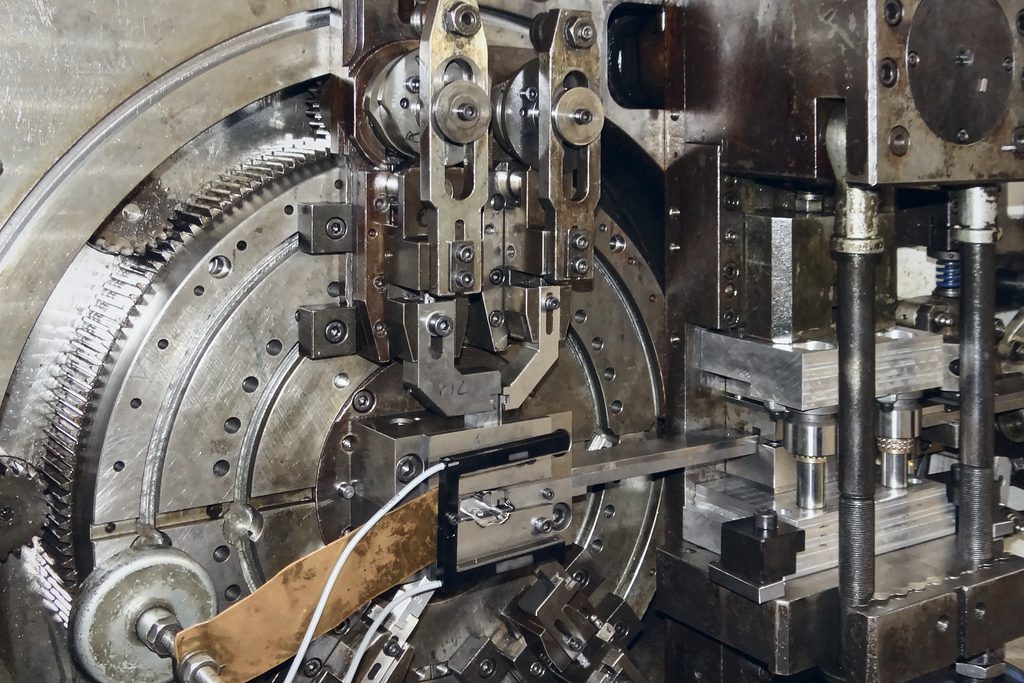
A stamping and bending machine (multi-slide) separates stamping from bending. The strip is stamped first, then radially arranged bending slides form the part from several directions. This produces bends that a linear progressive die could only achieve with great effort, such as closed shapes, rolled sleeves or springs with several legs.
Our stamping and bending machines are servo-controlled and process strip and wire. Stroke and motion profile can be finely adjusted on them.
05 Choosing a process
| Criterion | Progressive die | Multi-slide machine |
|---|---|---|
| Principle | All operations in one tool, station by station along the strip | Stamping in the strip, bending by radially arranged slides |
| Strengths | Flat and bent parts, parts on reel, in-die welding | Complex 3D bends, rolled and closed shapes |
Geometry, quantity and delivery form decide which method is more economical. We assess this on your drawing and explain our recommendation in the quotation.
06 Benefits
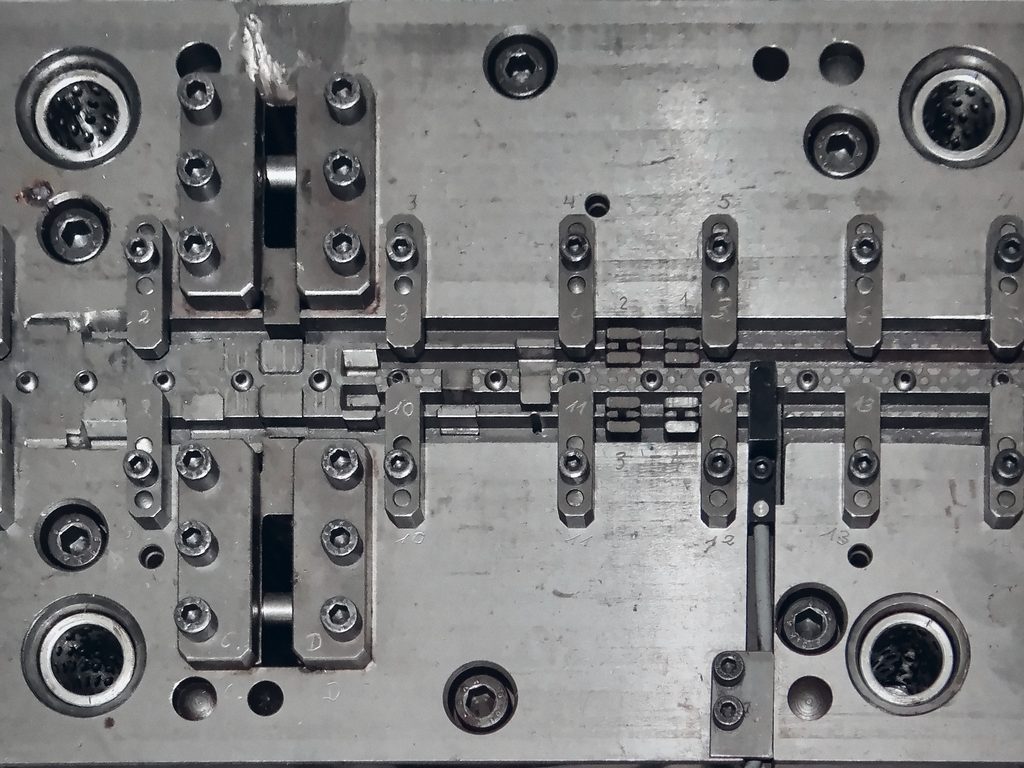
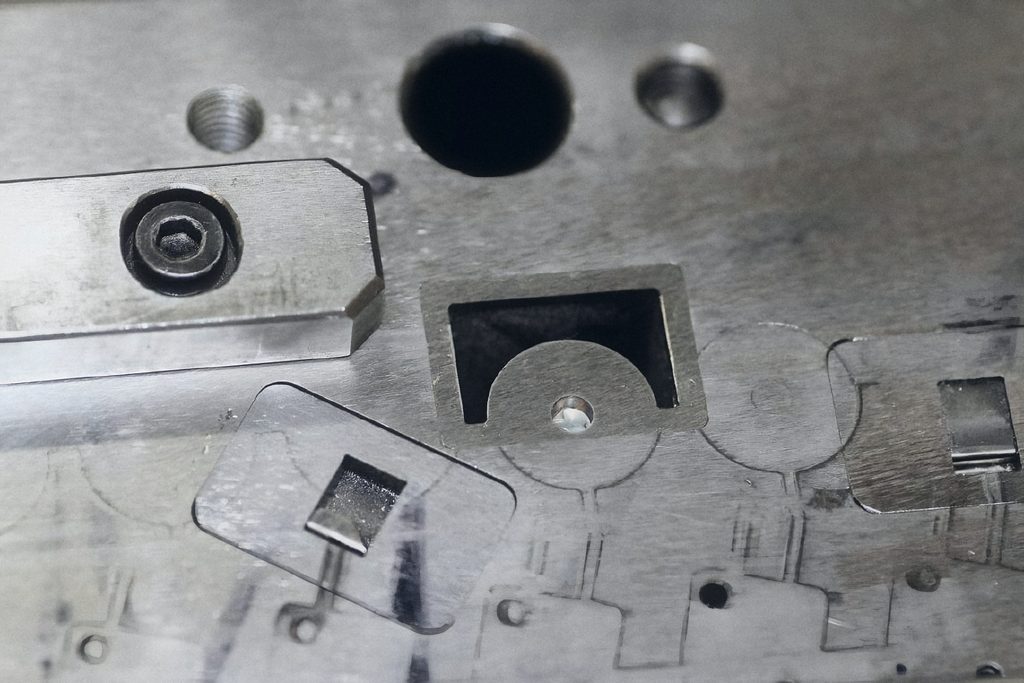
Design, EDM, grinding and try-out in our own tool shop. Changes and maintenance happen without outsourcing.
Resistance welding of two-component parts directly in the stamping process. The part leaves the die with its contact already in place.
Contact parts from copper, copper alloys, clad strip and contact profiles. We coin contact dimples, beads and reduced cross-sections directly in the die. We specify and coordinate plating with our plating partners.
Loose, on reel, taped or in magazines. The part arrives the way your assembly line takes it.
Optical image measuring system and measuring microscope in our own measuring room, product-specific tests to your specification. By agreement, 100 % inspection by an automatic optical inspection system is possible.
Quality management certified by DQS. Contact welding, thread cutting and assembly are part of the certified scope.
07 Materials
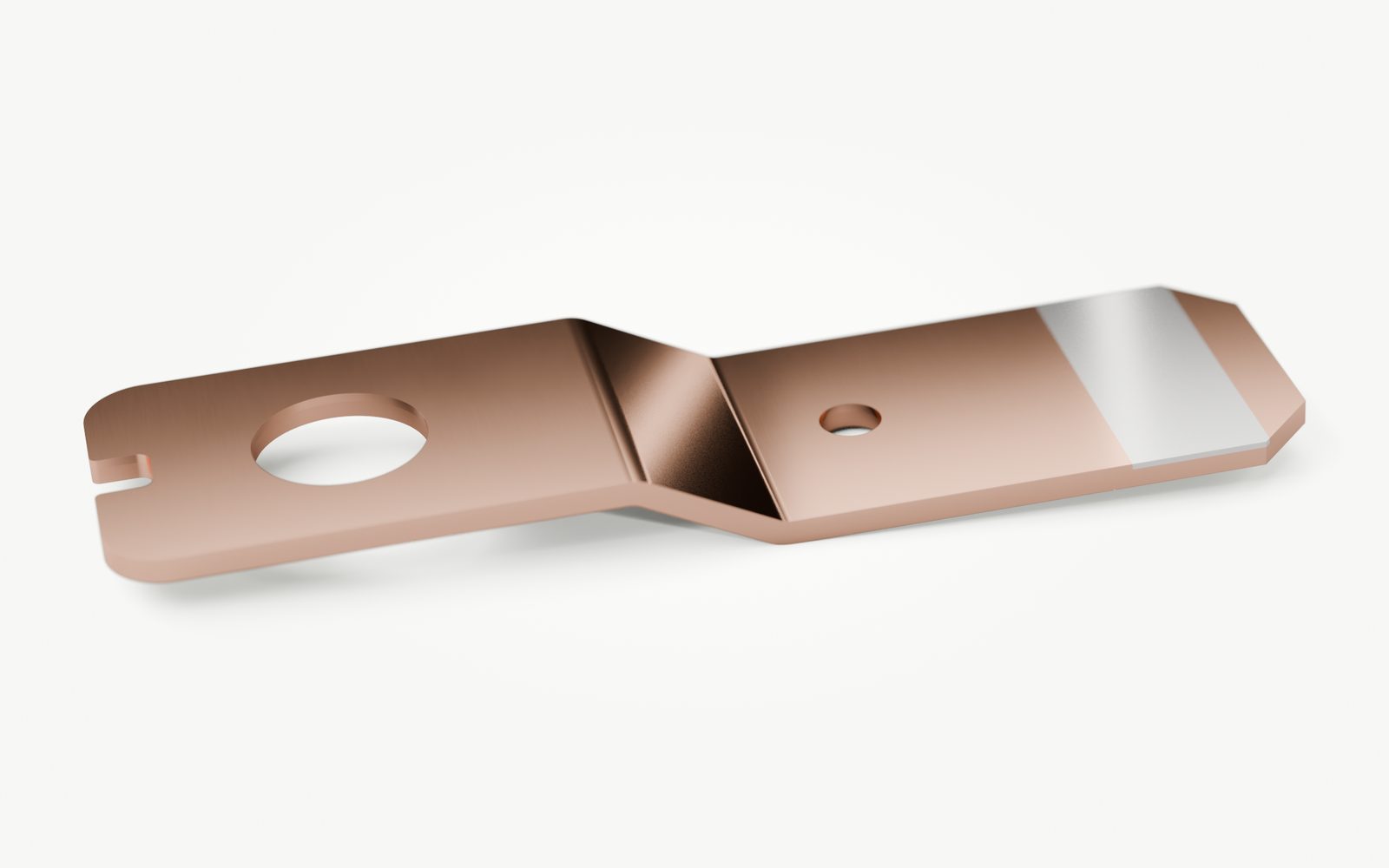
Cu-ETP
For parts whose main job is to carry current, such as contact pieces, contact bridges and carriers.
CuSn, CuZn, CuFeP, CuNiSi, CuBe
Copper alloys combine conductivity with spring properties. Beryllium copper offers high strength and resistance to stress relaxation for contact lamellae and highly loaded springs. Phosphor bronze (CuSn) and brass (CuZn) are common materials for plug, switching and clamping parts, while CuFeP and CuNiSi combine good conductivity with strength.
e.g. 1.4310
High strength and very good resistance to stress relaxation. We use stainless spring steel, for example, as a carrier strip onto which copper contact pieces are riveted.
e.g. carbon spring steel C75S
For retaining and clamping parts, frames and brackets, where strength matters more than conductivity.
Semi-finished strip that carries the contact material only in the contact zone. We lay out the strip and the tool so that the contact layer ends up exactly where the mating part touches.
Ag, Au, Ni, Sn, Zn
Silver, gold, nickel or tin plated, all-over or selective, also zinc plated. Plating partners do the electroplating, while specification and coordination stay with us. See surface finishes and materials and finishes.
08 Portfolio
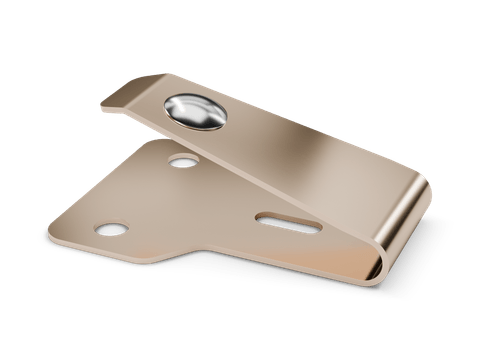
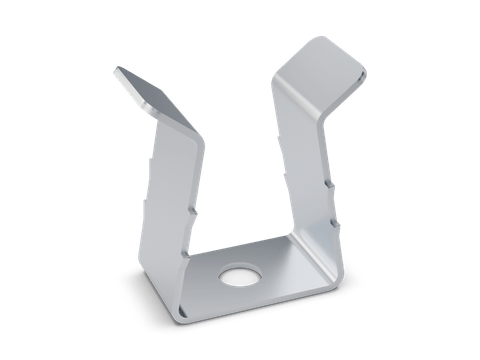
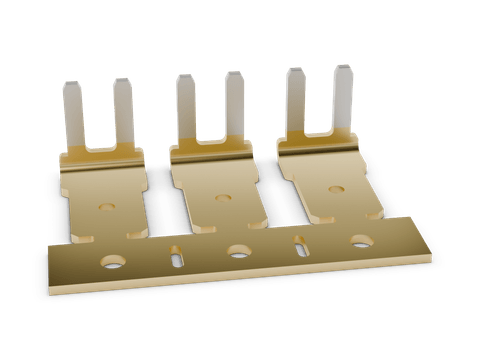
We make these part types by stamping and forming:
09 Process
We review your drawing for manufacturability: bend radii, web widths, burr side and choice of material. Our guide designing stamped parts covers the main design rules.
We define the strip layout and the tool concept and decide with you whether a progressive die or a multi-slide machine is the more economical route.
The tool is built in our tool shop. We also take over existing tools, see tool transfer.
Samples and prototypes confirm dimensions, function and fit before series production starts.
Small and large series, inspected to your specification and delivered in the agreed form.
10 Applications
Contact bridges and contact carriers with riveted or welded contacts.
Plug contacts for signal and power transmission, up to high-current connectors with contact lamellae.
Clamp bodies and clamp frames for screw terminals, cage springs and leaf springs for spring-clamp terminals.
High-current contacts for charging connectors, battery systems and power transmission.
Contact lamellae in test plugs and device connectors.
Conductor rail connectors for crane systems and rail joiners for model railways.
FAQ
Yes. ACA Atlas Contacte makes stamped and bent parts from first samples through small batches to high-volume production. We decide whether a progressive die or a multi-slide machine is more economical on the basis of your drawing and annual quantity.
To quote stamped and bent parts, ACA Atlas Contacte needs a PDF drawing or a 3D model (e.g. STEP), plus material, finish, annual and batch quantity and the preferred delivery form. We clarify any missing details with you by phone.
Yes. ACA Atlas Contacte resistance-welds contact material inline during stamping and so produces two-component parts in a single pass. Alternatively, contacts are riveted on.
Yes. ACA Atlas Contacte makes stamped and bent parts in copper and copper alloys such as beryllium copper (CuBe), and in steel, stainless steel and stainless spring steel. Other materials are possible to your specification. Silver, gold, nickel, tin or zinc plating is applied by plating partners coordinated by ACA.
ACA Atlas Contacte supplies stamped and bent parts loose as bulk goods, on reel as carrier strip, taped (bandoliered) or in magazines. Parts on reel and taped parts suit automated feeding on the assembly line.
The achievable tolerances for stamped and bent parts depend on material, thickness and geometry. ACA Atlas Contacte confirms them in the quotation for each drawing and inspects critical dimensions to the customer's specification.
Stamping and bending tools from our own toolroom
Resistance welding and riveting in-house
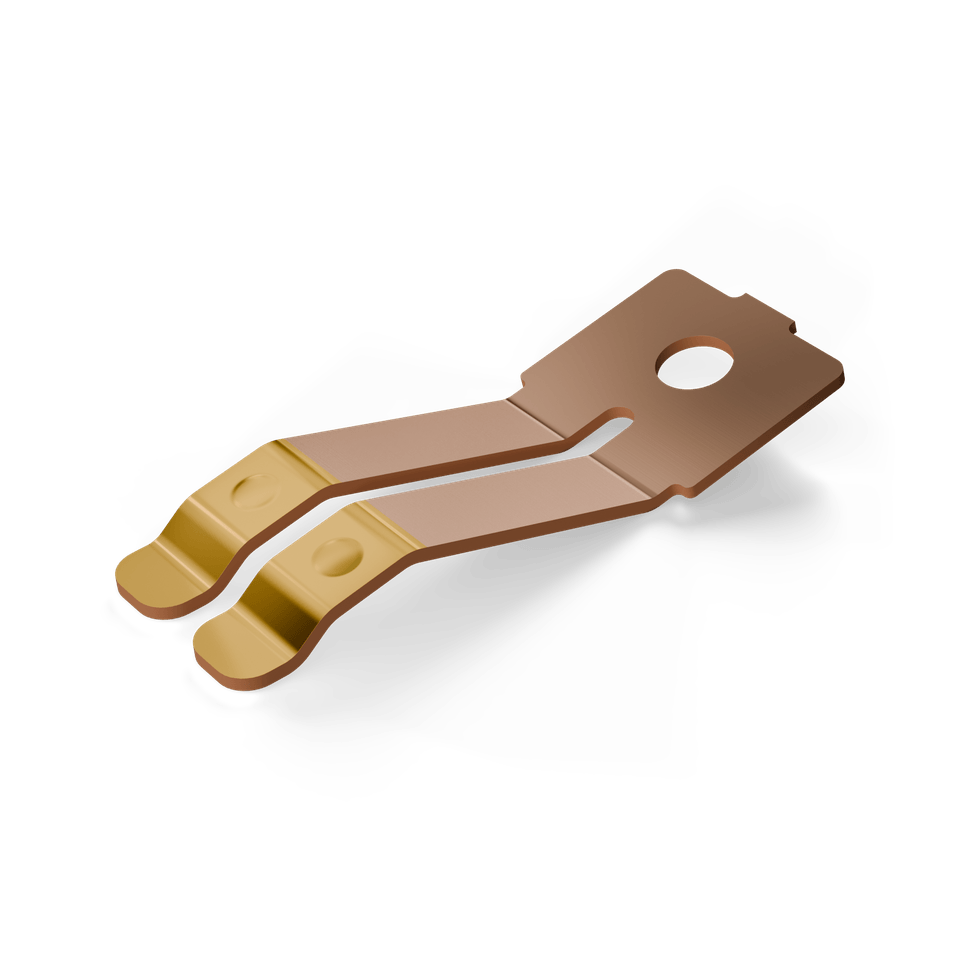
Rules of thumb for bend radii, hole diameters, web widths and tolerances
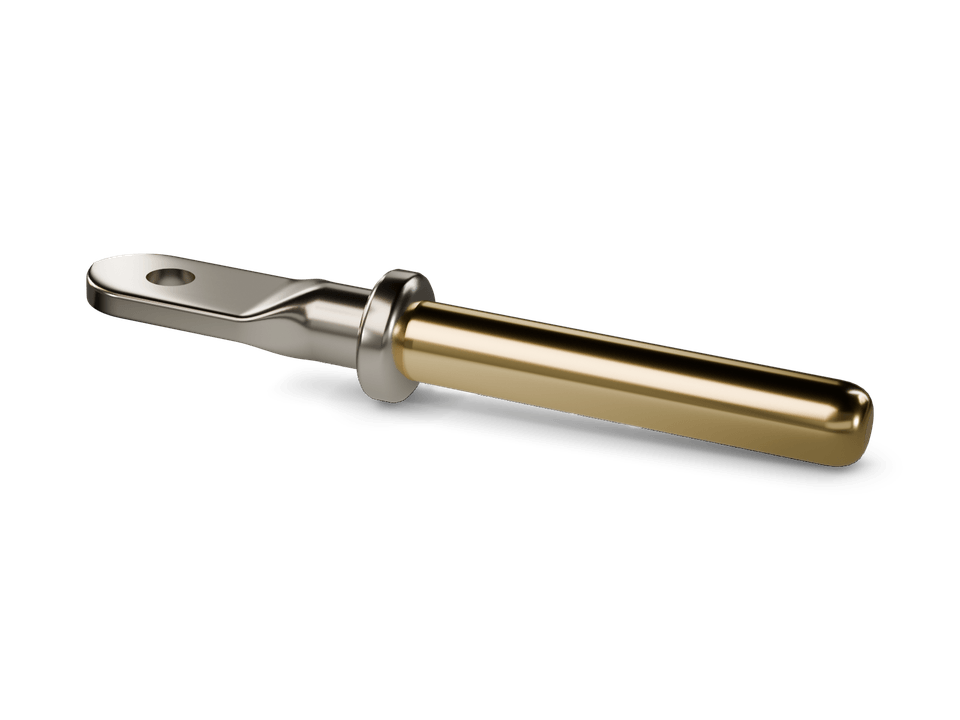
Copper alloys, spring steels and contact platings compared
Request a quote
Send us your drawing or 3D model with material, finish, annual quantity and preferred delivery form. We check manufacturability and propose the right process.